
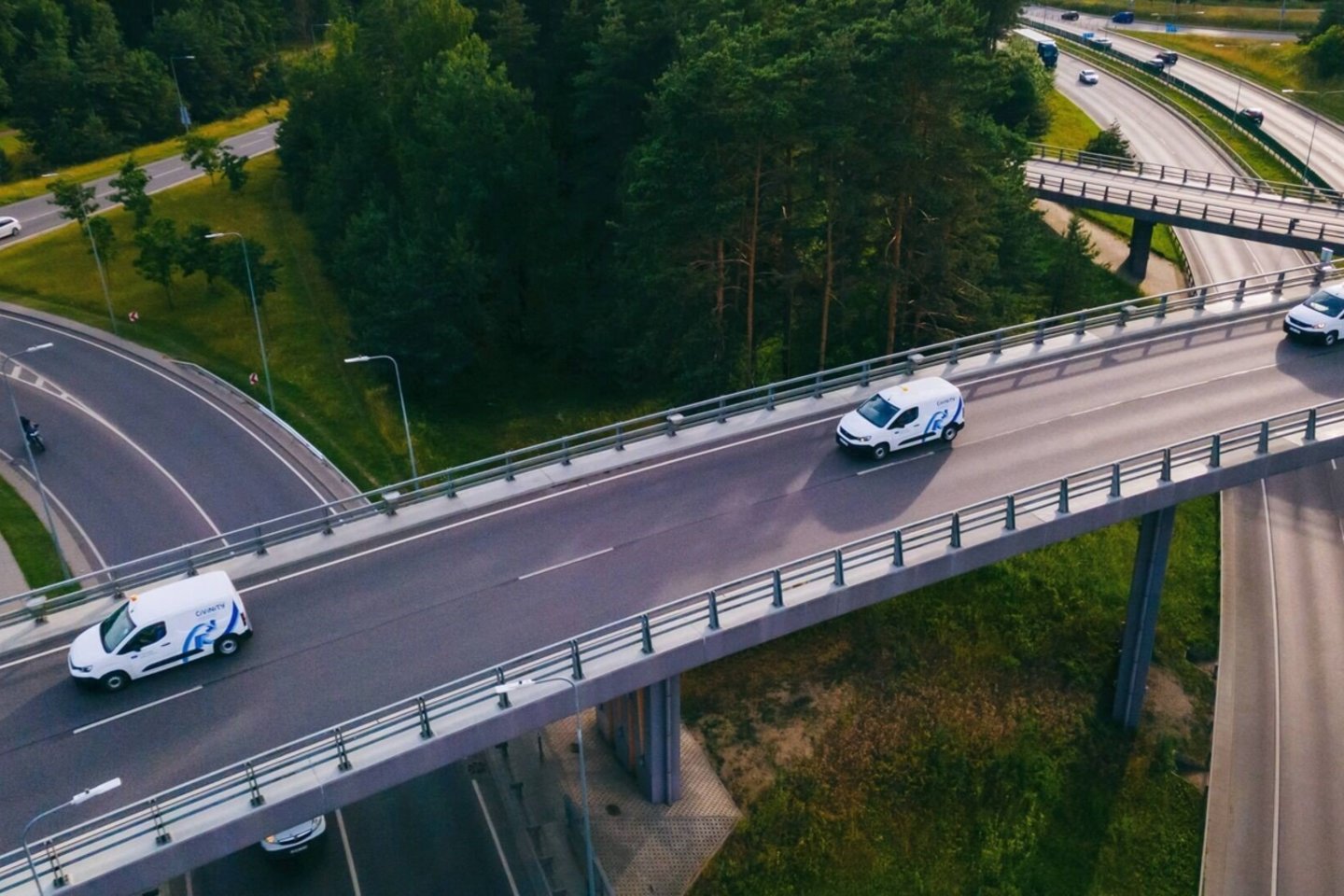
This is one of the most significant vehicle fleet renewal projects of its kind in the service sector and, without doubt, the biggest in the property maintenance services industry. Through this initiative, Civinity aims to steadily reduce the environmental impact of its operations and implement the ‘Smart Green City’ vision. In this smart green urban ecosystem, key services encompass not only buildings but also mobility between them.
Deividas Jacka, Chairman of the Board of Civinity:
For a city to run efficiently, it is crucial that mobility-dependent services are delivered quickly, reliably and sustainably. That is why renewing our vehicle fleet with sustainable, electric vehicles is not a symbolic step for us, but a very practical one – demonstrating our strategic commitment to sustainability and smart solutions, while reducing emissions.
Civinity announced the open tender on 26 January 2026. Proposals are being accepted until 4 February, with the winner expected to be announced on 20 February. The first delivery of vehicles must take place no later than six months after the contract is signed.
According to Civinity representatives, the tender aims to attract representatives of the most well-known and largest electric vehicle manufacturers in Lithuania, capable of meeting the full range of the group’s fleet requirements. Evaluation will consider not only the vehicles themselves but also their long-term operational quality.
In addition, the tender includes an electric vehicle operation training programme, designed to ensure safe and efficient use by Civinity employees – covering everything from daily operation to charging routines, and specifics of driving under different conditions.
The expansion will cover Lithuania and Latvia
The new vehicle fleet will be deployed across the Civinity Group’s property management companies in Lithuania and Latvia. This means that the supply chain, service quality and the partner’s geographical capacity must align with the group’s operational logic – meeting the operational needs of different teams across multiple cities.
The first phase (150 vehicles) is scheduled to be implemented within the next 6–12 months. Further expansion is planned over a 24–36-month period, depending on project results, operational experience and service requirements.
‘Green’ vehicle fleet – part of a broader sustainability goal
Civinity links this decision to its wider environmental, social and governance (ESG) agenda. Over recent years, the group has been steadily strengthening its sustainability management – from clearer principles and metrics to practical measures that have a tangible impact on daily operations.
The vehicle fleet is one area where impact can be reduced most quickly. In property maintenance and management, mobility is an essential part of the service: teams travel to clients daily, handle incidents, carry out inspections and perform engineering work. Therefore, transport solutions directly affect service quality, while choosing green energy directly influences environmental impact.
Jacka concludes:
Our approach to sustainability is straightforward: if we want to create a Smart Green City, we need to start with our everyday practices. Mobility is one of those areas where change is quickly visible. And this is not ‘greenwashing’ – it’s a step that reduces pollution and noise in the residential areas where our teams work, while helping us steadily transition to a lower-emission operating model.
Currently, the group’s companies manage a fleet of nearly 400 vehicles.
Civinity is a group of companies specialising in property maintenance, management and engineering solutions, operating in Lithuania and Latvia. The group is implementing its ‘Smart Green City’ strategy, which aims to integrate services relevant to urban life – from property maintenance and engineering to mobility solutions and digital tools.