
Rolandas Šležas:
Both households and commercial real estate development companies are now having to reassess how to manage the increased property tax burden. In practice, this means landlords will try to optimise costs as much as possible. However, ultimately tenants will still bear the burden of higher expenses.
In his view, although large businesses continue to prioritise central city locations, smaller and medium-sized businesses are increasingly facing a dilemma this year – whether to optimise costs or maintain an office in the central part of the city, where changes in property tax and overall expenses are felt most strongly.
Šležas:
Rental trends for commercial properties – offices and retail spaces – in recent years point to a clear direction: businesses are seeking more efficient solutions. This is also reflected in the sizes of leased spaces – while a typical office lease a few years ago was 500–700 sqm, today the average space required in SBA Group projects more often ranges between 200 and 400 sqm.
He explains that such a situation is not an attempt to cram more employees into a smaller space – rather, it is a rational reassessment of the need for additional space. Small and medium-sized businesses are reevaluating how much they actually need large meeting rooms, event spaces or reception areas, as every square metre used less frequently incurs additional costs.
One solution for reducing costs is to optimise office space; another is to change its location within the city. In the latter case, it is not only the rent itself that becomes important, but also additional fees: common area fees, utilities, facility and grounds maintenance, waste management and others.
In Vilnius’s office segment, rental rates for new, Class A business centres reached EUR 16–20 per sqm in 2025, while older, Class B centres ranged from EUR 10–15 per sqm. These charges are often supplemented by an additional EUR 4–6 per sqm for common area fees and EUR 1–2 for utility costs. When factoring in the increased property tax, the final monthly cost for businesses rises even further.
Šležas:
As a result, it’s natural that some businesses are starting to look towards outer areas of the city where rental prices are lower, and the impact of property tax on the overall cost structure is smaller. In such locations, general fees are often more flexible, parking solutions are simpler and there are no additional advertising or signage fees.
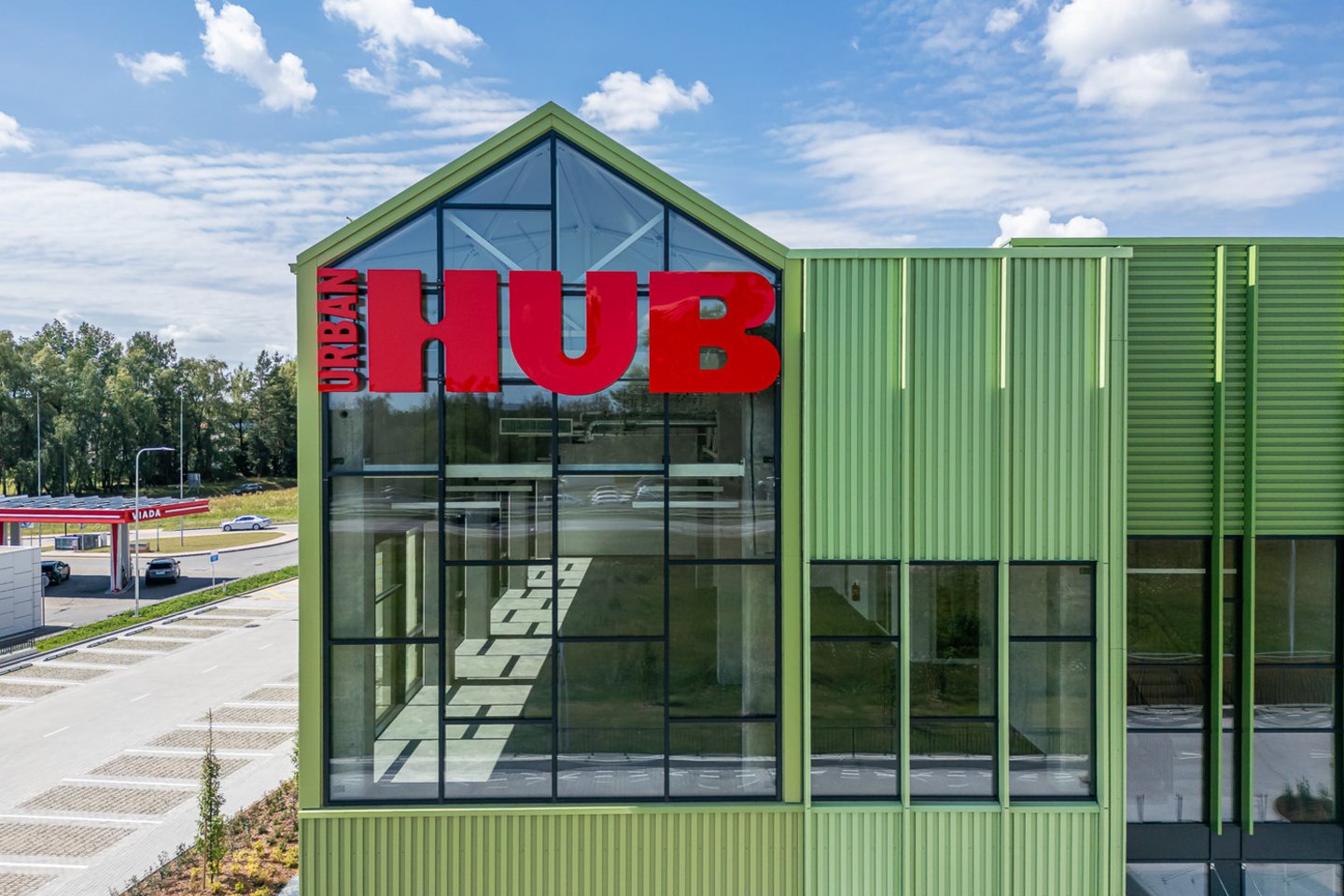
For example, he cites Urban HUB in Vilnius, where common area fees amount to about EUR 1.5 per sqm, and rental rates range from EUR 9 to 11 per sqm, compared to EUR 16 to 20 per sqm in projects closer to the centre. In addition, tenants are often offered free parking spaces, and no additional marketing or advertising fees are charged.
Šležas:
Of course, there are large organisations for which a city centre office location is a strategic priority. However, for small and medium-sized businesses, it is precisely rent, common area fees and rising property taxes that have the greatest impact on their budgets. That’s why we’re seeing them increasingly opt for the most cost-effective solutions rather than the most prestigious ones.
In conclusion, the most in-demand spaces in the Urban HUB Vilnius office segment currently range from 126 to 500 sqm, with the most important criteria being flexible layout, functionality, and convenient transportation and logistics.
Rolandas Šležas, CEO of SBA Urban’s Urban HUB business and retail campuses