
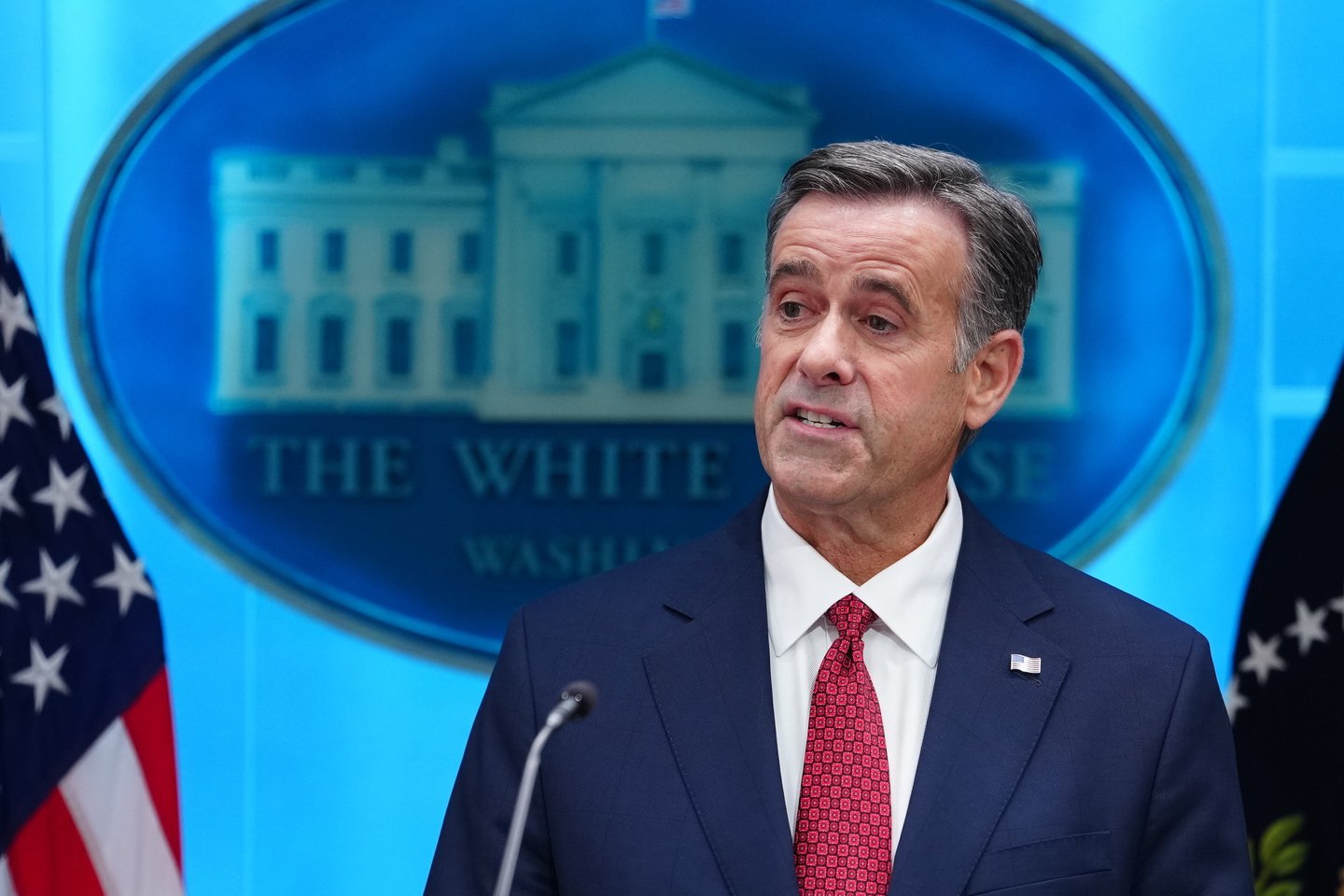
„The fact that they have been informed of the visit also goes some way towards revealing its possible purpose. It appears to be linked to the countries on NATO’s eastern flank and to serve as a kind of warning. US representatives are thus attempting to reassure the Baltic states and perhaps other countries on NATO’s eastern flank,“ Professor Janeliūnas of the Institute of International Relations and Political Science (TSPMI) at Vilnius University (VU) told ELTA.
He emphasised that prior coordination of a visit of this level with Lithuania is not necessarily standard practice, so the very decision to inform them of it may be significant.
„No, this is not necessarily the rule, and this appears to be a decision made by the Americans themselves,“ reflected the lecturer at VU’s TSPMI.
Susiję straipsniai

In the political scientist’s view, one of the main theories behind the CIA director’s visit to Moscow could be a warning from Russia regarding military action against NATO countries.
„At least from my point of view, this should be the main theory. And there are certainly quite a few signs indicating that at least one, or the main, mission carried out by Ratcliffe during his visit to the Russians could well have been precisely that,“ noted Janeliūnas.
According to him, so-called ‘red lines’ may have been drawn for Moscow, relating not only to direct military aggression but also to hybrid attacks.
„Presumably, that warning (may have been – ELTA) was to ensure that no attempts were made to carry out any military actions against NATO countries. Whether that would be some form of hybrid action – that is, attempts within those countries to cause damage to critical infrastructure – or the use of airborne means, such as drones, against NATO countries,“ said the professor.
„Mr Ratcliffe could have formulated such red lines,“ he added.
Better to be informed than uninformed
Former Minister of National Defence Laurynas Kasčiūnas also welcomed the fact that Lithuania had been informed of the possible visit. In his view, allies need to be on the same page.
„It’s good that allies keep each other informed. It’s very important that we’re all on the same page,“ said Kasčiūnas.
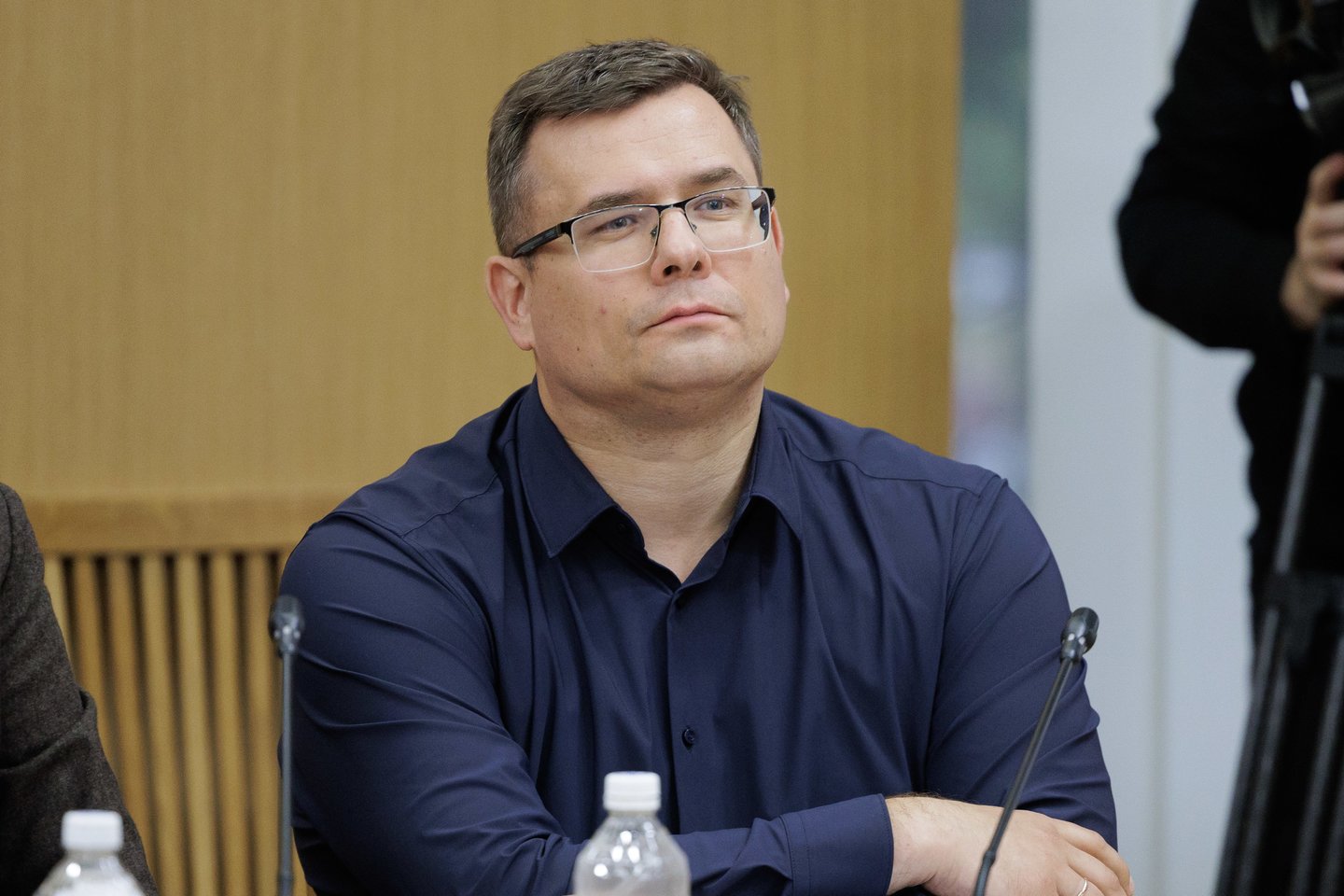
He also did not rule out the possibility that the visit might be linked to Russian provocations or to the risk of further escalation.
„There are clearly certain links here to what we have been discussing all summer – potential false-flag operations and a possible step towards greater escalation on Russia’s part,“ the politician remarked.
Kasčiūnas also did not rule out the possibility that a visit by a high-ranking US official might have been a signal to Moscow about the possible consequences of its actions.
„Visits of this kind, by such high-ranking officials, can also serve as a signal that it would be better not to go ahead with what you are planning,“ he pointed out.
Lithuania was informed of the visit
President Gitanas Nausėda revealed on Wednesday that Lithuania had been informed by its partners about the CIA Director’s possible visit to Moscow. The president said he did not wish to comment on the meeting's content, but emphasised that Lithuania would be provided with information on its objectives and agenda.
„Our partners have informed us that information regarding this meeting, its objectives and content, will be provided to us without delay – practically next week,“ said Mr Nausėda.
In the president's view, the potential meeting aims to reduce geopolitical tensions in the region.
„I can only assume that this meeting is indeed intended to reduce geopolitical tensions in our region, and that gives me cause for optimism,“ said the president.
As previously reported, on Tuesday the US media reported that CIA Director Ratcliffe had arrived in Moscow for meetings.
He flew from Riga to Moscow on a US Air Force C-17 military transport aircraft.
The US news website Axios, citing its own sources, reported that the United States had asked Ukraine to suspend strikes against Russia whilst Mr Ratcliffe was in Moscow.
Kremlin spokesman Dmitry Peskov told The Washington Post that Mr Ratcliffe had travelled to Moscow to hold talks with security services.
On Thursday, The Wall Street Journal and CBS News reported that Ratcliffe sought to persuade Russia not to attack NATO members, citing US intelligence assessments that Moscow might seek to test the alliance. The CIA itself declined to comment on the trip.
On Wednesday, Dmitry Peskov told the Russian media that the CIA director had not met with Russian President Vladimir Putin, but did not provide any further details about the content of the meetings.
ELTA notes that the last time a CIA director visited Moscow was in November 2021. William Burns, who was head of the agency at the time, warned Russia against launching a military invasion of Ukraine. However, a few months later, the Kremlin launched a full-scale war in Ukraine, which has become the largest armed conflict in Europe since the Second World War.