
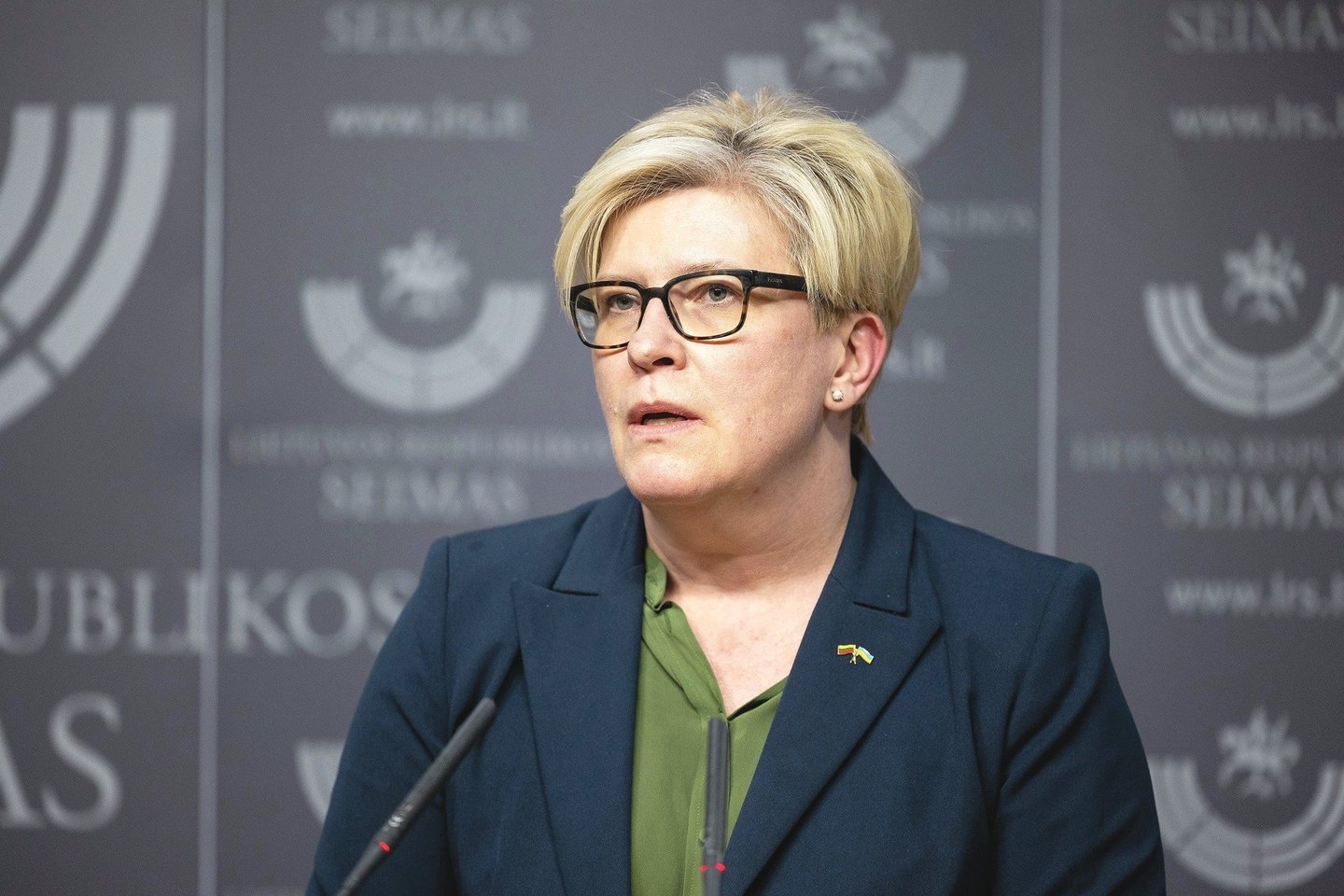
On Wednesday, following a press conference organised by the Centre for the Study of Religious Freedom Libertas Fidei, at which a study was presented on the use of religion as a means of influencing security in Lithuania and Europe, Šimonytė, speaking to journalists, stated that politicians should avoid sending signals favourable to the Moscow Patriarchate.
„I see (…) certain politicians taking part in events or presentations linked to the Moscow Patriarchate, or sending a positive political signal. I believe this should not be done, bearing in mind what is written in the State Security Department’s report,“ Šimonytė told journalists.
According to the politician, because this year’s VSD report has, for the first time, identified the Moscow Patriarchate as a threat, this assessment should be taken into account when making decisions about educational institutions.
„Usually, the State Security Department (VSD) and the Second Department of Operational Services do not use such language lightly, and if such an assessment has been made, it is a signal to the authorities to review other decisions that may be related to this, including, for example, licences for educational institutions,“ said the former prime minister.
According to her, the authorities should investigate whether such institutions are being used to exert a negative influence on Lithuanian society.
Šimonytė also noted that the Moscow Patriarchate's influence in Lithuania may be maintained through various organisations and educational institutions, even if Patriarch Kirill's views, which are unacceptable to the public, are not publicly reiterated.
ELTA recalls that, after Russia launched a large-scale war against Ukraine, Lithuanian clergy members affiliated with the Russian Orthodox Church (Moscow Patriarchate) – Vladimiras Seliavko, Vitalijus Mockus, Vitalis Dauparas, Gintaras Sungaila and Georgijus Ananjevas – fell out of favour with the leadership.
In the summer of 2022, these priests were defrocked by decision of the Moscow Patriarchate for criticising Patriarch Kirill of Moscow, who supported Russia’s aggression against Ukraine. However, the Lithuanian Orthodox Church stated at the time that the priests had faced severe sanctions for breaching their oaths, making false statements, and so on.
This was the first time in independent Lithuania's history that Orthodox clergy had faced such sanctions.
Later, in early 2024, Lithuania decided to re-establish the Orthodox Church under the jurisdiction of the Patriarchate of Constantinople.
Among other things, the Lithuanian intelligence services’ Assessment of Threats to National Security warns that the Orthodox dioceses of Vilnius and Lithuania remain subordinate to the Moscow Patriarchate, regardless of their own aspirations to become autonomous.
According to an assessment by the State Security Department (VSD) and the Second Department of Operational Services under the Ministry of National Defence, the Kremlin uses these dioceses to spread its ideology and strengthen its influence abroad.