
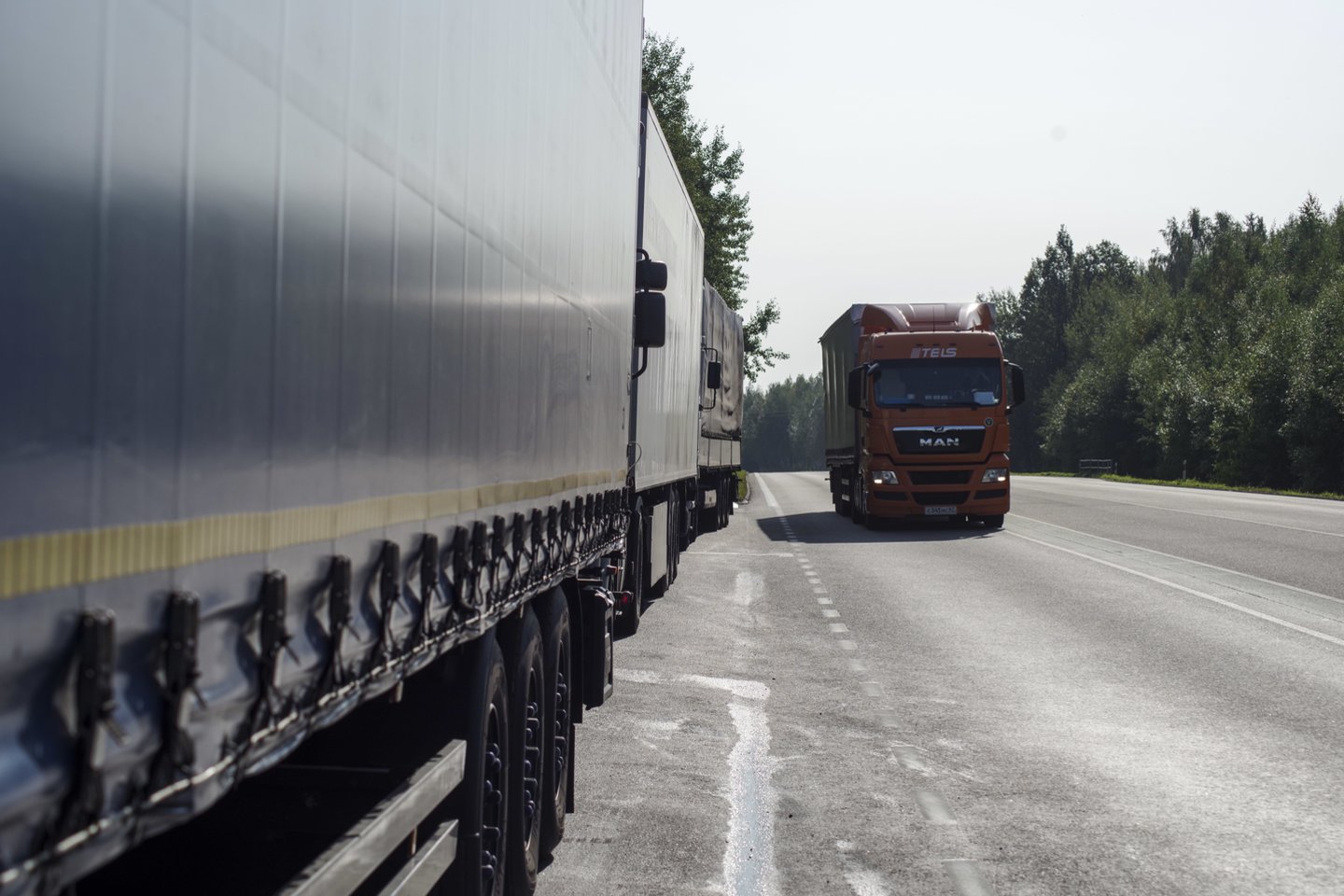
This is according to a survey of companies carried out by the International Transport and Logistics Alliance (TTLA) in March this year. According to the survey, nine out of ten companies have experienced increased costs due to the return of trucks and drivers to the country of registration. More than a third of them say that business costs have risen by up to 15% as a result, and more than half say that costs have risen even more.
„Companies have been active in setting up branches in EU countries to contain cost increases. The main destinations, according to the survey, are Poland and Germany. According to the data provided by the companies, they registered 8,300 new heavy goods vehicles in the Community,“ says Povilas Drižas, Secretary General of TTLA.
He adds that the obligation to periodically return trucks to their registration centres means that fewer of them are able to make freight journeys. Therefore, companies need to buy more new heavy goods vehicles in order to maintain the capacity of their freight services. The TTLA survey revealed that 80% of companies have experienced additional demand due to the return of a truck.
All companies surveyed indicated that they faced additional driver shortages as a result of the Mobility Package obligations. According to the International Road Transport Union (IRU), the number of vacancies for drivers in the EU will reach 500,000 by the end of 2022.
The organisation has stressed that the pay increases for drivers in Europe are not having a decisive impact. At the same time, it notes that the biggest challenges in this labour market are related to attracting young drivers and the lack of an EU-wide infrastructure for driver rest.
„Quality rest and safety for drivers is hampered by the severe lack of truck parking spaces, safe and well-equipped rest areas with showers, separate toilets for men and women, healthy food and safe sleeping areas,“ says Mr Drižas.
All TTLA survey respondents confirmed that finding accommodation for a driver's 45-hour or longer rest is a challenge. As many as a quarter of companies believe it is an impossible task all together. Two thirds of businesses say that finding accommodation for drivers is most difficult in France, Germany and Belgium. Half or less of the respondents cited the Netherlands, Italy and Austria.
Similar assessments are given for the difficulty of finding parking lots with available spaces for towing vehicles. Only a quarter of companies report that they rarely encounter theft from towing vehicles in their parking spaces, or when towing vehicles are left unattended. Over 60% of businesses experience such thefts frequently, and around a tenth very frequently.
According to the Association for the Protection of Transported Assets, half of all freight-related crime is committed in insecure parking areas.
According to the IRU survey, 95% of truck drivers and almost as many transport companies indicate that ensuring driver safety during rest periods is a top priority. However, only 3% of existing truck parking spaces in EU countries are certified as safe. For example, a study in Italy showed that there were 289 trucks per safe parking space.