
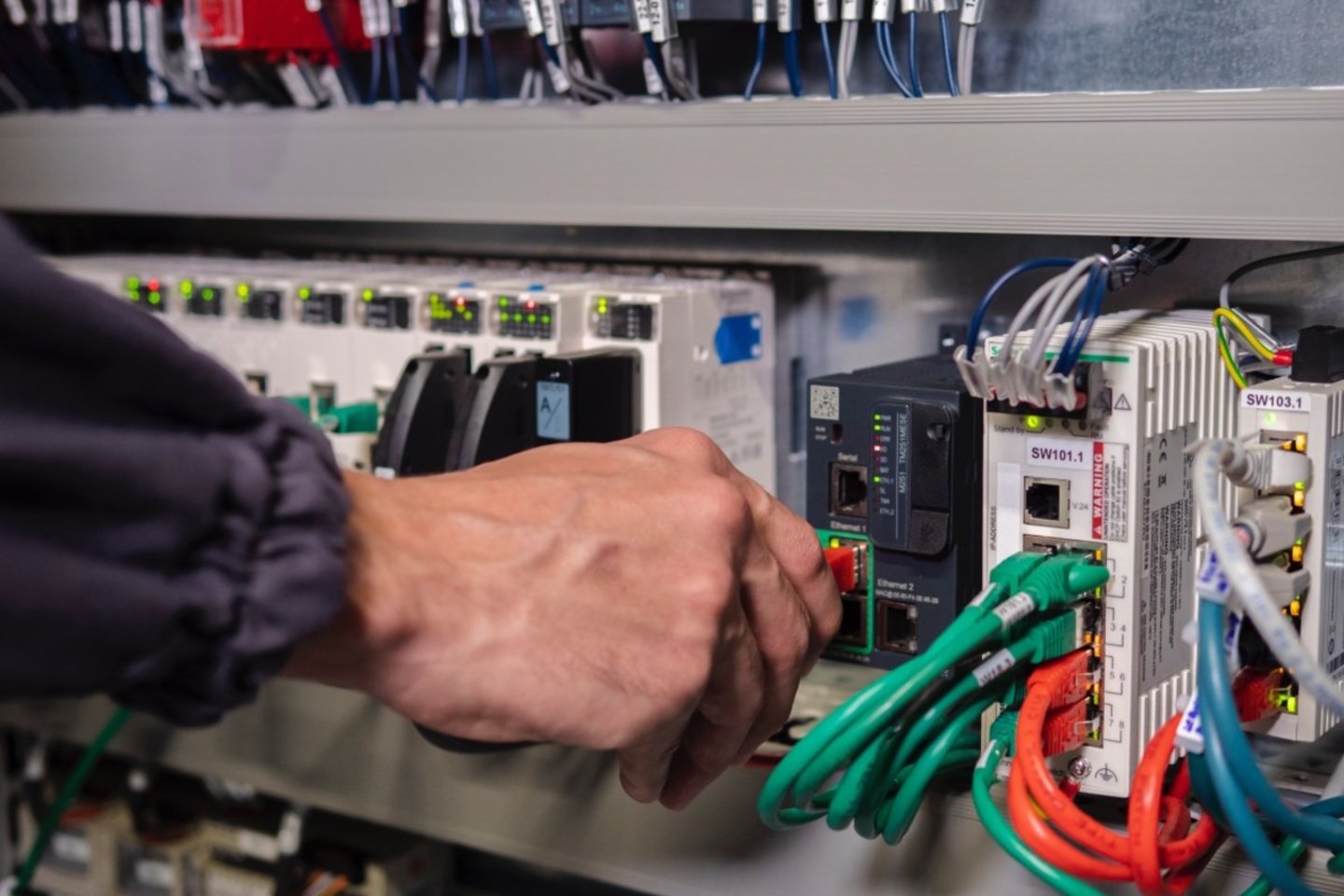
These innovations help protect against risks and smarter management of the energy that powers businesses all over the planet, helping to provide vital services such as medical care and food production.
„Modern energy systems can be compared to the human body. Electricity is the force that makes muscles work: the various devices and machines, lighting and climate control. The human nervous system transmits information about the state of the body's systems and the environment to the brain, which analyses the information and controls the actions of the whole body. The brains of modern power systems are digital energy monitoring solutions that help businesses see and manage the entire power system and avoid the significant losses caused by faults and disturbances that are usually invisible to the human eye,“ notes Tom Bakan, Head of Product Group at Schneider Electric, the international energy management company.
An uninterrupted power supply is critical for some organisations, such as hospitals, large industrial plants or data centres. Any disruption can disrupt or even halt operations. Therefore, in many organisations, electricity is monitored by digital monitoring systems that collect data on energy consumption and monitor its quality in real-time.
The digitalisation of the electricity grid in Lithuania is only now beginning
„Today, companies want to move to a higher level because they realise that an electricity system without a brain is like a primitive organism that cannot react quickly to changes, let alone plan for the future,“ notes T. Bakanas.
Digital innovations in electricity distribution have only recently appeared on the global market. One of them is the EcoStruxure Power Advisor, an energy analysis tool developed by Schneider Electric, which uses the data collected from energy and power monitoring systems to pinpoint problems in the power grid, such as unmetered loads, energy imbalances, and high levels of recurring alarms, and to detect power grid quality problems. In Lithuania, this digital data analysis solution is already being used by several companies in the wood processing industry.
„Such systems are particularly useful for large companies with large and powerful installations. Many electrical problems, such as harmonics, power factors or voltage sags, are invisible to the naked eye and are difficult to detect with conventional power monitoring systems. These silent problems can be compared to heart rhythm disturbances, which can only be detected in a timely manner by a professional with the right instruments. This is exactly what the Digital Grid Analysis tool is designed to do: it identifies problems in the power grid and provides specific recommendations on what to do to fix them. Such analyses of power grid data are recommended two to four times a year in large companies,“ notes T. Bakanas.
According to the expert, the so-called pollution of the power grid has been increasing recently all over the world, including Lithuania, due to the increasing number of renewable power plants connected to the grid and even due to the use of led bulbs for lighting. Problems with the quality of the electricity grid can lead to a variety of risks and significant losses. According to Mr Bakanas, all companies have problems with the power grid, but they only become aware of them when something happens: equipment burns out or catches fire, there are grid overloads and unplanned blackouts, and costs rise due to increased reactive power loads.
Schneider Electric's Power Advisor solution turns power grid monitoring data into actionable information for businesses and organisations. The service includes not only data analysis but also expert recommendations on how to address identified power grid issues.
„In today's world, with the proliferation of digital data, the need to analyse it is growing in all areas. The electricity sector is no exception. Data analysis helps to improve the quality of the electricity grid. Today, there is no shortage of specialists on the market who are able to install various systems. The problem is that more and more digital devices are appearing in various industries, and the huge amount of data and messages they collect is becoming too complex for humans to process. This calls for innovative systems, or in other words, the brains of the power grid, which can do the job: analyse the data and find solutions to problems, not just to irregularities,“ notes Mr Bakanas.
In the Baltic countries, according to Bakanas, the qualifications of electrical engineers and technicians are high, but business owners are more likely to invest in innovation, new equipment and production expansion and less likely to invest in energy distribution solutions.
„For modern companies, electricity distribution is just as important as technological processes, which have been digitalised in many places today. Companies keep track of how much they have produced, at what cost and so on. The digitisation of the electricity grid in Lithuania is only now starting, as managers and owners of companies realise that a power outage can bring the whole business to a standstill. All new projects or renovation projects are already being designed with digitalised electricity distribution as a mandatory part of the project. Smart energy management solutions are slowly making their way and are likely to take less time to take hold than the first commercial light bulb,“ Bakanas believes.