
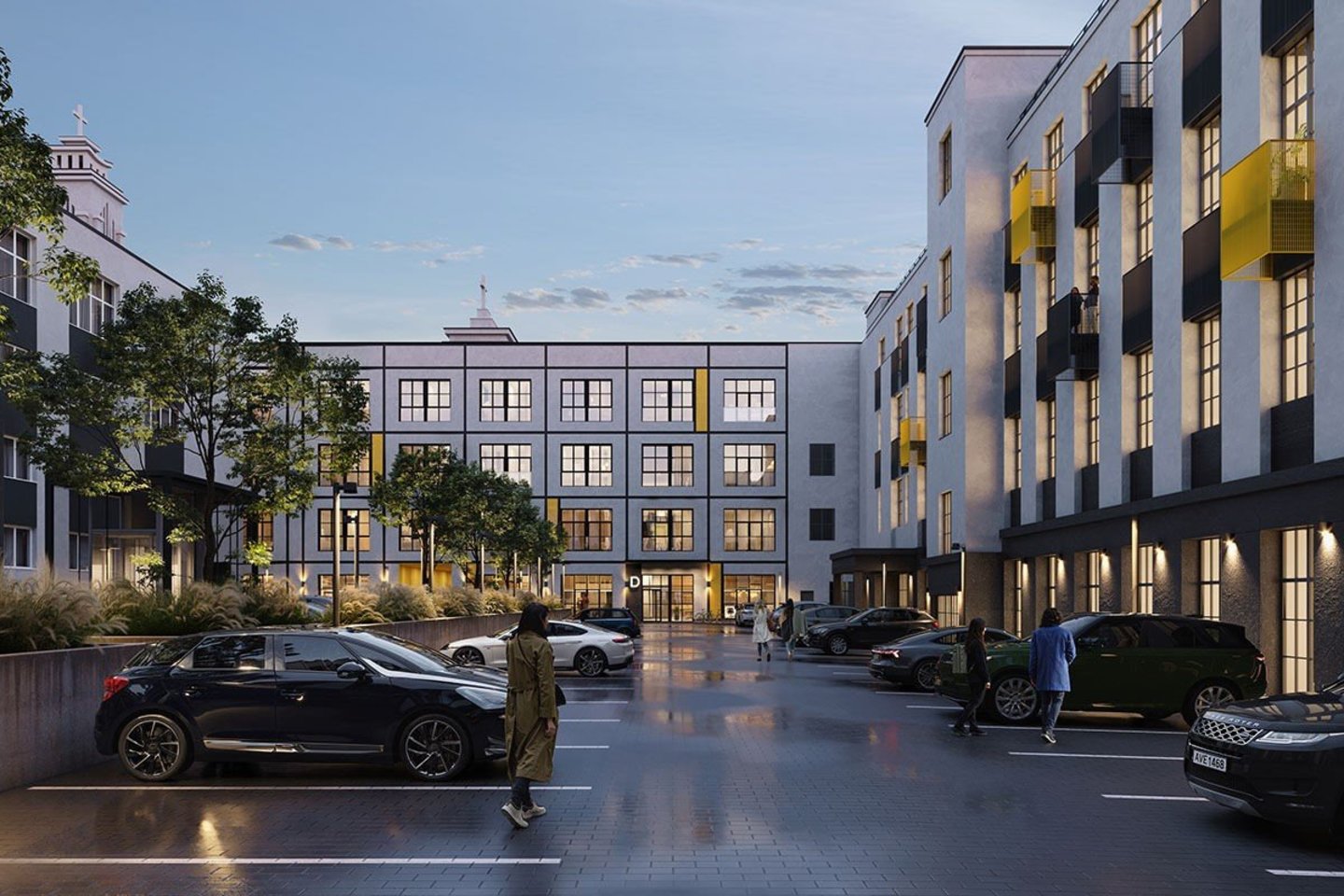
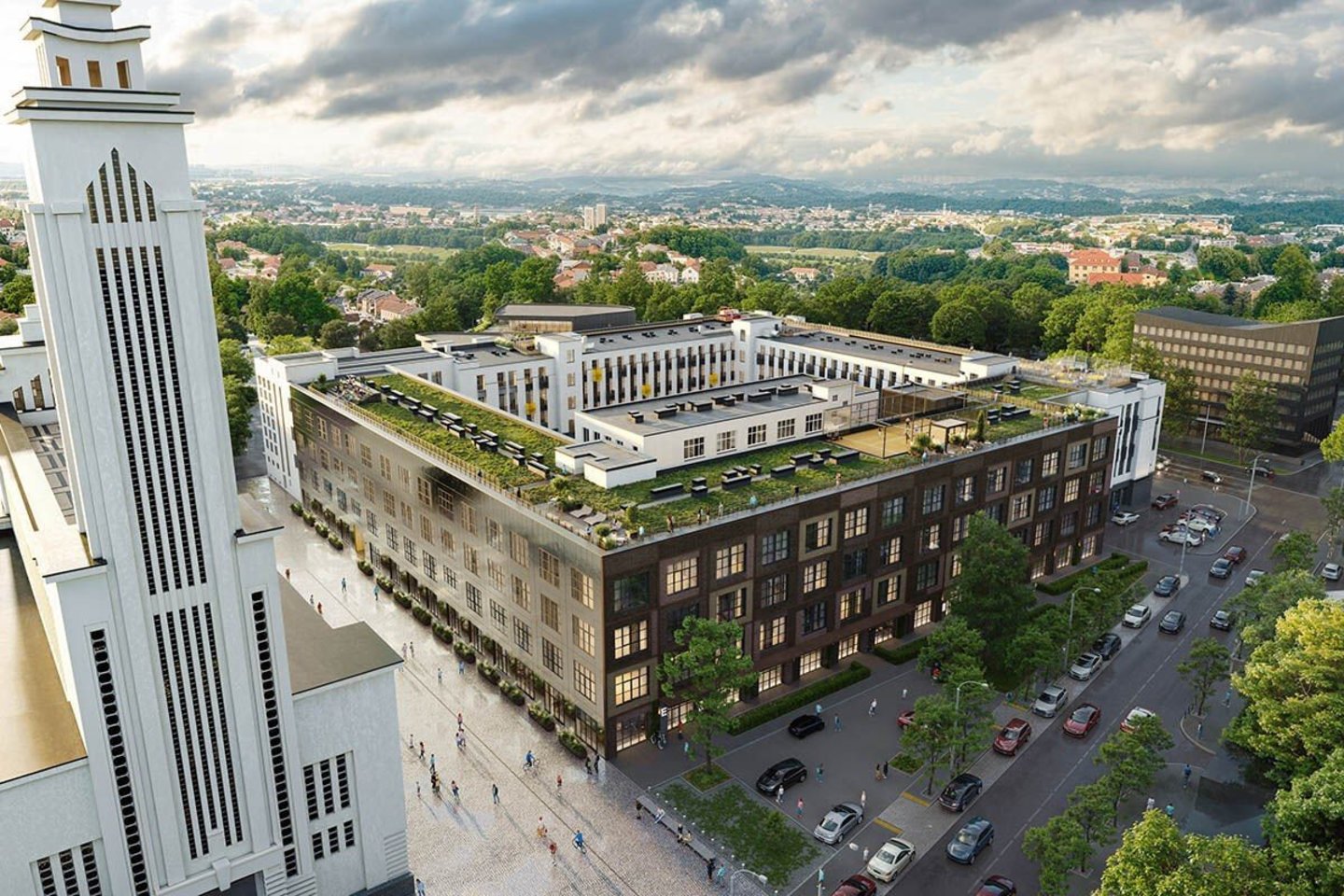
The fit-out and finishing works in this second phase, taking place in the Daina building (facing the Resurrection Church) and the Minija building (on Žemaičių Street), are expected to be completed by mid-2028.
This phase will offer as many as 250 units, with planned 2– to 5-room lofts ranging in size from 31 to 118 sqm, totalling around 7,320 sqm. The total gross area across both phases of the project is approximately 28,000 sqm.
The price per sqm for the lofts will range from EUR 2,200 to EUR 3,500, depending on the building, floor, size and other factors.
Susiję straipsniai

Citus Investment Director Šarūnas Tarutis, states:
There is currently a shortage of supply in the Kaunas housing market, which is why it lacks the level of activity typically seen in a city of this size. With the launch of the second stage of Radio City by CITUS, we aim not only to invigorate the market but to offer clients a proven and well-received product – flexible, inspiring loft spaces that are not only comfortable but also attractive as investments or for letting. Once construction is completed, the entire former Banga radio factory complex will take on a new identity and the value of property within the finished project is expected to rise more rapidly. Multifunctionality, the distinctiveness of the units and their non-standard layouts – such as ceilings over 4.5 metres high and huge windows – are appealing to buyers. A value package like this may not be available again in Kaunas. Clients who bought lofts during the first phase are already showing interest in expanding their investment portfolios.
The project is situated in Žaliakalnis, near one of the city’s main thoroughfares, making it easily accessible to any part of the city or any necessary destination on foot, by public transport, bicycle or scooter. Contemporary urban development is focused on promoting sustainable mobility, and this location offers the opportunity to be in the very centre of the city and move around easily: Vienybės Square, Laisvės Alley, universities, gymnasiums, cafés, theatres, Žalgirio Arena, Ąžuolynas, museums are all within a few minutes’ walk.
The first stage, which included the Nida and Banga buildings located along Astronomijos Street and Savanorių Avenue, has already been completed. More than 8,000 sqm of space has been converted into 184 lofts, all of which have been sold.
Tarutis continues:
The first stage is no longer a promise but a real result. Prospective clients can see the concept of the project, the work that has been done and the quality. Although the building’s shell remains, the entire property essentially meets the requirements and advantages of new construction, with modern engineering systems installed to ensure the building’s energy efficiency, comfort and longevity. People have already moved into the first phase of the lofts, and the common areas have become a vibrant part of community life. This is a significant step forward in creating a modern and functional space that meets the highest standards and creates value for the entire city of Kaunas.
The Radio City by CITUS courtyard will feature a car park with 233 spaces and landscaping. An underground car park with 88 spaces is also being designed. This will not only ensure convenience for the project’s customers but will also solve the problem of the inner courtyard, which resembles a Soviet asphalt wasteland. The construction of a new electrical substation serving the entire project will also be completed.
A tribute to the Church of the Resurrection
CITUS nuotr.
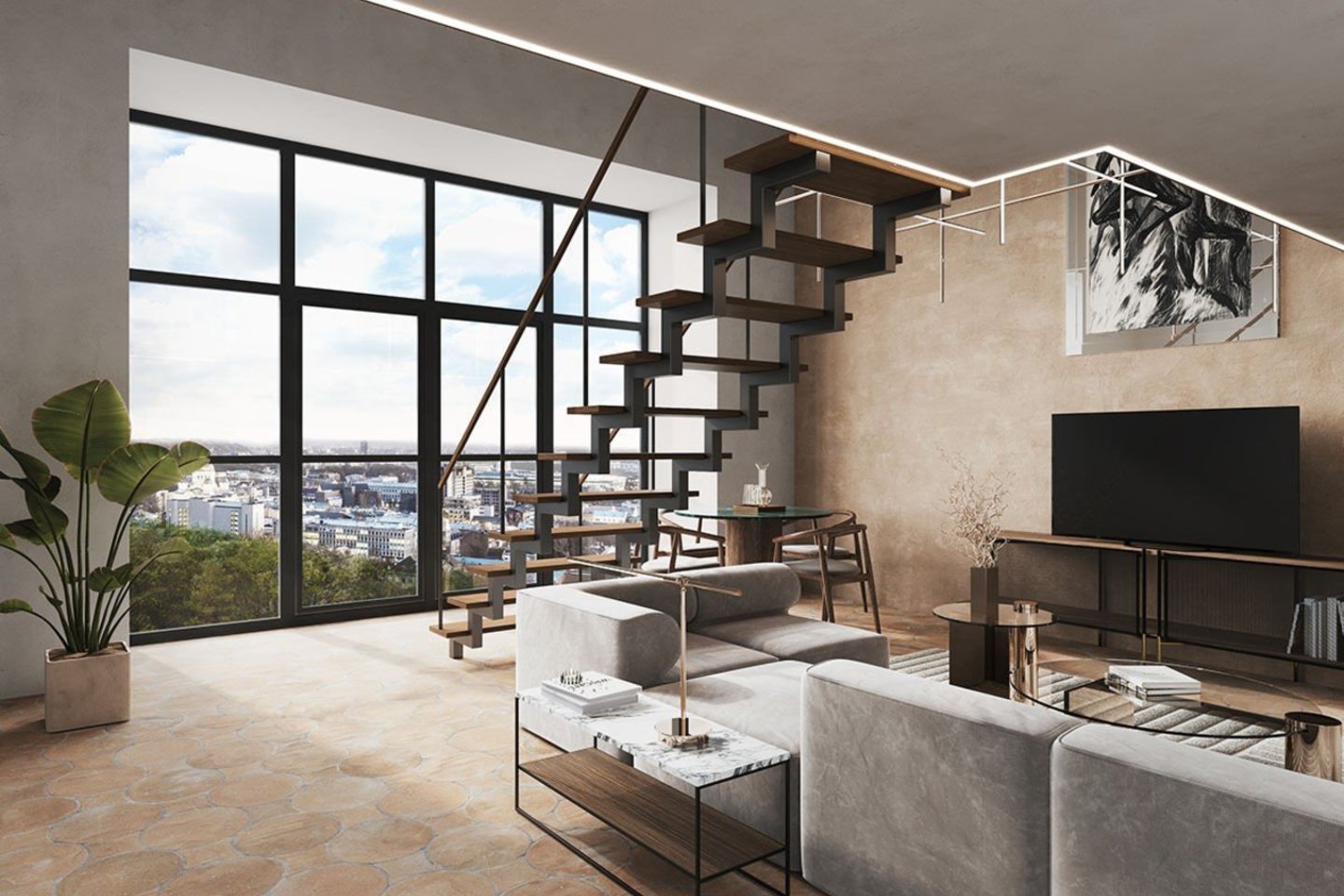
Žaliakalnis is a highly regarded area of Kaunas, where culture, history, nature and modern life come together, so Citus aims to highlight its unique character. During the first stage, the façades were renovated and refurbished; however, the building’s aesthetics remained essentially unchanged. This time, the architectural solutions will enhance the uniqueness of the building and the experience of its owners: panoramic windows, almost reaching from the floor to the ceiling and almost twice as wide as in the first stage, will open up a panorama reminiscent of the view from the roof of the Church of the Resurrection.
Šarūnas Tarutis elaborates:
The Radio City by CITUS complex will be given an industrial modern look through various exterior façades. On the side facing the Church of the Resurrection a subtly reflective, ventilated façade for the Daina building is planned. It will subtly reflect one of Kaunas’s symbols, and the project building will not compete with it. The Minijos façade will be decorated with mosaics of clinker tiles of different shades, sizes and textures, reminiscent of conversion projects in Copenhagen, London and New York.
The second stage will involve the construction of a generously landscaped roof for the remaining buildings, which will also feature viewing platforms, various relaxation areas and even a padel tennis court. The roof will offer a 360-degree view of Kaunas from above.
Tarutis:
We wanted the building to be ‘alive’ around the clock, unlike business centres where entire neighbourhoods become empty at 5 p.m. Since this is a multifunctional building, it is bustling with life during the day, and in the evenings, people return, perhaps even from their workplaces, to the building itself. The roof will be available to everyone who has settled in Radio City by CITUS, both loft and business space owners, and various events will be held here. In addition, a restaurant is currently being developed in the project, so the building will never be empty.
The first stage already includes a clinic, a printing house, various shops, a dental office, beauty services companies, a creative therapy centre, a children’s space, an art studio, a restaurant, a 24-hour pharmacy and other businesses.
The project’s access is also changing. The project includes the renovation of part of the surrounding area, roads, paths and pavements. A prestigious residential project is planned on the site of the controversial former Šilelis Cultural Centre, which housed the Venera Club.
CITUS nuotr.
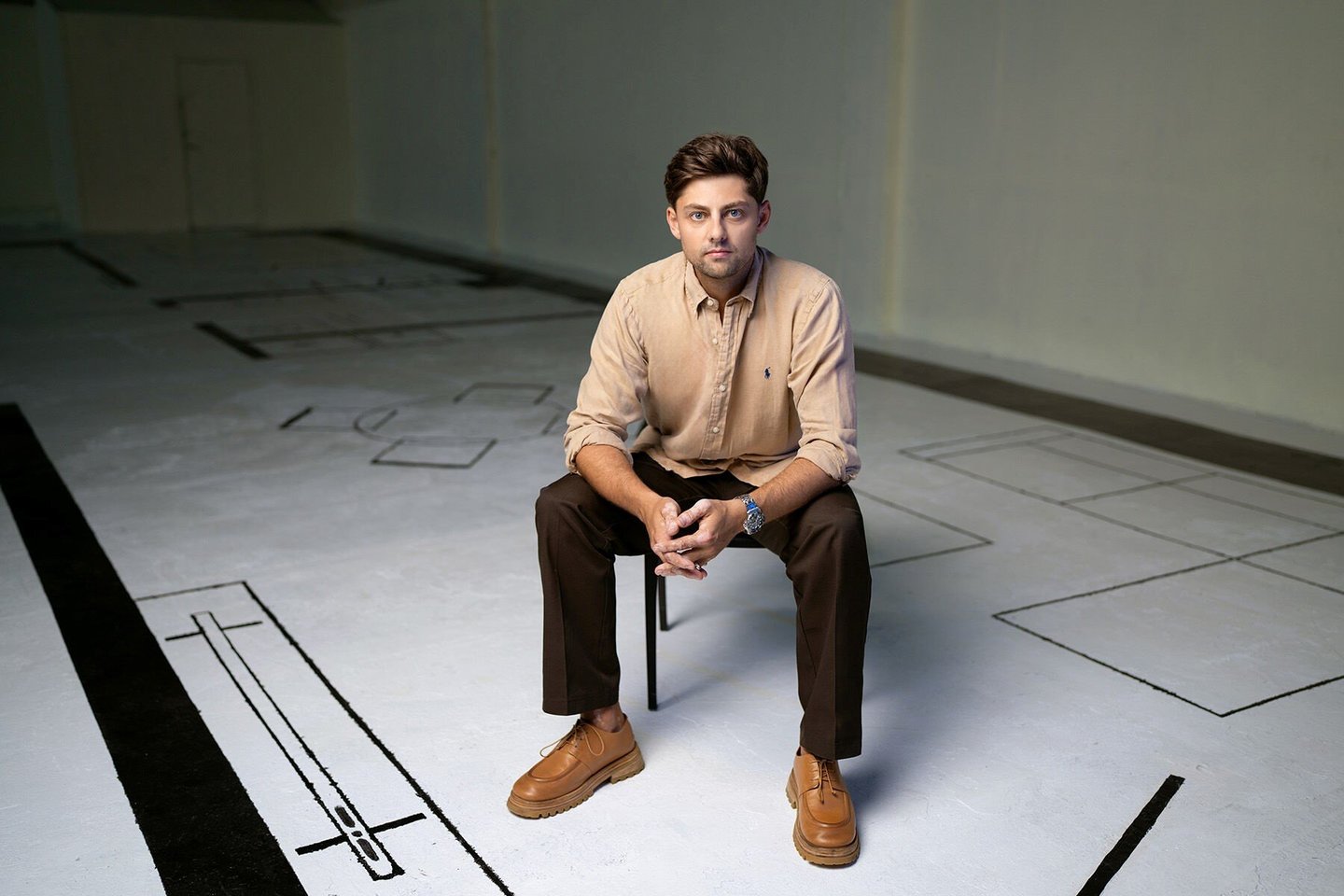
The architectural aspect of the Radio City by CITUS conversion is being carried out by the well-known Kaunas architecture studio Archas, comprising Gintaras Čepurna, Jolita Slendzoka, Tomas Kuleša, Mantas Navalinskas, Neringa Sobeščukaitė, Julija Platūkė and Jokūbas Platūkis.
Sustainable restoration
The conversion of the former Kaunas radio factory into Radio City by CITUS continues with the completion of the first stage of work. Most of the building’s walls and floor structures will be preserved, repaired and reinforced, and characteristic architectural details, such as staircases and lift shafts, will be retained. Meanwhile, the different façades will give the building a new character.
Tomas Kuleša, architect at Archas studio:
Although new construction is easier, it is an outdated approach. The Banga factory building was not fully adapted: it was too large for a single function, and industry could not return there. It also had no public purpose, and was isolated and introverted. However, it was impressive, and we saw great potential in it. Together with Citus, we chose the Radio City by CITUS conversion and by assigning it various functions we created a connection – a living link with the city itself. Not only can the people who are there use the building, but it also creates new connections – even those who do not own property there can use it. This change from closed to open, where the object becomes accessible to everyone with various functions, is the most outstanding achievement for the city.
The second stage will see the complete renovation of the second building of the former factory. The façade and roof with terraces will be insulated and refurbished, new floor structures, internal partitions and lifts will be installed and all engineering systems – water supply, heating, electricity, fire alarm, sewage, ventilation and individual metering – will be replaced.
Kuleša:
Aesthetically, the second stage will differ from the first: it is not a renovation of the existing façade, but the creation of a fundamentally new architectural face. This decision was influenced by the urban context and the close visual connection with one of Kaunas’s most important symbols, the Church of the Resurrection of Christ.
The project meets high sustainability standards in several respects: the existing building structures are preserved, so less energy is consumed to construct the building, less construction waste is generated and modern energy-saving engineering systems are used.
CITUS nuotr.
Kuleša concludes:
Sustainability is not just about technological solutions – it is a responsible approach to the city and its heritage. Conversion projects such as Radio City by CITUS not only preserve architectural value but also create a vibrant, multifunctional space that promotes community spirit and reduces the use of excess resources. The former purpose of the building had long ceased to meet the needs of this important part of Kaunas, so this conversion is a sustainable and beneficial change for the city, in line with contemporary urban development trends. This is an investment in the city of the future – a sustainable, efficient and comfortable place to live.