
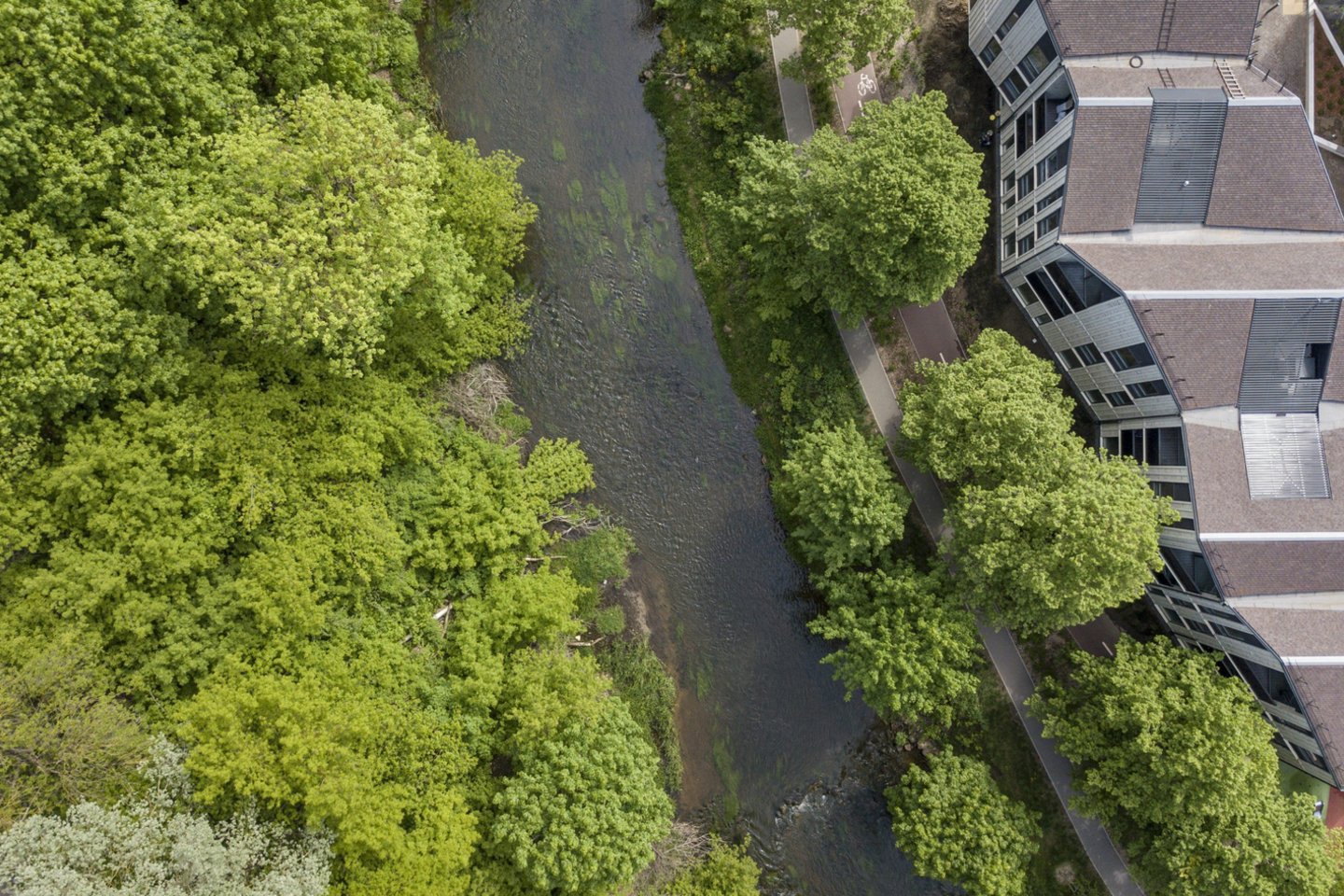
According to the survey, 84% of people in Lithuania consider natural elements to be the most attractive view from their home window. A smaller proportion – 25% – admire the city skyline, while 10% of respondents appreciate the open landscape.
While residents would like to see more greenery, their view is often obstructed: as many as 48% of Lithuanians see neighbouring buildings from at least one window in their home, 22% see the street, and 17% see car parks or other structures. This is especially common in large cities.
Desired views are becoming harder to find
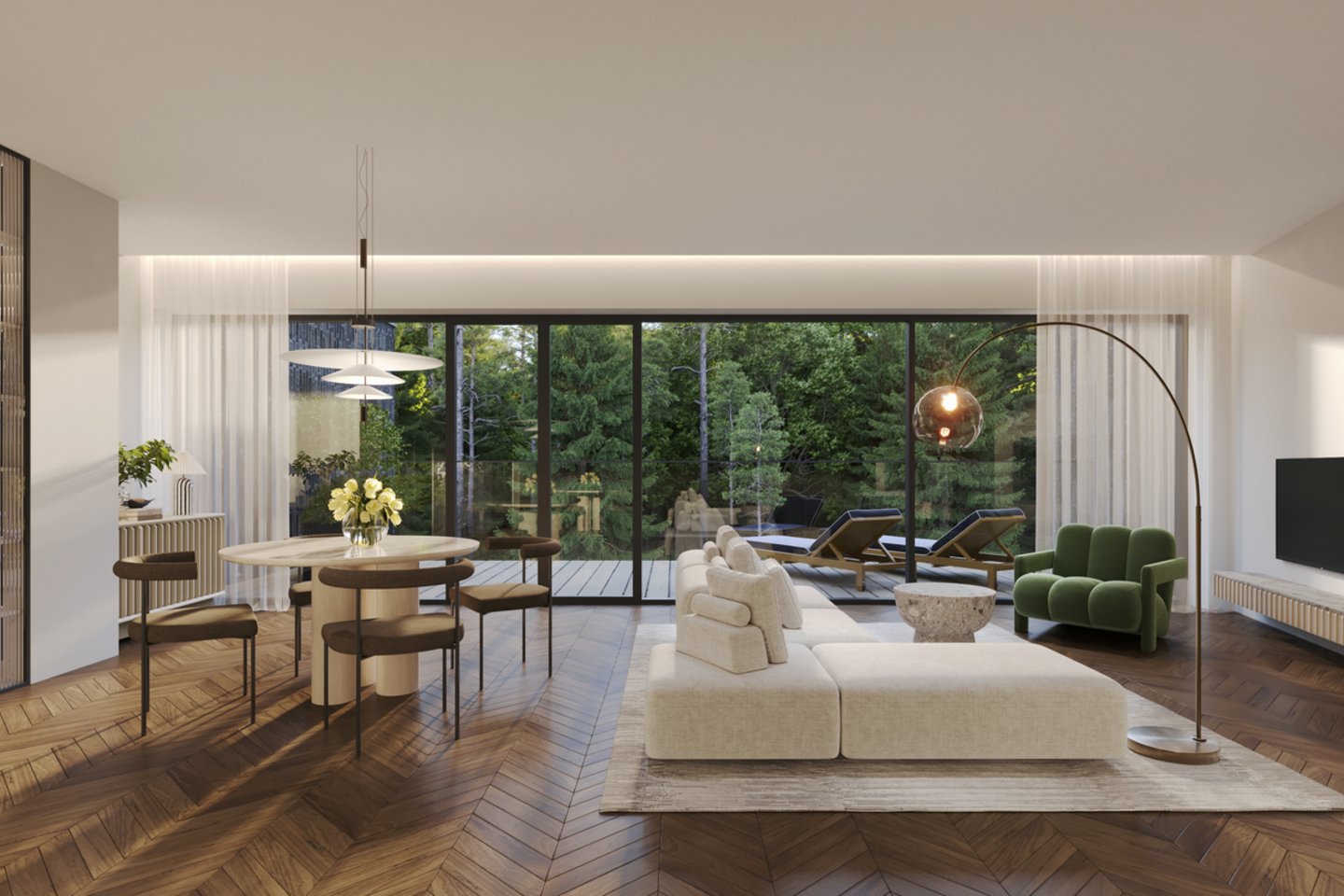
Mykolas Čiplys, Head of Sales and Rental at Darnu Group, says that the view from the window is primarily determined by the property's location – likely the main factor in a buyer’s decision. He notes that the capital has recently seen a shift in buyer behaviour and in how people perceive what makes a good location.
„Traditionally, a good real estate location is understood in two main ways, depending on buyers’ preferences and lifestyle: the Old Town and central areas, which offer a wide range of services and the convenience of urban living; and nature-rich outskirts, which provide a quieter, more community-oriented, and more private lifestyle. Both categories of property are in limited supply and desirable for different reasons. However, as the city becomes denser – especially in the central areas – demand is growing for homes that offer an escape from the hustle and bustle, proximity to greenery, and a slower pace of life,“ he says.
According to Čiplys, this trend is also reflected in the company’s sales results.
The Sakai district, currently being developed on the banks of the Neris River, became the capital’s most popular project in the first half of the year. The main motivation for buyers was the project's location, noted for its exceptional natural surroundings.
Tadas Jonauskis, Director of PUPA – Life Over Space, an urban planning studio, agrees, noting that while residential areas close to both the city and nature still have growth potential, their number will inevitably decline in the future.
There are many unknown variables, but the number of green spaces is fixed, and increasing them in densely urbanised areas is challenging. Living close to nature, especially near the city centre, will therefore remain attractive, but the options will become increasingly limited. In the capital, areas near parks, the Neris River, and nature reserves are already attracting significant attention – these elements are linked to both quality of life and housing value,“ says the urbanist.
7–20% more for the view of your dreams
According to Darnu Group, 39% of people would be willing to pay up to 5% more than their home’s value for a good view, while nearly a quarter would pay 10% extra.
Mantas Mikočiūnas, an expert at the real estate agency Capital, says that in Vilnius, apartments with a good view are often 7–20% more expensive than those overlooking a car park or the street.
„Overall, the situation in Vilnius remains quite positive because it is a green city. However, in developments of city blocks, clearly defined plot boundaries often determine the density of construction. If you buy a house in the middle of a housing estate, all you’ll see around you are the walls of surrounding buildings. The situation is somewhat different in districts farther from the city centre, where larger land plots allow for more spacious residential areas with greater greenery,“ says Mikočiūnas.
According to Mikočiūnas, contemporary buyers associate a dream-like view out the window with quality leisure time – the opportunity to go for a walk after work, play sports, or spend time with family in a peaceful environment. A home overlooking a park, river, or forest often offers the perfect balance between the city’s energy and the need for relaxation and privacy.
Čiplys, Head of Sales at Darnu Group, agrees with him. The view from the window is important not only for aesthetic reasons but also for practical purposes.
„Of course, for Lithuanians, it is associated with quality of life, housing value, and carries significant emotional meaning. However, this isn’t the only thing people are buying. It's all about how much that view from the window expands opportunities for spending time outdoors and how realistically it can be integrated into our daily lives,“ he says.
It’s a critical factor, he says, because our immediate environment strongly influences our daily actions, choices, and habits – making it one of the key factors that shape our quality of life. For this reason, what matters is not only the uniqueness of the location, but also how well it is adapted to human needs.