
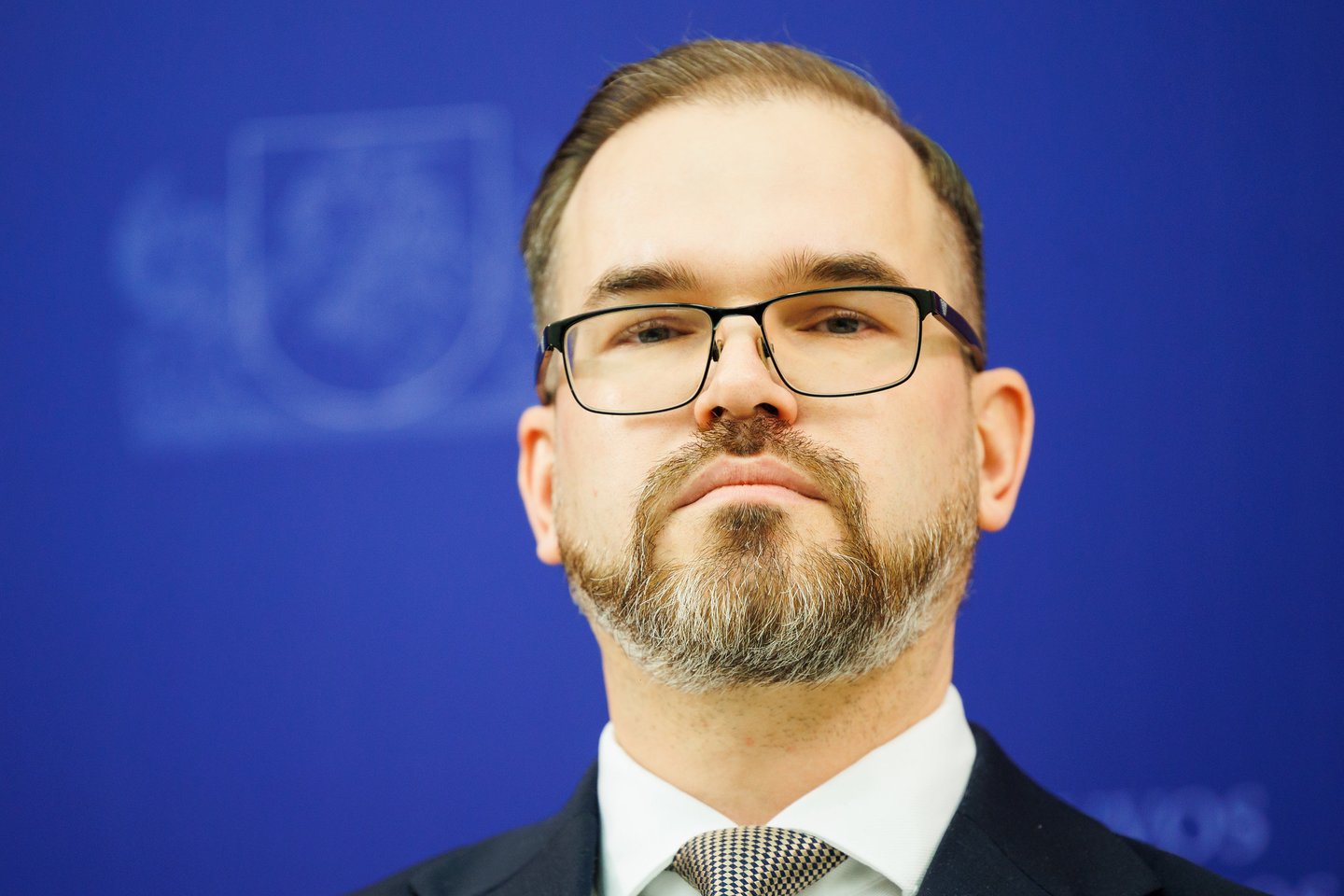
„The conditions were such that all contractors met them, and if the conditions need to be tightened in the future, we will be able to do so,“ Kaunas told reporters at the government on Thursday.
„Rules and criteria are always established for each project, which project implementers must meet when participating in the competition. Today, for the construction of the town of Rūdninkai, back in the days of Mr. (Laurynas – ELTA) Kasčiūnas, certain rules were created, and the process was carried out based on them. As far as I know, Dovilė Šakalienė tightened those rules a little, the process was improved, and now we have a list of potential winners who meet all the conditions,“ said the member of the government.
According to the head of the Ministry of National Defence (KAM), in the future, contractors for defence projects may be required to have the right to access fully classified information. However, the most essential criteria remain financial and managerial capabilities, as well as punctuality.
„If we see that future projects will require greater secrecy, for example, permission to work with information marked 'strictly confidential', we will certainly include such conditions in the tender. The main point, however, is that all contractors in projects of this scale should be able to implement the project – they should be capable both financially and in terms of management, and the project should be implemented on time,“ said Kaunas.
On Wednesday, in response to the announcement of the winners of the second stage of the Rūdninkai town competition, Prime Minister Inga Ruginienė said that the competition conditions for projects should be discussed and reviewed to avoid any appearance of a lack of transparency.
The Delfi portal was the first to report that among the winners of the EUR 1.8 billion Rūdninkai tender was Fegda, the company that had previously built the defective road to the training ground.
The portal later also announced that the Ministry of National Defence (KAM) had selected the potential tender winner without taking into account the SSD's report on the company's reliability, which stated that the company was concealing certain information in accordance with the Law on State and Service Secrets.
However, Fegda itself claimed that it had received permission to work with less reliable information, which is restricted in use, but did not receive authorisation to work with information marked „strictly confidential“ because it did not provide the SSD with information about low-value purchases from third countries.
Fegda is often associated with Mindaugas Sinkevičius, Chairman of the Social Democratic Party – the politician previously worked for the company, and the politician's father, MP Rimantas Sinkevičius, also belongs to a hunting club together with company shareholder Arvydas Gribulis and Gediminas Gribulis, director of the Fegda Group, which owns the company.
ELTA recalls that defects were noticed on the road leading to the Rūdninkai training ground immediately after its construction in 2023, but the Ministry of National Defence, which coordinates the military project, is not requiring Fegda to rebuild the road; it is currently only being repaired.
Fegda, which won the public procurement contract to build the reinforced concrete road to the training ground, carried out the work for EUR 6.45 million.