
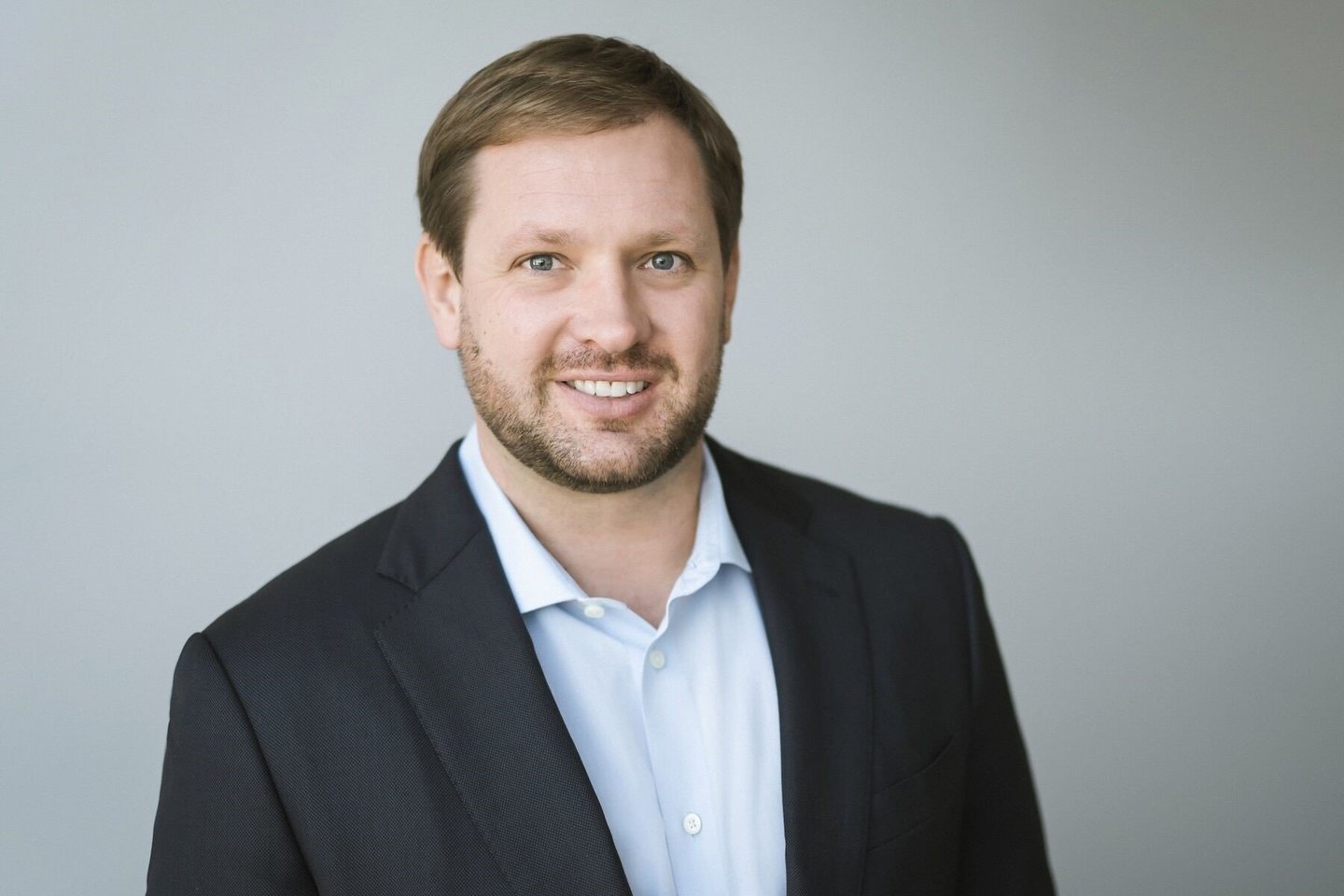
Jacka notes that these changes mark a new stage of maturity for the group, which Civinity has reached by consistently growing and strengthening its core activities:
Our group strategy is always planned over five years. In 2020, we had a clear direction: to improve service quality, increase efficiency and grow both organically and through acquisitions. At that time, we set a specific goal – to reach EUR 10 million in EBITDA. Today, we have achieved that target: we have nearly tripled our revenue, increased efficiency and continue to improve the quality of our services consistently.
According to Jacka, simply growing with the market is not Civinity’s ambition, so a clear goal has been set for the new five-year period – to increase EBITDA tenfold and reach EUR 100 million:
Susiję straipsniai


This is not just a financial ambition. We can see how quickly – at digital speed – the world is changing. Traditional business models are not enough for such rapid growth – digital transformation is essential.
It is planned that by 2030, at least 30% of Civinity’s portfolio will consist of digital businesses. Jacka adds that this is not just a new five-year period – it is a new stage of growth based on a different logic, bringing greater speed and new opportunities. He adds that the group will continue to bring together businesses providing traditional services, but will operate on a hybrid model in which a stable, mature business operates alongside faster-growing digital ventures.
Jacka outlines the vision:
Traditionally, a large share of our turnover has been linked to physical work, people’s time and specific physical assets. Digital businesses operate according to a different logic – they are easier to scale, less dependent on geography and allow for the creation of repeatable solutions. It changes not only the speed of growth, but also the very structure of value creation. Generating 30% of our turnover from digital businesses will also mean greater resilience for the group against economic cycles and less dependence on labour constraints. At the same time, it implies a different margin structure, more efficient use of capital and greater flexibility.
Digital expansion – inevitable
Over its 20 years of operation, Civinity has built a broad range of services – from day-to-day maintenance and management of commercial and residential buildings, to the design and implementation of complex engineering solutions. Today, the group is established in Lithuania, Latvia and the United Kingdom.
Jacka:
Although there are various groups in the region – both specialised and diversified – we currently do not see a combination of services that covers all these activities and operates across multiple countries.
However, maintaining a competitive edge requires more than just a broad service portfolio. International trends confirm this: the World Economic Forum predicts that over the next decade, around 70% of all new economic value will be created by digital platforms. On the consumer side, the shift is equally clear – according to consulting and audit firm PwC, 71% of consumers are willing to switch brands solely for a better digital experience. Organisations are responding: after the pandemic, around 70% have begun or accelerated digital transformation.
Jacka:
Digitalisation is becoming a primary direction for value creation. What interests us most is how these trends manifest in real urban infrastructure and services. Today, the landscape of city services is highly fragmented. There are isolated examples of success, such as Dubai or Riga, where a large share of city services is already integrated into a single digital platform. However, in most cities, residents currently use ten or more separate apps – for parking, public transport, tickets, fees, utilities or other services.
He adds that Civinity’s digital expansion covers both existing clients and entirely new markets:
Digital solutions allow us to create additional value for current clients, improving convenience, speed and accessibility of services. At the same time, digital products specifically enable growth beyond the limits of traditional operations and geography. This is particularly evident in our investment in Mobilly. This urban ‘super-app’ is already generating value in Latvia, but its growth potential is not tied to Civinity’s presence in that city. Mobilly can expand both in cities where we already have traditional business and in entirely new markets where we previously had no physical presence.
A similar example is Valandinis: the construction work platform strengthens Civinity’s current operations in construction and building maintenance, while also functioning as an independent platform capable of expanding into new markets, regardless of the geography of other group companies.
Jacka:
Digital expansion does not force us to choose between existing and new clients; it allows us to simultaneously strengthen services for current clients and unlock entirely new growth opportunities across Europe.
Investing in capabilities
Deividas Jacka explains that a significant part of the changes has already been implemented: Civinity has a strong board, where each member’s experience is directly aligned with the company’s chosen strategic directions. There is also an investment committee that helps identify, evaluate and select for acquisition only those businesses that genuinely create value and fit the strategic vision. Traditional group businesses and their teams are also changing:
For several years now, we have been implementing digital tools and artificial intelligence solutions: our engineering teams use advanced technologies to design systems, AI helps managers plan work and respond more quickly to client requests, and cleaning service specialists are increasingly supported by robotic solutions.
According to him, by acquiring digital businesses Civinity consciously invests not only in products or technology, but also in specific capabilities. Each team joins the group as an independent business, developed by its own experts:
We provide them with capital, a long-term perspective, access to a larger client base, and the group’s infrastructure. This naturally opens opportunities for knowledge exchange across the entire group, while maintaining each team’s independence.
Jacka reveals that the group currently has multiple investment targets in sight:
At present, we are evaluating around 15 potential acquisitions across eight countries – ranging from mid-sized deals to projects valued at EUR 100 million or more. We invest in businesses that operate within the ‘Smart Green City’ ecosystem. For us, a ‘Smart Green City’ means a city that functions efficiently and sustainably, and is focused on people’s everyday lives. These solutions cover not only urban infrastructure, mobility and energy management, but also in-home services: building maintenance, engineering systems, and municipal and daily services that directly impact people’s quality of life.
He emphasises that when evaluating potential acquisitions, it is important that businesses are profitable and have real growth potential:
For us, it’s not just the idea or the market that matters, but the ability to create value in practice, along with a clear vision of how the business can grow further. We look for companies whose leaders are ready to raise the bar with us. We also focus heavily on people: we value teams that see beyond their own product and have the ambition to grow. What matters to us is not short-term deals, but long-term partnerships.
Help, but don’t interfere
Jacka explains that over its operational history, Civinity – which brings together nearly 40 different companies and over 1,600 employees – has learned several lessons. One of the most important things is not to impose changes where you know less than others:
This is particularly relevant when acquiring new businesses in foreign markets. In both the market and our own experience, we have seen cases where, after an acquisition, group management starts to take the lead and implement changes too quickly. For this to succeed, you need deep knowledge of the specific business and local market, but very often the local team knows this best.
He adds that Civinity follows two rules. First, in such cases, it acquires no more than 70% of the business, leaving the remaining share to local partners who best understand the market and clients, and who believe in their product. The second rule is ‘help, but don’t interfere’:
Over more than 20 years of experience, we have tested various post-acquisition integration models and have found that partial integration works best for us. In practice, this means that we develop the strategy together with the acquired company’s team: agreeing on direction, ambition and key goals. Once this agreement is reached, we do not interfere with the team as they pursue them. We integrate into the group only what makes sense, strengthens the whole and creates synergy – finances, certain processes and access to group resources. Our experience shows that the best results come where there is freedom to create and a clear shared ambition.
In daily operations, as in any organisation, Civinity sees various risks. However, the greatest risk, according to Jacka, is people-related:
Europe is ageing rapidly, which we see within our group, especially among technical specialists, where the average employee age today is around 50. Naturally, the question arises – what will it be like in ten years? The solution is not simple. On one hand, we need to consistently work to ensure that young people choose studies and careers related to our fields – engineering, building maintenance and technology. On the other hand, this is also a broader, national-level issue that requires a consistent approach to the integration of employees from third countries.
He adds that this also clearly reflects growth potential. For example, the proptech industry could grow much faster if more young people in the Baltic countries had engineering and technology skills:
In this industry, digital knowledge alone is not enough. You need to be able to apply it in a very specific environment – understanding how buildings function, how they will be managed in the future, how people move between them and how mobility in cities is changing.
Where to look for opportunities
Over the next five years, Deividas Jacka identifies and outlines several clear growth opportunities:
First – the increasing demand for digital solutions within the urban ecosystem. Today, everyone expects to access daily city services on their phones. We want to combine dozens of apps into a single, convenient platform that makes city life easier. Second, there is a growing need to manage buildings and infrastructure efficiently. Energy prices are rising, sustainability requirements are tightening and consumer expectations are increasing. As a result, building owners and cities will seek solutions that reduce costs, save resources and improve user experience. Additionally, this will create extra opportunities for both engineering and digital solutions.
The third direction, he notes, is new operating models in the labour market. Platform-based solutions that enable more flexible work planning, more efficient use of specialists’ time and faster responses to market needs will become increasingly important.
Jacka concludes:
This is especially relevant in construction, building maintenance and engineering, where there will continue to be a shortage of specialists. Finally, we also see opportunities for geographic expansion. The greatest potential lies where technology, cities and people’s everyday needs intersect.