
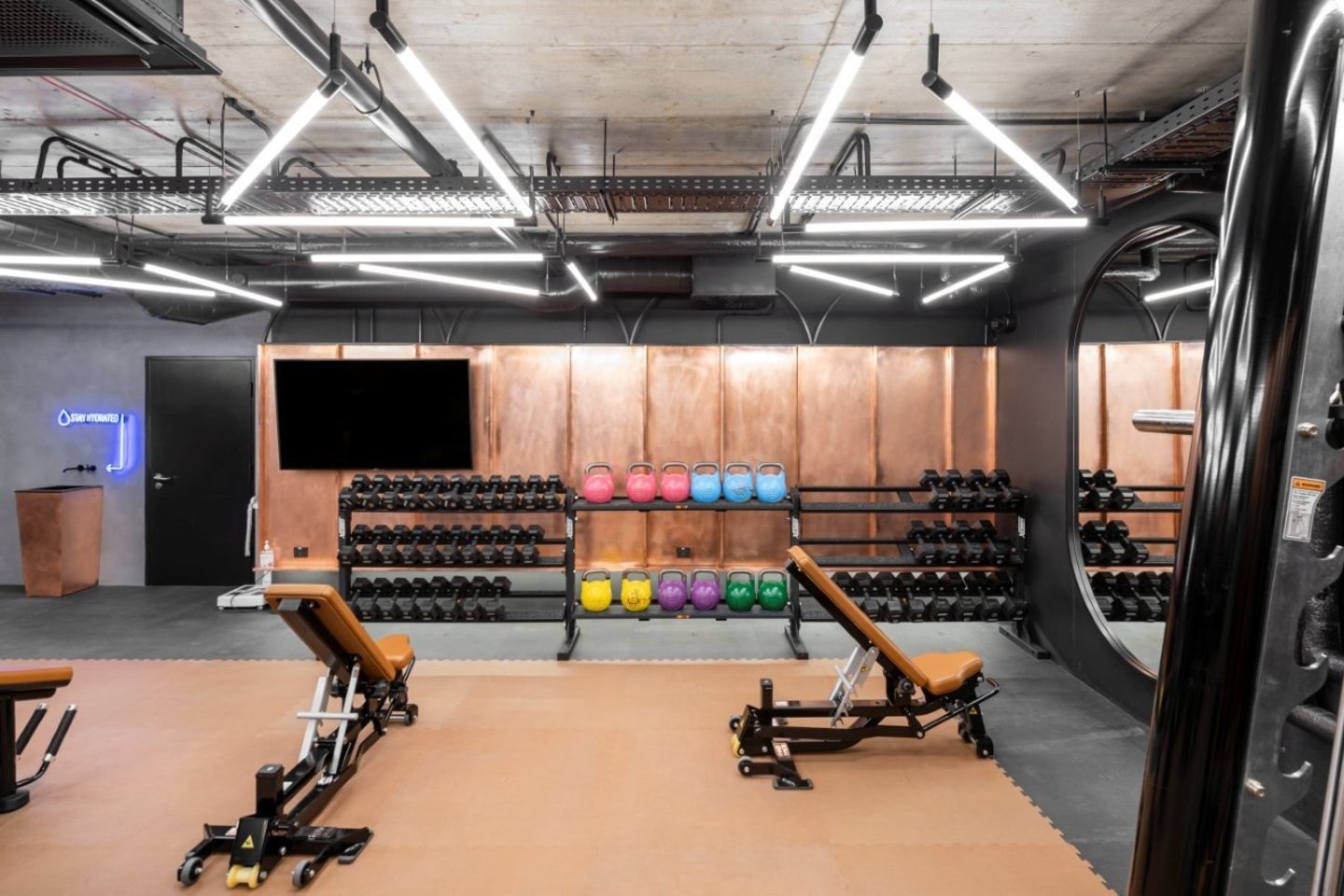
The sports club in the Sakai neighbourhood, being built next to the Neris River and the Karoliniškės Landscape Reserve, is scheduled to open in mid-2027. This 350 sqm sports space will focus on group training, conducted in small groups to ensure high-quality service and individual attention for each participant. There will also be a dedicated area for endurance and strength training.
A proven concept
„The capital's sports club market has experienced not only growth, but also a structural shift in recent years. In this context, boutique spaces are emerging – today seen not as an alternative to large chains, but as a parallel segment with its own audience. Therefore, the Re.Formatas model – which focuses on smaller groups of sports enthusiasts, highly competent coaches, and an exclusive aesthetic environment – has been a great success and will open next year in the Sakai neighbourhood, currently being developed by our Group,“ says Ramūnas Grušas, Head of Darnu Group's Sports Business Group.
Susiję straipsniai


He estimates that over the past few years, the customer base has grown by 30%, reaching 2,000 customers. According to Grušas, the positive results were influenced not only by the public’s increasing focus on health and physical activity, but also by the carefully chosen locations of the sports clubs. After initially targeting business centre audiences in 2018, Re.Formatas shifted its focus a few years later to open sports clubs in Paupys, developed by the company, and at SEB Arena.
„We aim to maintain a positive trajectory, so expanding into Sakai is a natural step forward. The decision to locate here is also heavily influenced by our success and experience in Paupys. The buyers and visitors of both projects share similar profiles. In a multifunctional neighbourhood of this scale and type, we can expect future customer traffic not only from residents but also from other businesses and the surrounding infrastructure. We are confident that we will become a natural part of the local ecosystem, contributing to both the quality of life and the overall vitality of this part of the city,“ says Grušas.
The premium of the past – the standard of today
According to Grušas, in recent years the sports club market in the capital has clearly split into two directions: economy-class chains operating on scale and price, and higher-value clubs, where sport is seen as a service with a clear philosophy.
„This polarisation is not accidental – it reflects the growing maturity of city residents, a trend seen not only locally but across Europe. Sport is no longer a spontaneous decision to „start on Monday“, but a consistent investment in wellbeing and longevity. This change is reflected in the growing demand for individual training, as well as in an increasing focus on training quality rather than quantity,“ comments the representative of Darnu Group.
According to a 2024 global study on boutique sports clubs by Research and Markets, a leading market research company, the market was valued at USD 34.35 billion in 2023 and is expected to reach around USD 54.81 billion by 2029, growing at an annual rate of 8%.
According to Grušas, what was once considered „premium“ is now a basic expectation. Such clubs tend to have high customer loyalty. For example, 85% of the Re.Formatas community consists of regular customers, while only 15% are new or changing customers. This shows that the decision to use the chosen space is a long-term one, rather than an impulsive choice. Here, sport becomes part of the routine, rather than a short-term project.