
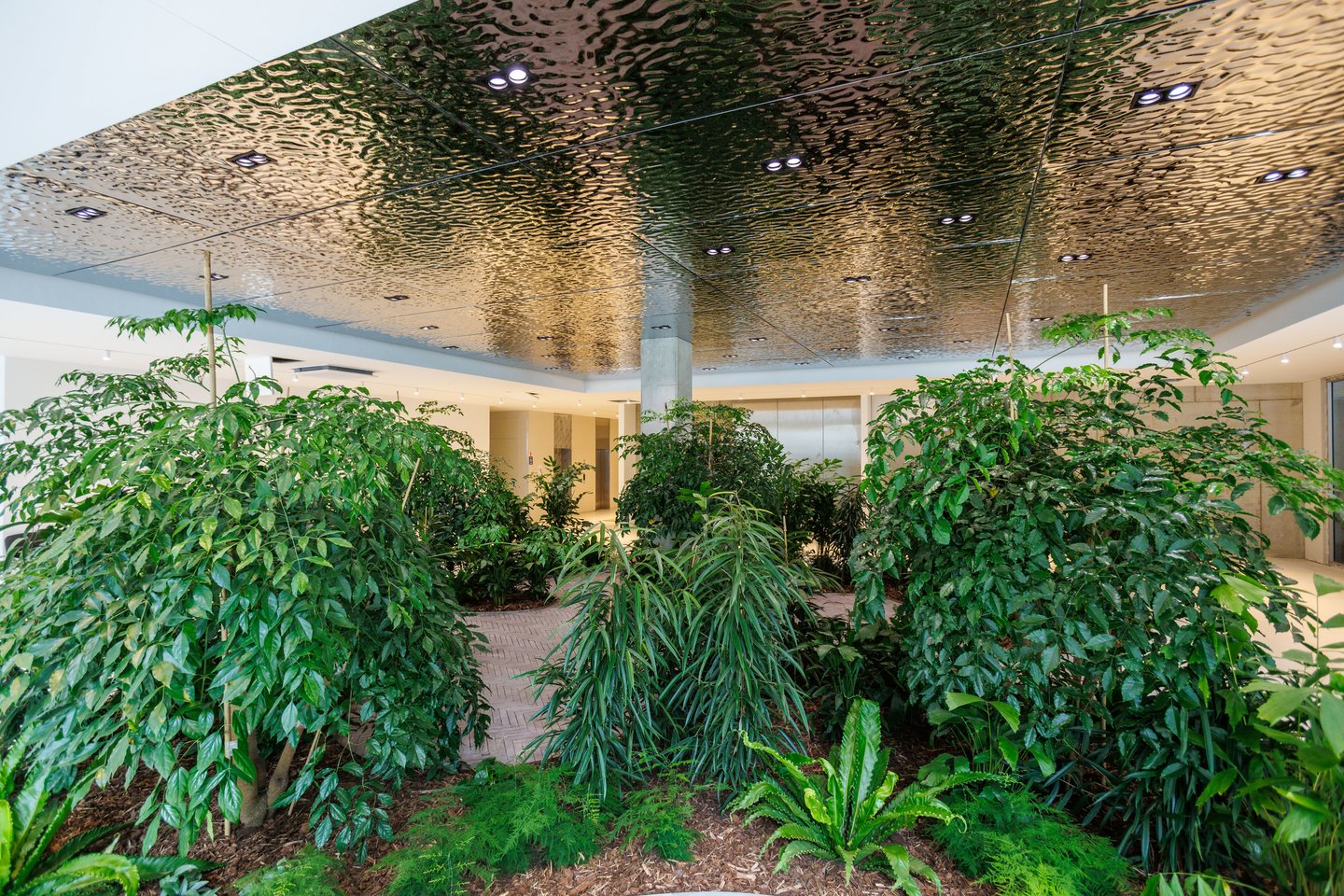
Plants become an extension of architecture
„Over the past few years, biophilic design – the integration of nature into buildings – has become one of the key foundations of architectural concepts for offices and business centres. Plants are no longer just individual pots placed beside reception desks. They have become an integral part of the overall design. This includes furniture with features specifically designed for plants, as well as green walls, hanging gardens and integrated indoor landscaping,“ says Eglė Juozaitienė, who is the Head of B2B Sales at Hersc Flora, one of the largest providers of landscaping solutions in the Baltic States. Her team also created the plant island at the Hermanas business centre in Kaunas.
According to her, the boundaries between the work of architects, construction professionals and plant specialists are becoming increasingly blurred. In some offices, biophilic design forms the very foundation of the architectural concept, with companies investing in such solutions from the earliest stages of development, long before construction is completed.
„Whereas in the past it was common to fit out offices and business centres with minimal investment and the most basic solutions, that trend has now changed completely. Real estate developers are investing hundreds of thousands of euros in greenery both inside and around business centres. For example, when green spaces are planned during the construction phase, we integrate automated irrigation systems directly into the plans, design dedicated lighting solutions and create root zones within furniture. These are no longer simply flowers in pots – they are living, functional ecosystems,“ Eglė Juozaitienė stated.
Landscaping investment for a single building can reach EUR 120,000
A distinctive indoor plant island has recently been installed at the Hermanas business centre in the Nemunaičiai development, featuring nine different plant species. At its centre stands an elegant, three-metre-tall Ming aralia tree, which has become the focal point of the interior design.
According to Lina Mačiulė, Head of Office Leasing at SBA Urban in Kaunas – the company developing the business centre – the decision to invest in an integrated indoor garden was driven by a desire to create harmony with the surrounding environment. The building is located on the banks of the River Nemunas and is surrounded by nature, so the aim was to bring that same organic atmosphere indoors.
„We believe that an office is a company’s calling card. Today, it should convey a sense of calm, professionalism and sustainability. These are among the most important considerations for modern businesses. When selecting new premises, senior executives evaluate not only the price, floor space and location within the building, but also the property’s image and reputation. Business centres that incorporate sustainable solutions, from green spaces to infrastructure that supports sustainable mobility, gain a competitive advantage in an increasingly demanding market,“ Lina Mačiulė emphasised.
The plant island was designed to create layered greenery and bring a sense of lightness to the space, while larger trees add a touch of luxury without overwhelming the interior. The result is a subtle balance between modern architecture and nature – an aspect valued by both employees and visitors in business centres.
Landscape design specialists have also observed another interesting trend: businesses are increasingly choosing plants not only for their appearance but also for the message they wish to convey. For example, outdoor spaces are often designed to reflect the character of the Lithuanian natural landscape, while interiors are embracing concepts inspired by different climate zones. Separate office areas may be landscaped to evoke the flora of countries such as Mexico, Finland or Italy, creating distinctive environments with their own unique character and atmosphere.