
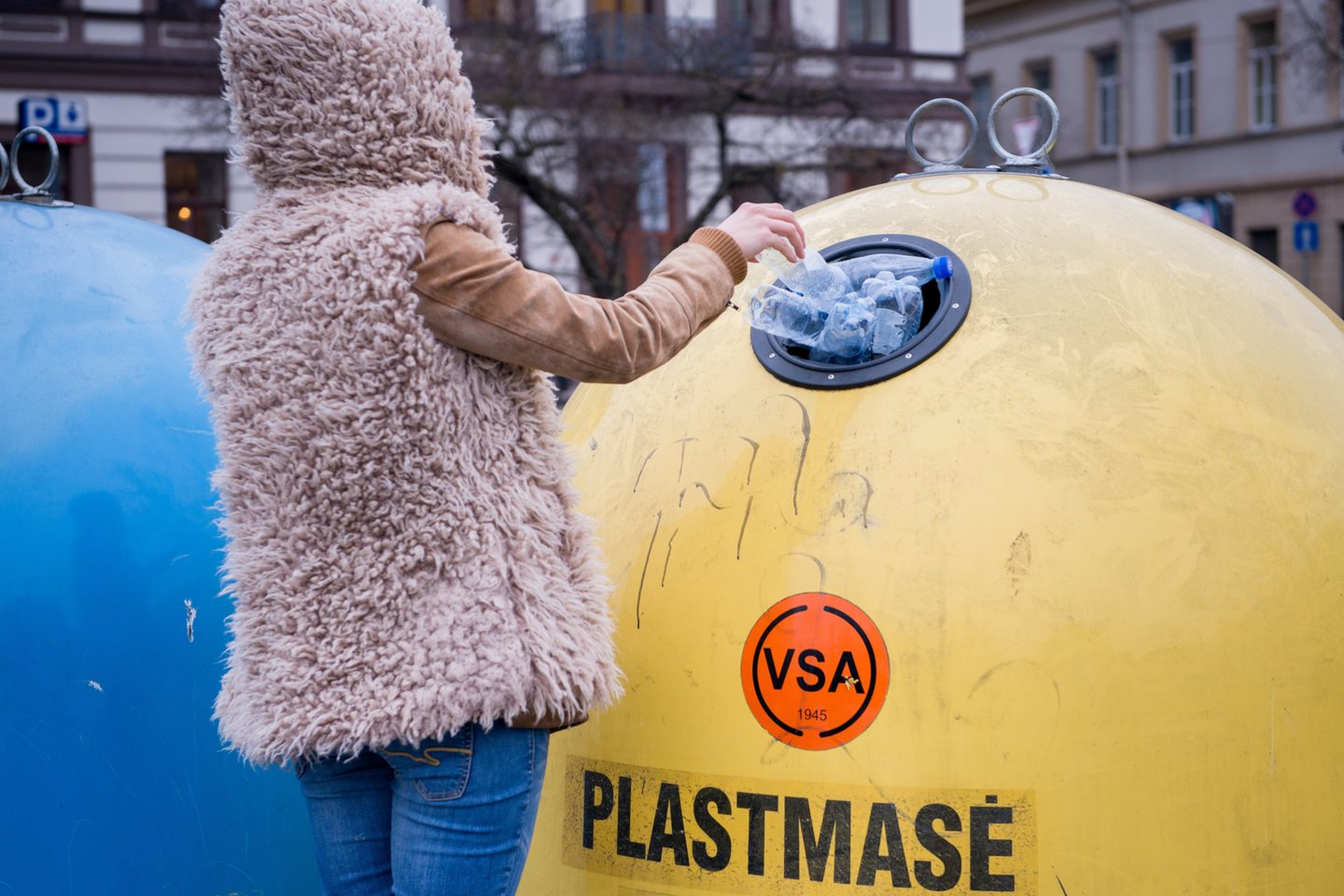
The business sector will definitely be affected by changes in regulation, so plan ahead. At „Žaliasis taškas“ conference „Interesting Ecology“ to mark World Earth Day, representatives from politics and public institutions discussed not only the challenges ahead, but also the homework that will help businesses remain competitive and sustainable.
The planet is still preparing many lessons
In his welcoming remarks to the conference, European Environment Commissioner Virginijus Sinkevičius noted that humanity and our planet are at a critical juncture and that knowledge is the key to understanding this and to understanding what we are risking and what we need to do at the national level.
„We have a duty to protect the environment because climate change can have many consequences. It’s not just the iconic images of ice sheets breaking off from glaciers and falling into the Arctic Ocean due to climate change. Crops destroyed by prolonged droughts become the cause of military conflicts, and irresponsible human treatment of wildlife leads to pandemics,“ Sinkevičius said of the consequences of climate change, noting that the planet is still preparing many lessons.
However, he welcomed the continued growth of a generation that is aware of the importance of nature and the fact that the understanding of the global climate crisis has changed and is being taken seriously and countries are taking real action, such as the Green Deal.
If everyone lived like the average Lithuanian, we would need two planets
Simonas Gentvilas, minister of the environment of the Republic of Lithuania, began his speech by noting that Lithuania is a progressive country and that we live in a rich world. „If everyone in the world lived like the average Lithuanian, then the world would need two planets,“ he said, adding that we need to change the way we live so that we produce, move, and heat our homes in such an environmentally friendly way that we no longer need the earth’s resources.
The minister noted that Lithuania is still lagging far behind EU indicators and called for practical solutions to reduce the gap. „Let’s think practically about how our ecological footprint could be reduced each year and what we should do to make 2022 the peak year for change.“
What should a business interested in sustainability know?
Ieva Budraitė from the Green Policy Institute answered the question of how business should contribute to planetary change at the „Interesting Ecology“ conference. She noted that there is no need to worry, as business initiatives will be encouraged and supported in order to meet the commitments, and that the most important thing now is to review their processes in time.
According to the expert, one of the main changes that awaits business is the implementation of a climate-neutral economy. This means that pollution will be adequately taxed and polluting products will have a high cost. Such taxation, according to Ms Budraitė, threatens to make imported goods cheaper than those produced in Europe, but the tool to curb this is appropriate pollution taxes on importers.
„To avoid losses, businesses should quantify their emissions throughout the supply chain. This will allow an accurate calculation of the carbon footprint and find the most painful points that need to be corrected and identify opportunities for elimination,“ suggests Budraitė, calling for a focus on activities that encourage emissions absorption.
It is equally important to review logistics processes and to take the opportunity to install charging points for electric vehicles, as one of the changes envisaged is the decarbonisation of mobility. The EU’s target is to reduce emissions from all transport by 90%, which means that 75% of current road transport must be transferred to rail or inland waterways.
Increasing demands on product recyclability
In order to achieve a circular economy in Europe, the EU is also gradually increasing the requirements for product recyclability and lifetime. For example, for plastic bottles, the aim is to make the recycling of 25% of the raw material mandatory by 2025, rising to 30% by 2030, and similar requirements will apply to other packaging.
„This will affect the highest waste-generating sectors, such as electronics, packaging, textiles, and construction. The challenge and the solution are to search for and find technological and process innovations to close the resource chain,“ says the expert, noting that Lithuania’s implementation of the circular economy is very poor (4% compared to 11.9% in the EU) and that the EU will therefore encourage initiatives to help achieve the targets.
„In my view, the requirements of the circular economy open up opportunities for businesses to create savings and ensure competitiveness, to be more resilient to changes in raw material prices and to logistics disruptions,“ she says.
Opportunity for construction companies
Another problem is energy-inefficient buildings, estimated to be as high as 75%. The EU’s aim is to trigger a wave of renovation and increase public funding to develop the necessary solutions, replacing conventional cement or steel with organic materials. The cost of heating with polluting fuels will also rise, with a view toward replacing them with more environmentally friendly alternatives.
For businesses, Ms Budraitė suggests preparing for the renovation requirements in advance and estimating the costs, noting that this is an excellent opportunity for construction companies to take a leading position in offering environmentally friendly building alternatives.
Time to take stock of commodity supply
There will also be stricter requirements on the use of chemicals and agricultural inputs such as pesticides, antibiotics, or fertilisers, with the aim of zero pollution.
„Businesses should also prepare for the new stricter labelling requirements and take stock of their raw material supplies – where they come from, whether they are contributing to deforestation, whether they are causing problems as protected areas expand. It is also time to look at the materials used throughout the supply chain and look for alternatives, and to apply safer design principles,“ suggests Budraitė, adding that retailers will also have to rethink the way they store, transport and package food.
The price of survival may have to be paid
The Green Policy Institute pointed out that there are often cases where businesses try to be „greener“ in order to get the benefits of sustainable business at the lowest possible cost.
To stop this fraud, the EU has introduced a classification system for sustainable economic activities – the Taxonomy – which will not only provide clear requirements for businesses but will also allow you to carry out an environmental impact assessment to check whether your activities are compatible with the six environmental objectives and whether they are not harmful to any of them.
„In the long term, sustainability will no longer be just a matter of fashion, a matter of reputation. It will also be a question of accessing better funding opportunities. If you are not sustainable, insurance companies, banks, and credit companies will not want to work with you, because it will also undermine their sustainability performance,“ said Ms Budraitė, who encouraged people not to wait for the possible consequences, „The current period is a crucial period of adjustment. If you don’t take advantage of the opportunities that are opening, you will be forced to do so by your partners and clients, and if you don’t listen to their expectations, you risk becoming irrelevant in the future and paying a high price for survival.“