
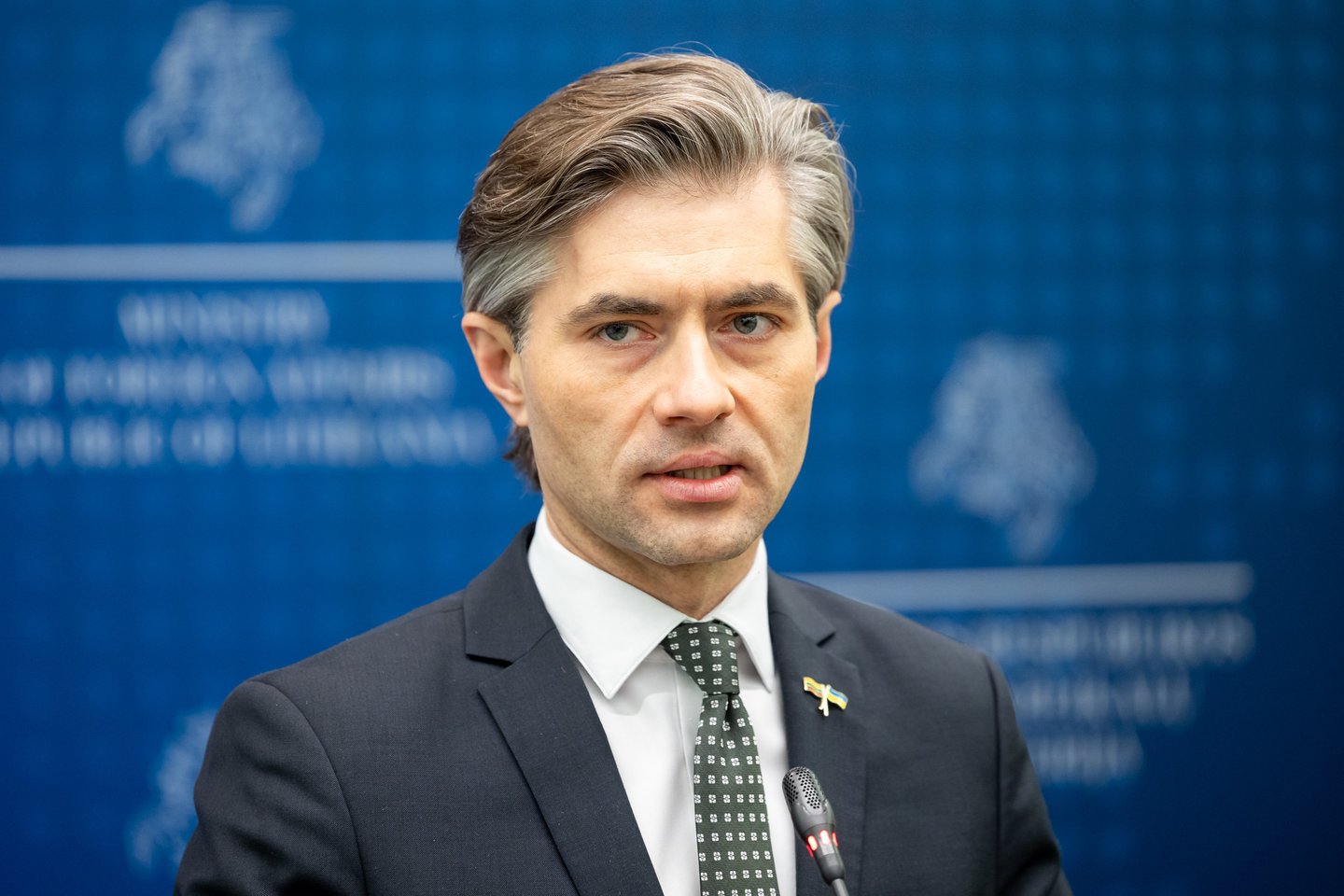
„We are consulting with the countries in the region, looking at what decisions they have taken and what we can take. We are also talking to the European Commission (EC) about what we intend to do. We desire to have tools at our disposal if the EU begins to falter, if we see that it is ineffective, and if the countries in the region need to introduce their sanctions. This can be done in various ways, one of which is the national sanctions we are proposing,“ Budrys told reporters in Turkey on Thursday.
„I believe we will succeed in having this effective tool in the region or extending EU sanctions. We desire that Russia's military machine should not be fuelled, that Russia should lack all dual-use goods that it uses to manufacture military equipment and weapons. We must make every effort and not allow even the slightest risk that the entire system we have built over the past three years will collapse,“ he stressed.
On Thursday, Prime Minister Gintautas Paluckas and Seimas Speaker Saulius Skvernelis spoke about the need for regional, non-unilateral decisions.
Susiję straipsniai

Amid growing doubts as to whether the European Union (EU) will extend sanctions against Russia until July, the Ministry of Foreign Affairs supplemented the draft restrictive measures against Russian and Belarusian citizens on Wednesday, which had been extended in April. The amendments allow national restrictions on Russia and Belarus if European sanctions are not applied.
The amendments proposed by the Ministry of Foreign Affairs allow the government to draw up lists of sanctioned individuals and companies, freeze their assets, or impose sectoral restrictions.
The assets of Russian and Belarusian citizens or companies would be frozen if they harm the territorial integrity of Ukraine, support the war and repression against the Russian opposition and civil society.
However, exceptions to these restrictions would apply in cases where funds are needed to pay for food, utilities, rent, medicines, medical treatment, taxes, or insurance, and the same would apply to health problems.
Sectoral sanctions, meanwhile, aim to prohibit the import of technology, services, and software from Russia and Belarus and the provision of services related to the supply or manufacture of these goods. Importing goods from the countries above would not be possible.
Exporting services, technology, and software that could improve the Russian or Belarusian military or technology or increase industrial capacity would also be prohibited.
However, the sanctions would not apply in cases where the services are necessary for pharmaceutical, medical, or humanitarian purposes.
The Ministry of Foreign Affairs proposes to provide for additional sectoral and restrictive measures if it is established that the relevant sectors of the Russian and Belarusian economies could be used to support military aggression against Ukraine, improve the military and technology, increase industrial capacity, or harm Lithuania's security and independence, including through information manipulation.
The amendments are expected to enter into force on August 1.