
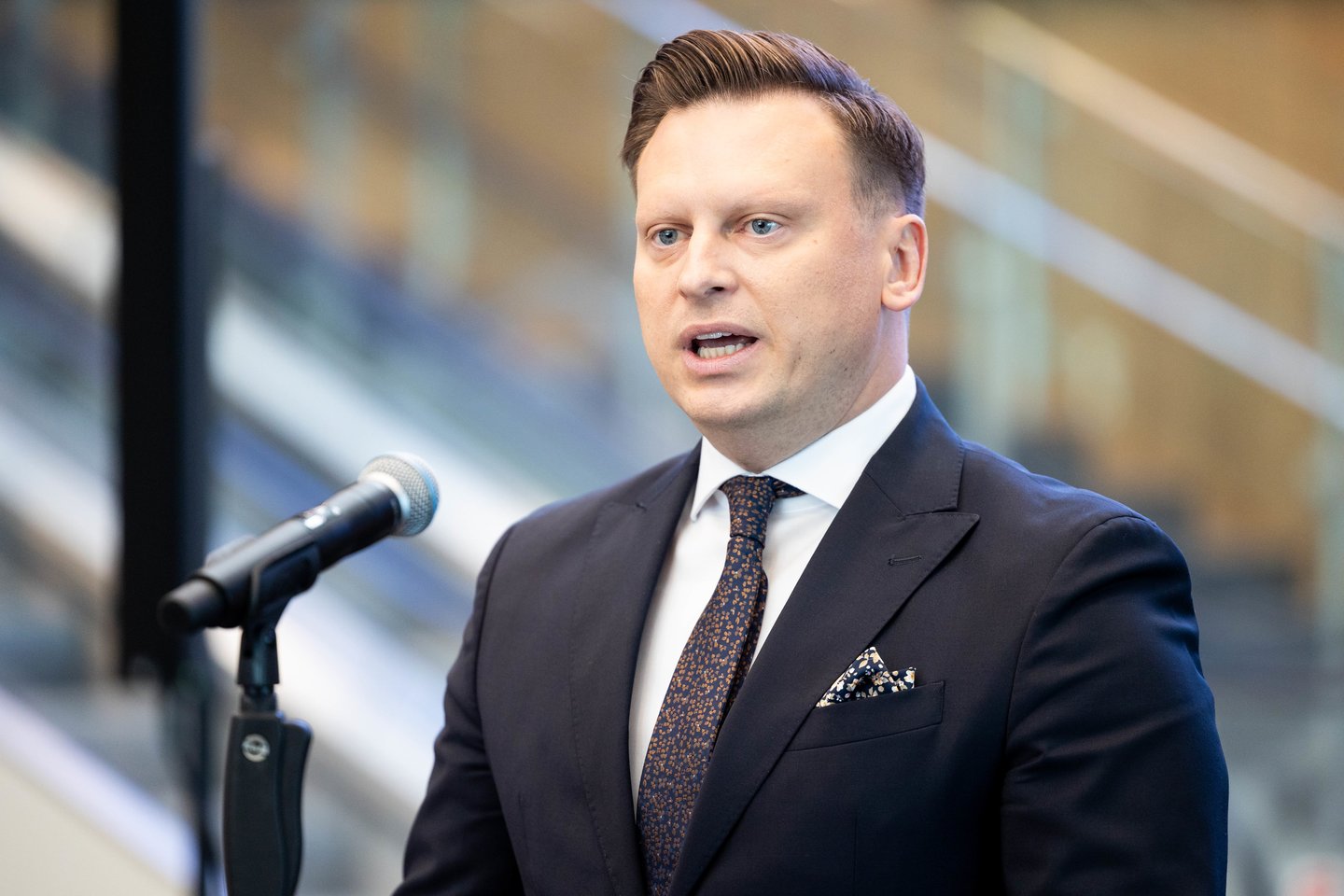
„Seeing that migration numbers are growing in Lithuania and that more and more migrants are settling in Lithuania, especially in Vilnius, it is essential to control these processes and to have all the experience that Western countries and cities have already gained over the past few decades, and not to repeat the mistakes that could essentially determine the things that we are now facing in Vilnius. Countries and cities have already gone through several decades, and we should not repeat the mistakes that could essentially lead to the loss of the things that other cities now envy us for in Vilnius. I am referring to both safety and the entire aesthetic aspect of how comfortable the city is to live in,“ the mayor of the capital told LRT radio on Thursday, November 13.
„Those lessons are well known. At that initial stage, it is essential to manage the processes, not let them go, and control them so we do not repeat those mistakes. I would say the processes have not progressed to the point that they are uncontrollable. This is only the beginning, but it is essential to have the right laws in place at the outset so that they properly regulate and control migration and that the state makes decisions in such a way that there is no need to regret them later and have processes that may be irreversibly flawed,“ emphasised Benkunskas.
Submitted proposals for the regulation of the legal framework
Although, according to the mayor, the situation in Vilnius is currently under control; to prevent potential threats, the central government must take measures to regulate not only the procedure for granting residence permits but also the admission of the families of arriving people.
„There are no separate districts, nor are the migration figures such that we should now be talking about any danger signals, but we are seeing a general trend that is beginning to develop. Given our legal framework, where migration is essentially left to its own devices and not regulated in any way, including for temporary and permanent residence permits, the requirement to learn the language is practically unenforced. We have repeatedly expressed our proposals to the central government regarding what should be changed in the legal framework first,“ said Benkunskas.
„Changes to the legal framework are needed so that we can regulate and control migration flows – how many workers we admit, who these people are, how their families will be admitted later, and so on. These processes begin with legal regulation,“ he emphasised.
He stresses the need for foreigners to learn the Lithuanian language
According to Benkunskas, one of the main factors contributing to the exclusion of foreigners and challenges to their integration is their lack of knowledge of the official language, so, according to the mayor, greater attention should also be paid to this.
„When we launched obvious programs that are primarily aimed at the city of Vilnius, we said that if people who come to Vilnius want to work for the city of Vilnius, they must start learning the Lithuanian language, because language is the primary source of integration. Language is a barrier that limits and encourages the creation of ghettos and stigmatises the whole society,“ said Benkunskas.
„We sent a clear message that people who want to work in the public sector will have to learn our language,“ emphasised the head of the municipality.
As reported, with the influx of migrants into Europe, some of the countries that have taken them in have seen the emergence of concentrated foreign neighbourhoods, known as ghettos. Due to the formation of such districts and the high concentration of foreigners, cities are facing challenges in ensuring the safety of residents, fostering social integration, and ensuring the effective functioning of urban infrastructure.
The ELTA news agency reports that Rimantas Sinkevičius, Chairman of the Seimas Committee on National Security and Defence, said in the middle of the week that the threat posed by migration from Central Asian countries is growing in Lithuania. According to the politician, to prevent future problems, existing laws need to be amended.
According to data from the Migration Department, as of November this year, 78,700 Ukrainian citizens, 50,800 Belarusians, 13,800 Russians, and 10,200 Uzbeks have temporary residence permits in Lithuania. Such licenses were also held by 7,700 Indian citizens, 6,500 Tajiks, and 4,500 Kyrgyz.