
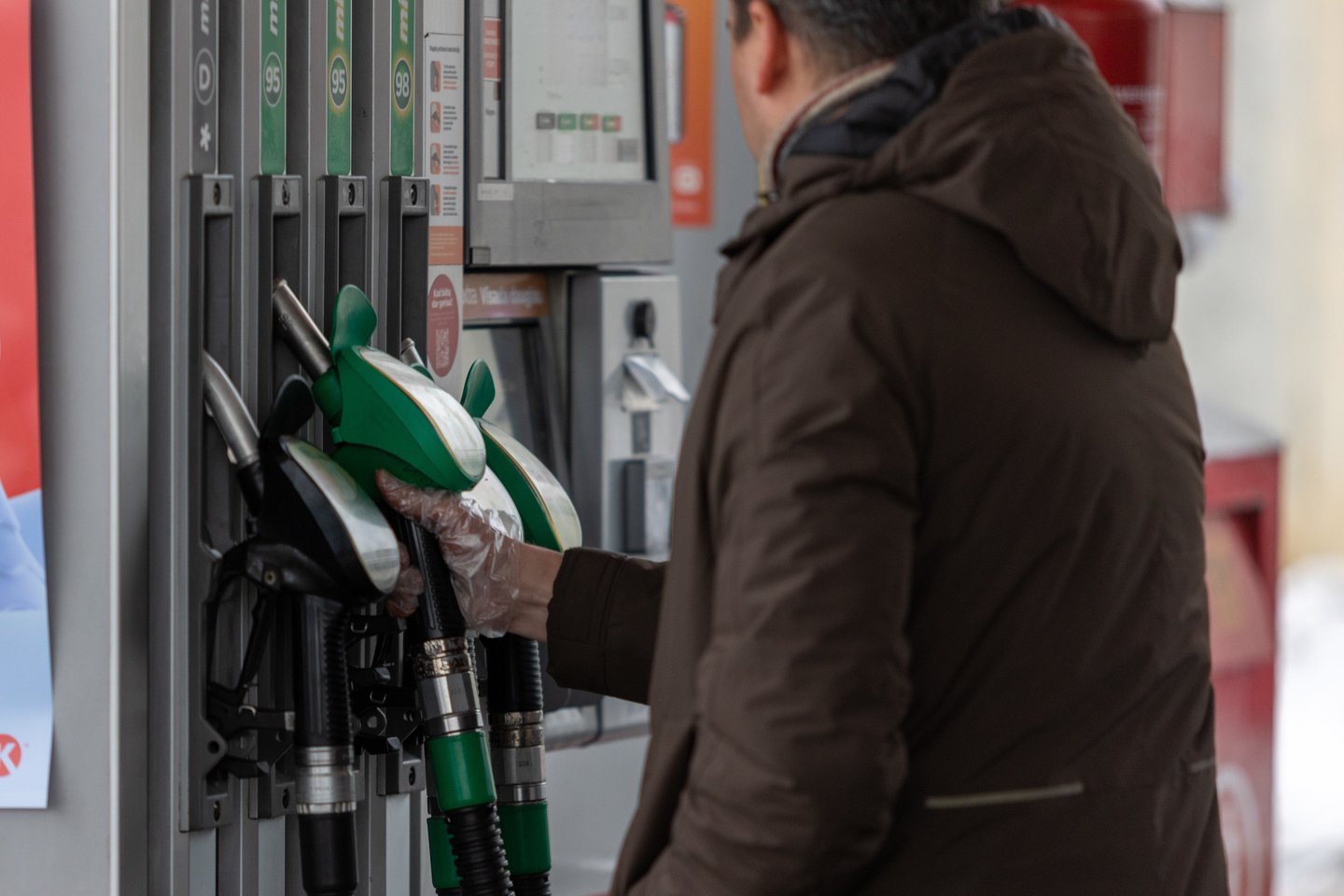
„We reached an agreement with the European Commission, which also took some time and was a rather complicated process, as we have commitments regarding the RRF plan, but the European Commission has given permission to reduce the excise tax on diesel,“ Ruginienė said in an interview with TV3 Žinios on Tuesday.
Finance Minister Kristupas Vaitiekūnas had previously announced the EC’s unofficial approval of Lithuania’s plans to reduce fuel excise taxes under the new VAT mechanism; the government is expected to adopt the decision on Thursday.
„We have to make a decision in the government this week; this will be one of the measures (to reduce fuel prices – ELTA),“ said Ruginienė.
According to the Ministry of Finance’s proposal, there are plans to temporarily—until mid-June—reduce the fixed portion of the excise tax rate on regular diesel fuel and marked diesel fuel used in agriculture.
This could reduce the final fuel price for consumers by approximately 0.06 euros per litre (including VAT).
It is anticipated that excise tax rates on diesel will be reduced by an amount that offsets the state budget’s losses from decreased excise tax revenue, with increased VAT revenue from higher diesel prices offsetting those losses; therefore, these changes should not impact the state budget.
According to the prime minister, when reducing fuel prices, the government makes decisions that have a real, albeit small, impact on fuel prices.
„It is not our government’s goal to simply make populist promises about certain things that will have no real effect—we are focused on tangible actions,“ stated Ruginienė.
„The most important goal is to react swiftly and flexibly, to adapt to the changing situation, (…) geopolitics is dynamic, and the situation changes every day,“ she added.
Following the outbreak of military hostilities in the Middle East, the International Energy Agency (IEA) has allowed member countries to release 400 million barrels of oil and petroleum product reserves into the market.
Lithuania has already released 80,000 tons of its national fuel reserves into the market to influence fuel prices.
Among other measures planned by the government to address the fuel crisis are the development of a fuel price monitoring tool and amendments to the law governing the procurement of biofuel blended into fuels.
It was also decided that train tickets will be discounted by 50% from April through the end of May.