
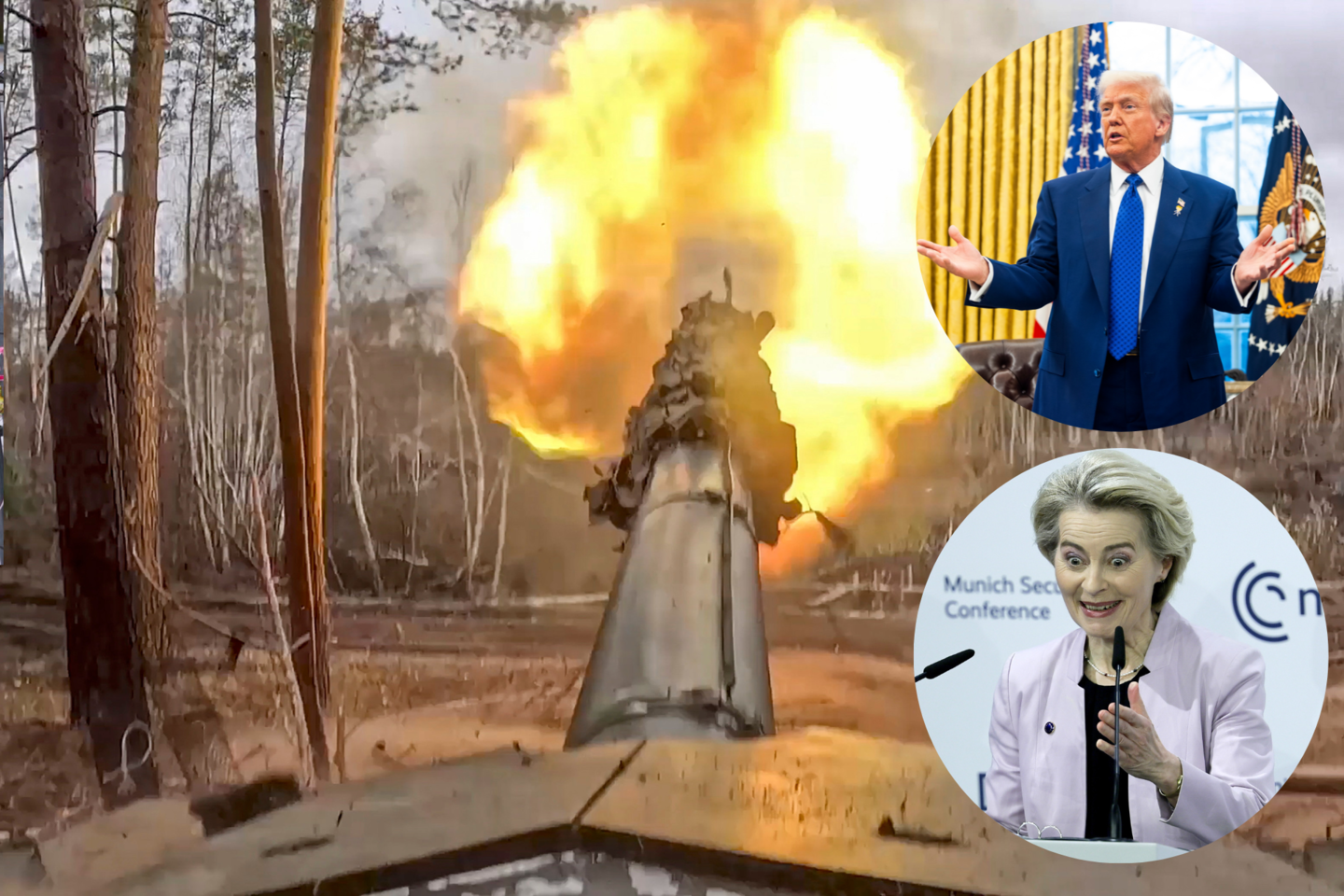
„Isolation will never help Europe because the EU is at a crossroads between Africa, the Asian continents and non-EU countries. So going down a third path (ELTA – disassociation from NATO) will not do us any good, especially since we will not meet all the needs we need to“, says MEP Petras Auštrevičius.
Reinhard Wesser, a columnist for one of Germany's largest publications, the Frankfurter Allgemeine Zeitung, echoes this view. Referring to the mood in Germany on this issue, he argues that there is no reason to talk about Europe's geopolitical autonomy simply because of the US's importance in securing the nuclear umbrella.
„Germany's position has always been to emphasise the transatlantic alliance, while individual defence structures within the EU have always been sceptical. The consensus among the major parties is that it is perfect that we have the US nuclear weapons protection, so we cannot weaken our ties with the US,“ the commentator told Elta.
The situation in Lithuania is similar. For example, President Gitanas Nausėda made it very clear last week that any attempts to duplicate NATO are not in Lithuania's national interest and are dangerous.
Linas Kojala, Director of the Geopolitics and Security Studies Centre (GSSC), agrees with the President. Despite the tensions between the Euro-Atlantic partners in recent weeks, he believes that there is no need to rush to talk about the end of NATO's potential.
„We should not be too quick to think that NATO is doomed and that NATO is no more just because we are not happy with comments from US politicians, while at the same time, they are repeating that they have no intention of destroying NATO,“ the GSSC Director told Elta.
On the other hand, the expert admits that Europe is currently unable to sit comfortably at the same table with the Americans to solve geopolitical problems because of its hesitancy in the field of defence. This is well illustrated by the US-Russia meeting in Saudi Arabia to discuss the situation of the war in Ukraine, where neither the EU nor Ukraine was invited.
„It is now clear that the European powers have weakened their leverage considerably over the last few decades. Particularly in the defence area because the military element of defence was considered irrelevant. Now it is back to the idea that it is impossible to function without military muscle“, he stressed.
Kojala pointed out that the EU is currently at an impasse. Mr Trump is pressuring it to meet NATO defence requirements that the vast majority of countries are unwilling or unable to meet.
„We need a Europe that does not theoretically think about autonomy or regionalisation but invests in achieving greater security. In this case, it is a question of political will and determination, which is still lacking“, says the GSSC Director.
It is disappointing that even now, in the context of a major war in Ukraine, almost a third of EU countries do not spend even 2% of their GDP on defence.
„If we continue at this pace, the time it will take to achieve the optimal result will be a decade or more. But with enough will, it can be shortened to a few years,“ says Kojala.
US President Trump issued statements on Tuesday and Wednesday on the need for elections in Ukraine. He also said President Volodymyr Zelensky's approval rating in the country had fallen to 4%. According to the White House host, most Ukrainian cities, except Kyiv, have been destroyed.
For his part, Mr Zelensky said that the rating figures Mr Trump announced were disinformation from Russia.
In a harsh message published on Wednesday, Mr Trump, in response to the Ukrainian President's comment, called Mr Zelensky a 'dictator' and echoed the Kremlin's position on some issues related to the war, thus exacerbating the disagreements that have caused concern in Europe.