
„Relations with China can be restored to a certain extent. Let's keep in mind that China is the second largest player in the world, a global player. Certain relations should be economic, while political ties may be more complicated. We should continue to move forward,“ Matulionis told Žinių Radijas on Tuesday.
„Russia and China are viewed somewhat differently, at least in NATO doctrine. Russia is treated as a direct long-term threat to the Alliance and Alliance countries, while China is treated as a challenge in all areas that must be addressed. However, China is not yet treated as a military threat to the Alliance,“ he emphasised.
At the same time, the adviser sees the strengthening of ties between Beijing and Moscow as an attempt to counterbalance the United States' (US) influence on the world.
„We should understand that this is not a marriage of love between Russia and China; it is a marriage of convenience. It is a union aimed at counterbalancing American influence in the world. Various nuances between these countries show that they do not always agree,“ explained Matulionis.
Chinese President Xi Jinping was among more than 20 foreign leaders who arrived in Russia on Friday to attend a massive military parade marking the 80th anniversary of Nazi Germany's defeat in World War II.
After a more than three-hour meeting with Xi, Russian President Vladimir Putin told reporters they had a „traditionally warm and friendly“ conversation and referred to the Chinese leader as a „dear friend.“ The Kremlin later released a joint statement describing US President Donald Trump's plan for a space-based missile defence system, known as the „Iron Dome for America,“ as „highly destabilising.“
For her part, Dalia Grybauskaitė, who served two terms as president of Lithuania, does not believe that former relations with China should be restored. According to her, Beijing's participation in Victory Day celebrations in Moscow indicates who is a friend and who is an enemy.
However, the Presidency has previously endorsed resuming diplomatic relations with China. In April, Marius Česnulevičius, an Advisor to President Gitanas Nausėda, said that discussions on the possible normalisation of relations were underway.
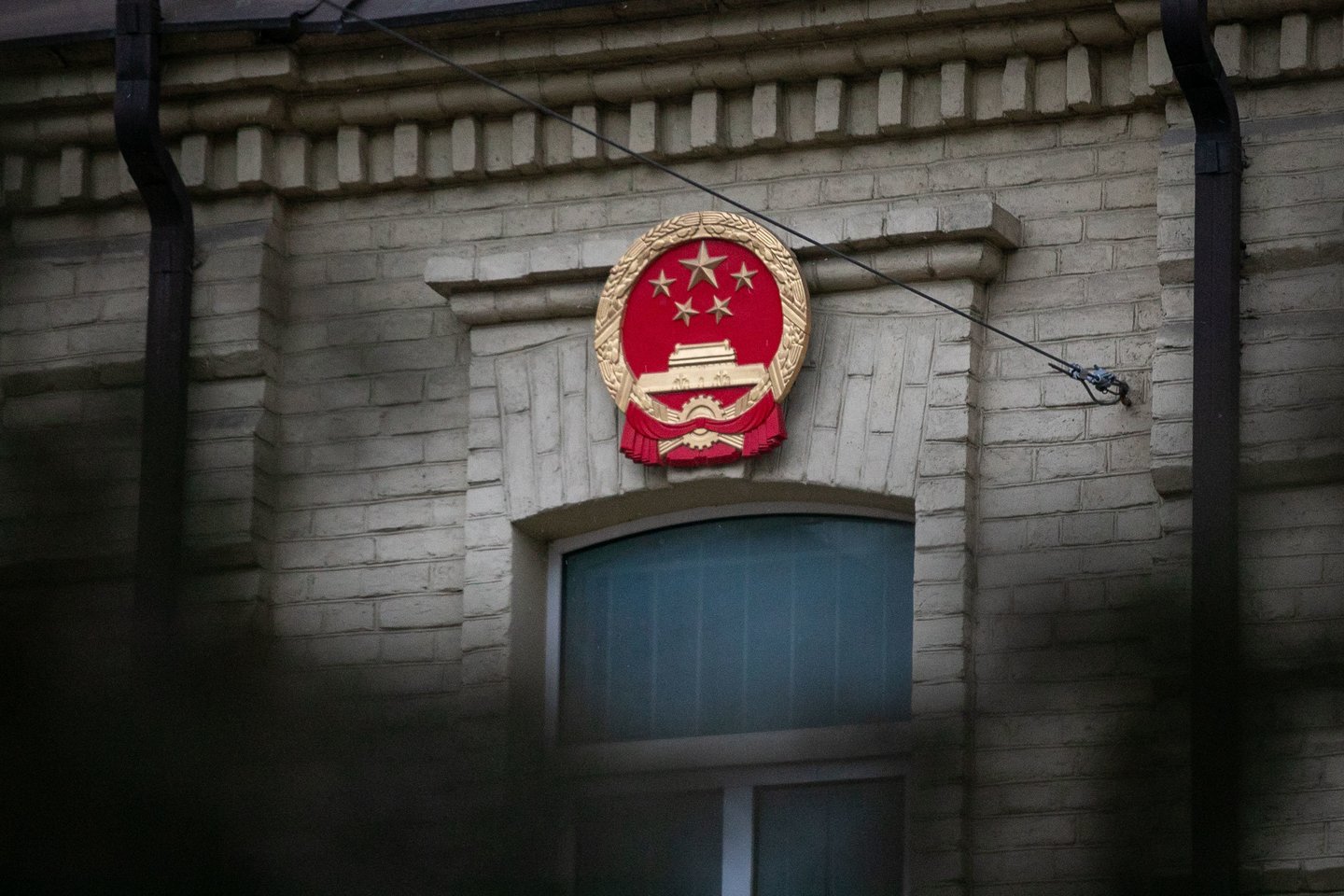
ELTA recalls that relations between Vilnius and Beijing became significantly strained at the end of 2021 when a Taiwanese representative office was opened in Lithuania. China imposed strict diplomatic and economic sanctions. In addition, the Chinese Ministry of Foreign Affairs officially changed the level of diplomatic relations with Lithuania from ambassador to chargé d'affaires.
Tensions in bilateral relations had been simmering for some time, following Lithuania's withdrawal from the „17+1“ cooperation format with China. The then Head of the country's diplomacy, Gabrielius Landsbergis, called other EU countries to follow Lithuania's example. However, only neighbouring Estonia and Latvia followed Vilnius' example.
As announced, after the Social Democrats' successful parliamentary elections, Prime Minister Paluckas hinted at the possibility of improving bilateral contacts with Beijing and returning the Lithuanian ambassador to China.
However, the Prime Minister's position soon softened. The Government's Program does not mention improving relations. On the contrary, the document identifies China as a significant challenge for Lithuania's foreign and security policy. The Prime Minister has also stated that the name of the Taiwanese representative office would not be changed if diplomatic relations with Beijing were restored.
For his part, Foreign Minister Kęstutis Budrys has said that Vilnius wants to normalise relations with Beijing. According to the politician, Lithuania wants China to return diplomatic representation to a higher level and have its ambassador in Vilnius.
Beijing has responded to these statements. As stated by Fang Mei, advisor to the Chinese mission to the European Union (EU), Beijing hopes that bilateral relations will „return to normal.“ However, it is noted that communication and exchanges can only be strengthened by respecting the „one China“ policy.