
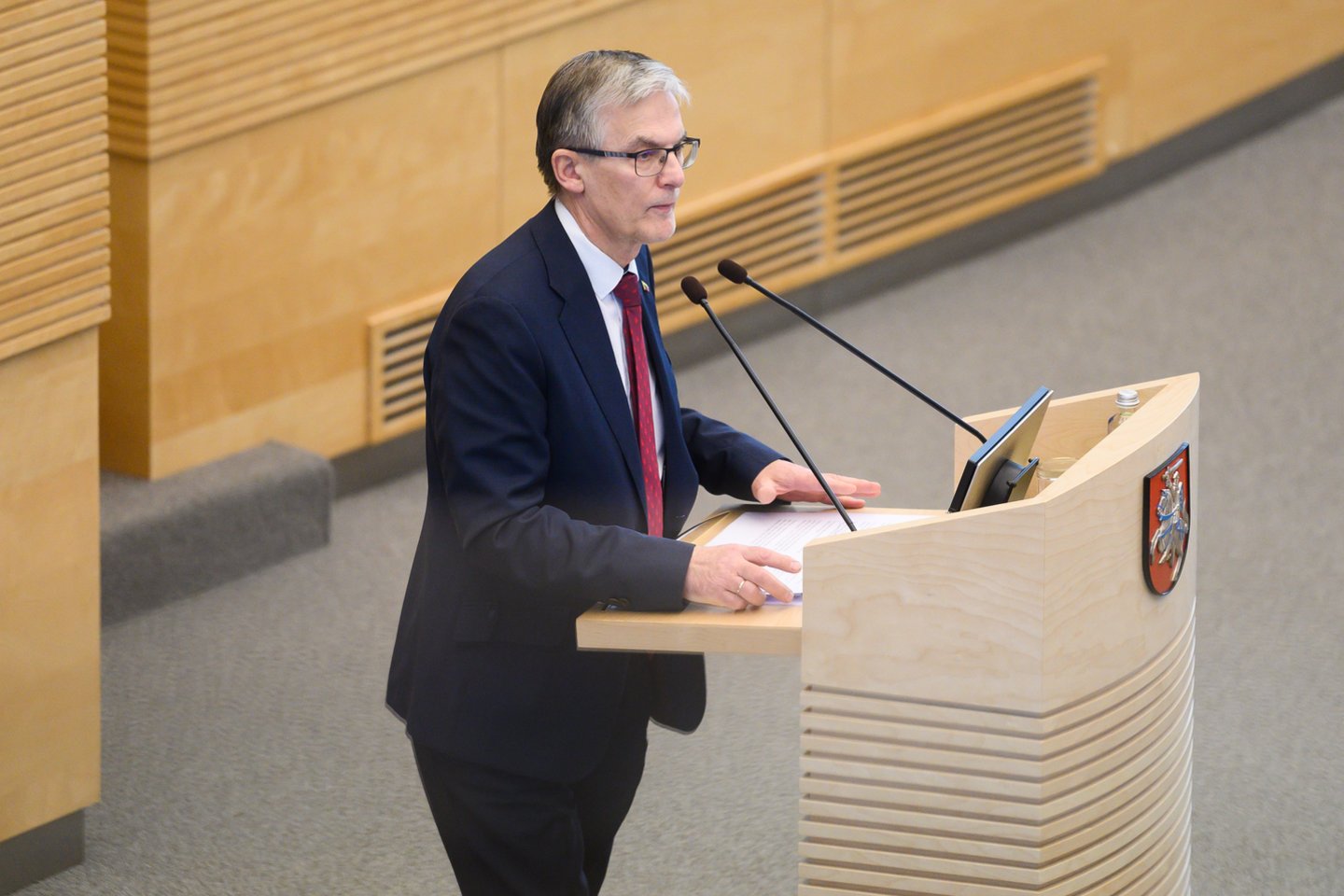
The draft amendments to the Criminal Code, discussed in committee hearings last week, propose that property damage is considered serious when it exceeds 400 MGL (currently 28,000 euros) but does not exceed 900 MGL (63,000 euros).
If the Seimas approves the amended draft, a fine, restriction of liberty, arrest or imprisonment for up to 5 years would be imposed if a public servant, by abusing their official position or exceeding their powers, caused significant material damage to the State, the European Union (EU), an international public organisation, a legal entity or a natural person.
Anyone who has caused severe damage to property by such acts would be liable to a fine or imprisonment for up to 7 years.
Susiję straipsniai

Širinskienė: The draft decriminalises part of abusive acts
Agnė Širinskienė, a member of the Seimas TTK, believes that the improved draft amendments to the Criminal Code decriminalise part of the abusive acts.
„Those acts of abuse up to EUR 28,000 would be excluded from the scope of the BK. This means that all the „cheque cashers“ would be exempt from criminal liability, and presumably, they would still take some of the people convicted of corruption offences with them. As you know, the BK is retroactive. Therefore, those who have been convicted of, say, abusive acts causing damage of less than EUR 28,000 could now expect some kind of state pardons,“ commented on the amended draft that reached the Committee.

According to her, under the current draft law, liability for abuse would only arise when the damage exceeds EUR 28,000.
„There are certainly no such „cheque writers“ because they simply did not receive payments of this size,“ Širinskienė stressed.
She did not speculate on the number of prisoners who would be affected by the new proposed regulation.
„I do not doubt that we have prisoners whose damages are less than EUR 28 000. During the Committee hearings, we will likely learn how many prisoners would be affected and to what extent we will have an amnesty. Criminal laws, when they mitigate circumstances, are retroactive. Therefore, I will say that Arūnas Dudėnas will take a bunch of friends with him,“ the politician remarked, referring to a member of the Social Democrats' faction who was involved in the „cheques“ story.
According to Širinskienė, until now, abuse could occur when both material and non-material damage was caused, but the new amendments propose to abolish the non-material element of abuse.
„When politicians and civil servants have been abused, the Supreme Court (AT) has recognised that their actions have brought discredit to the name of the official, the politician, and have caused serious non-pecuniary damage to the state. In this case, this Supreme Court practice would be circumvented, as the amendments to the Criminal Code propose to abolish the non-pecuniary element of abuse,“ said Širinskienė.
The Seimas TTK held hearings on the improved amendments to the BK last week. However, at Širinskienė request, a break was taken. She proposed that the Supreme Court, the National Judicial Administration and the Public Prosecutor's Office be asked to evaluate the amendments to the BK.
„Normally, when the BK is amended, these institutions are contacted, as the BK norms guide them. In this case, no appeal was made. This raises many questions as to why this has not been done. Perhaps they do not want to receive a negative answer?“ Širinskienė wondered.
Sabatauskas: myths are being spread
At the same time, Sabatauskas, Chairman of the TTK, insists that there is no improved draft of the amendments to the BK.
„It is a working draft prepared by the committee's advisers based on the conclusions received from the Ministries of Justice, Interior and Mykolas Romeris University“, he told Elta.
He also said that a study commissioned by the Committee on the experience of EU countries had been received.
„In the European context, Lithuania seems to have very high penalties. In European countries, if the punishments are similar or higher, they involve either death or the use of violence. For example, Estonia, Italy, and Germany have no similar abusive activities in the Criminal Code at all,“ said Mr Sabatauskas.
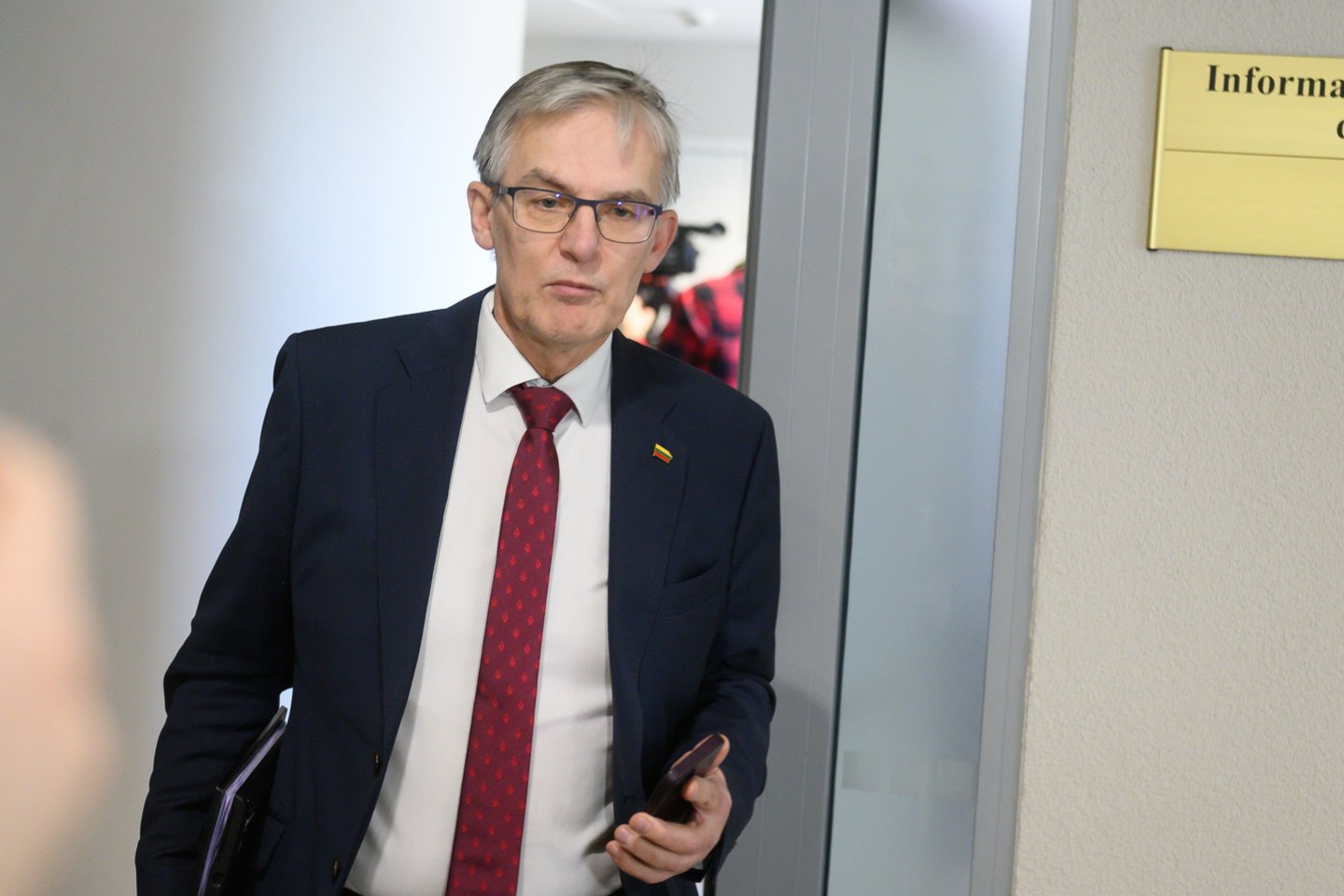
He assured that nobody is proposing decriminalisation but that they want clarity.
„Nobody is proposing decriminalisation. At the moment, the abuse clause is „naked“ because there is no clarification of what constitutes serious harm, what kind of harm it is. I would see this as a loophole“, says Mr Sabatauskas.
He insists that there will be no „amnesty“ for „cheque writers“ and other convicts.
„Myths are being spread here to reinforce their opinion to people who do not know and do not understand such things. There will be no 'amnesty' because if such a person is not convicted of abuse, he will be convicted, for example, of embezzlement, forgery of a document,“ said Sabatauskas.
The Head of the Committee did not yet predict what the final draft of the amendments to the Criminal Code would look like when it reached the Seimas.
„No decision has been taken in the Committee yet. Currently, the draft is in the hearing stage. It is not clear what the final version will be“, the politician said.
The Seimas TTK has requested that the Supreme Court, the National Judicial Administration, and the Prosecutor's Office evaluate the amendments to the BK.
As ELTA has already reported, in March of this year, the Seimas approved, after tabling, amendments to the Criminal Code that propose mitigating the liability of politicians caught up in the „cheques“ scandal.
This initiative, submitted by Social Democrat Jūratė Zailskienė, was supported by 60 members of the Seimas, with 10 against and 17 abstentions. The draft will be discussed by the Seimas Committee on Law and Order and is expected to reappear on the plenary agenda on 12 June.
According to Ms Zailskienė, the draft amendments to the Code propose differentiating cases of abuse based on the amount of damage caused. In her view, the current provisions of the BK do not sufficiently differentiate instances of abuse of office.
The amendments to the Penal Code propose that if the damage is less than 25 MGL (currently EUR 1,750), the abuse would be punishable by public works, a fine, restriction of liberty, arrest, or imprisonment of up to 3 years.
If the damage is greater but does not exceed 250 MGL (currently EUR 17,500), it is proposed that the penalty should be a fine, restriction of liberty, arrest or imprisonment for up to 6 years.
The maximum penalty – a fine or imprisonment for up to 7 years – is proposed only in cases where the abuse of office has caused severe damage exceeding 250 MGL (EUR 17.5 thousand). These sanctions are proposed for persons who have caused damage for pecuniary or other personal gain, provided that there are no signs of bribery.