
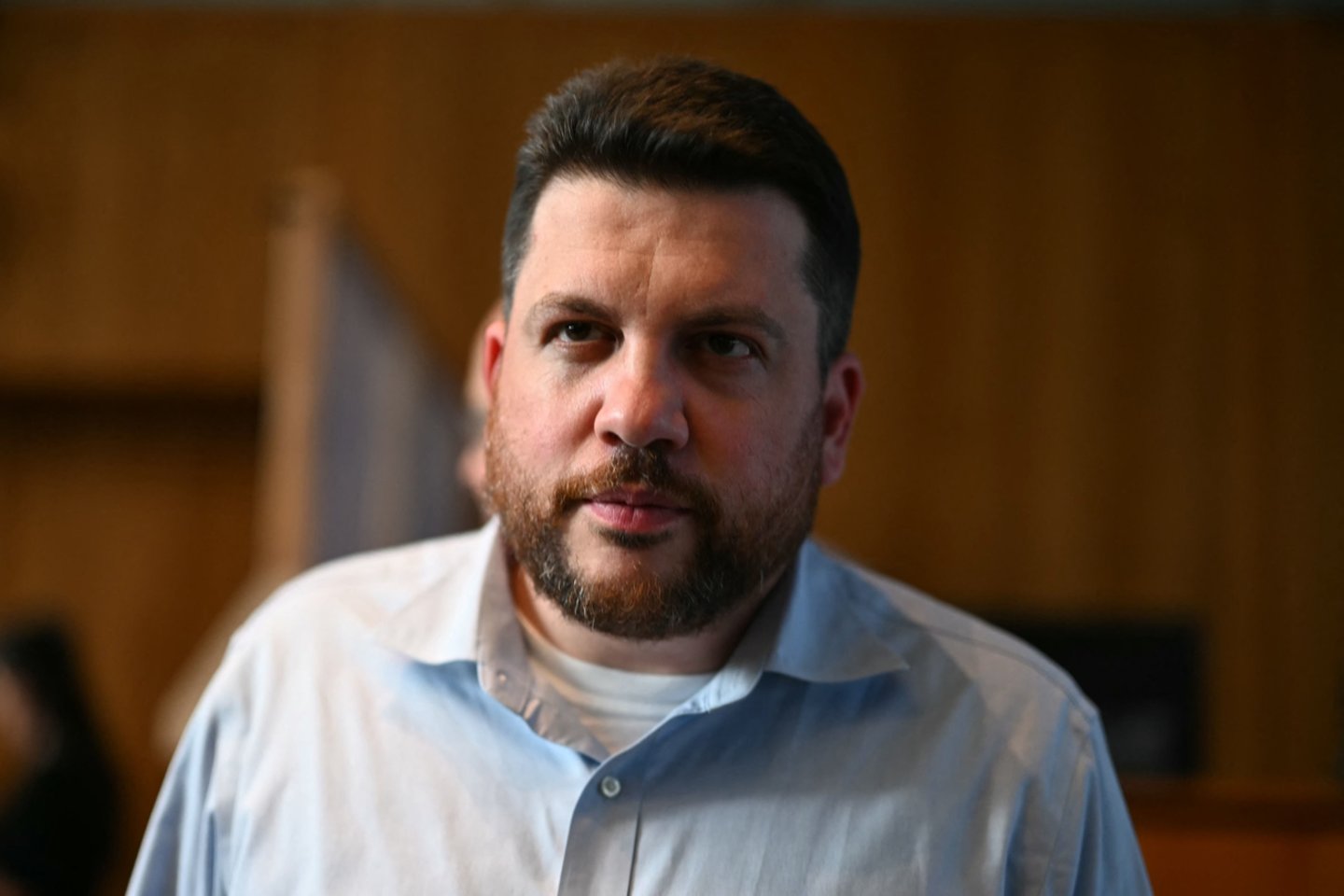
„On Tuesday, the Migration Department contacted the State Security Department for additional consultation regarding a possible threat to state security and requested an assessment of the foreigner's statements that appeared in the public sphere. Further action will depend on the information provided by the VSD,“ according to the Migration Department's response to ELTA.
At the end of December, following the news that Denis Kapustin, who allegedly led a Russian volunteer corps conducting raids in Russia, had been killed, Volkov called him a Nazi in a letter and rejoiced at the „denazification“ that had taken place. On Monday evening, Volkov confirmed his words, but explained that the letter was private and therefore full of emotion.
„A Nazi who, by his very existence, was a gift to Kremlin propaganda has been eliminated. He and his clownish 'corps' carried out the obscure tasks of the despicable village political technologist Budanov (...). I hope that Kapustin's henchmen will follow him. Yermak will be imprisoned, Podoliak will be imprisoned, Budanov will be imprisoned, and all the other propagandists, hypocrites, and thieves. And then Ukraine will have a chance to win. But as long as it relies on people like Kapustin, it has no future,“ said Volkov.
After Volkov's letter came to light, the Migration Department intends to decide whether Volkov will be allowed to continue living in Lithuania.
VSD: Regimes hostile to Lithuania and Ukraine may use similar rhetoric for their own purposes
For its part, the VSD points out that regimes hostile to Lithuania and Ukraine may use such rhetoric for propaganda purposes.
„The VSD monitors and assesses all risk factors and threats to national security within its competence. The information and assessments collected are forwarded to decision-makers and competent authorities. If necessary, the assessments are updated,“ reads the department's response to ELTA.
„More generally, regimes hostile to Lithuania and Ukraine may use similar rhetoric for their own propaganda purposes,“ emphasises the VSD.
The Law on the Legal Status of Aliens stipulates that a person's temporary residence permit in Lithuania shall be revoked if their presence in Lithuania poses a threat to national security, public order, or public health.
ELTA recalls that Volkov left Russia after being threatened with arrest. Volkov currently lives in Lithuania.
Budrys: The VSD will comprehensively assess Volkov's statements
Following the publication of controversial statements by Russian opposition figure Leonid Volkov, who lives in Lithuania, about Ukrainian officials, Foreign Minister Kęstutis Budrys says that opposition to the country's national interests is grounds for losing the right to live here. He also emphasised that the State Security Department (VSD) will evaluate Volkov's statements not as separate messages, but as a whole.
„When it comes to Ukraine's sovereignty, territorial integrity, and Ukraine's defensive and vital needs, there should be no doubt that we expect these positions to be supported. Disagreement with these positions has direct consequences for Lithuania's national security. Therefore, appropriate decisions must be taken about such persons, for example, not to allow them to enter Lithuania or to tell them that they no longer have a place in Lithuania,“ Budrys told reporters on Tuesday.
„Disapproval of the national security interests of the Republic of Lithuania is grounds for not being in Lithuania,“ he emphasised.
To assess Volkov's statements, the Migration Department contacted the State Security Department on Tuesday.
For his part, the minister of foreign affairs, based on his previous work experience in the department, indicated that the information should be assessed comprehensively.
„What I can say from experience is that each comment, case, especially those expressed in correspondence (...), cannot be assessed individually, in isolation; no one ever does that. It must be assessed comprehensively. This is the job of the services, which have a broader view,“ he said.
„No one will ever draw big conclusions based on a single piece of information. This is a matter for the Lithuanian state to decide whether a particular person is acceptable or unacceptable in Lithuania. Ultimately, this is also a matter of legal assessment, and we need to justify to everyone (...) what criteria we apply, how they were met or not met, and if not met, what data we rely on,“ Budrys asserted.