
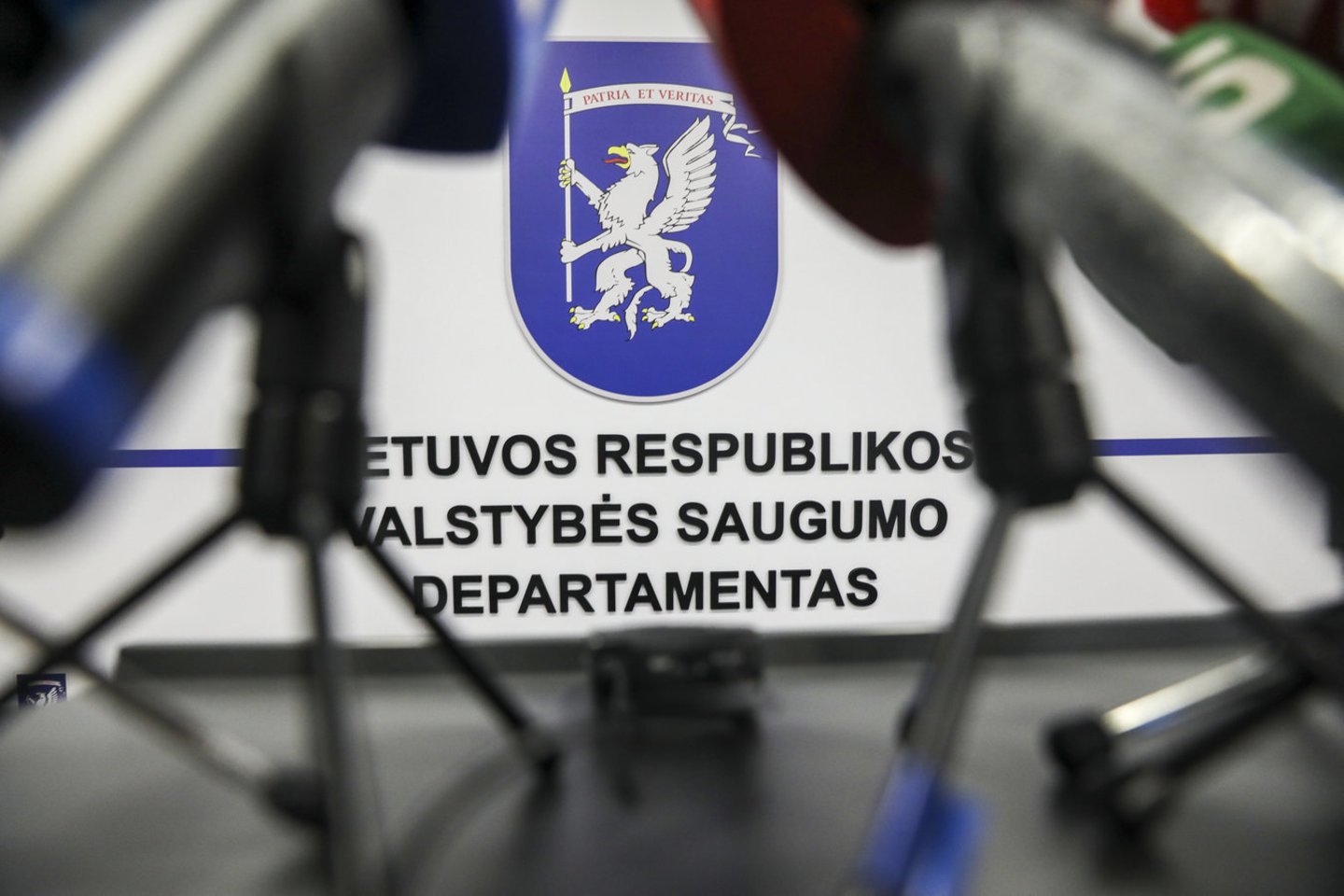
„YouTube video distributed on social networks, whose author identifies himself as a Belarusian KGB officer. The recording, in Lithuanian, discusses, among other things, the problems „caused by the government's injustice.“ Those who wish to discuss this are encouraged to contact the Belarusian KGB via a „secure channel,“ the VSD announced on Facebook on Wednesday.
„The VSD warns against succumbing to this provocation and getting involved in the malicious activities of a foreign state, which is punishable by severe criminal liability,“ the intelligence agency emphasises.
The department notes that Russian and Belarusian intelligence services actively use social networks to search for potential agents, recruit them, and maintain contact with them.
„The VSD urges you to inform Lithuanian intelligence if you suspect that you have encountered attempts to recruit you or that the intelligence services of hostile states are spying on you or your organisation. Our staff will help you assess whether the threat is real. By informing the VSD promptly, you can prevent the recruitment, manipulation, or blackmail of Lithuanian citizens,“ the department emphasises.
„We invite people living in Lithuania who are already involved in the activities of Russian or Belarusian intelligence services or who have received offers to cooperate to contact the State Security Department and take advantage of the possibility provided for in the laws of the Republic of Lithuania to be exempt from criminal liability,“ adds the VSD.
To counter the increasingly frequent operations of hostile countries' intelligence services, the VSD launched a new campaign against human recruitment in October 2024.
According to the VSD's data at the time, intelligence activities in Lithuania are carried out by Russian services, whose aggressiveness, scale of operations, and level of threat are the highest since the country regained its independence. It was claimed that Belarusian and Chinese services also organise similar operations in the country.
It is emphasised that the targets are most often employees of state institutions, law enforcement officers, military personnel, businesspeople, politicians, and journalists, who, due to their positions, may have access to information of interest or the necessary contacts.
However, the department warns that the services also need other individuals who can monitor military or other strategically important objects, disseminate propaganda on social networks, carry out diversions or acts of vandalism, or cooperate with other recruited agents.