
„Within the scope of the commission, we intend to develop additional safety measures that we will propose for implementation in the Lithuanian railway system, which will further enhance safety in LTG’s infrastructure, as well as in passenger and freight transport,“ Gediminas Šečkus, Director of Business Resilience at LTG, told reporters on Monday.
„The insights and conclusions of our ongoing investigation will also guide the measures we intend to develop and implement. That said, what we intend to do during the commission’s work is not to limit ourselves to tactical measures, but to look at the strategic level. This could involve additional investments in railway infrastructure that would help strengthen traffic safety,“ explained the company representative.
According to him, an example of a measure that could be implemented on the European-gauge RB1 line from the Polish border to Palemonas Station in the Kaunas district is a railway signalling system that would enable an active response to disruptions and help prevent similar incidents.
Susiję straipsniai
However, according to the LTG representative, signalling equipment has already been installed at Gudžiūnai Station.
„We are not ruling out any measures and are evaluating them all. They can be electronic, technical, or even organisational, taking into account our existing processes, procedures, and the like,“ stated Šečkus.
According to the LTG representative, in the Kėdainiai district, in Gudžiūnai, where an accident also occurred last Friday, traffic has been almost fully restored. However, delays are still possible on that section.
Meanwhile, in the Kaunas district, in Jiesia, traffic is currently running on only one track; LTG plans to fully restore both tracks fully this week.
„Traffic has been restored on one track at the Jiesia station, but accident cleanup work is still underway on the standard-gauge track. We are carrying out this work and intend to complete it within the next few days. However, this will require additional service interruptions, about which we will inform passengers in advance. That said, we will ensure that passengers reach their destinations as planned,“ assured Šečkus.
„We aim to resume service this week in both areas and at the stations where the incidents occurred,“ he added.
Preliminary data indicate that the causes of the two incidents are different
According to the LTG representative, the two incidents and their underlying technical causes are likely different. Still, specific details will only become clear once the investigation is complete.
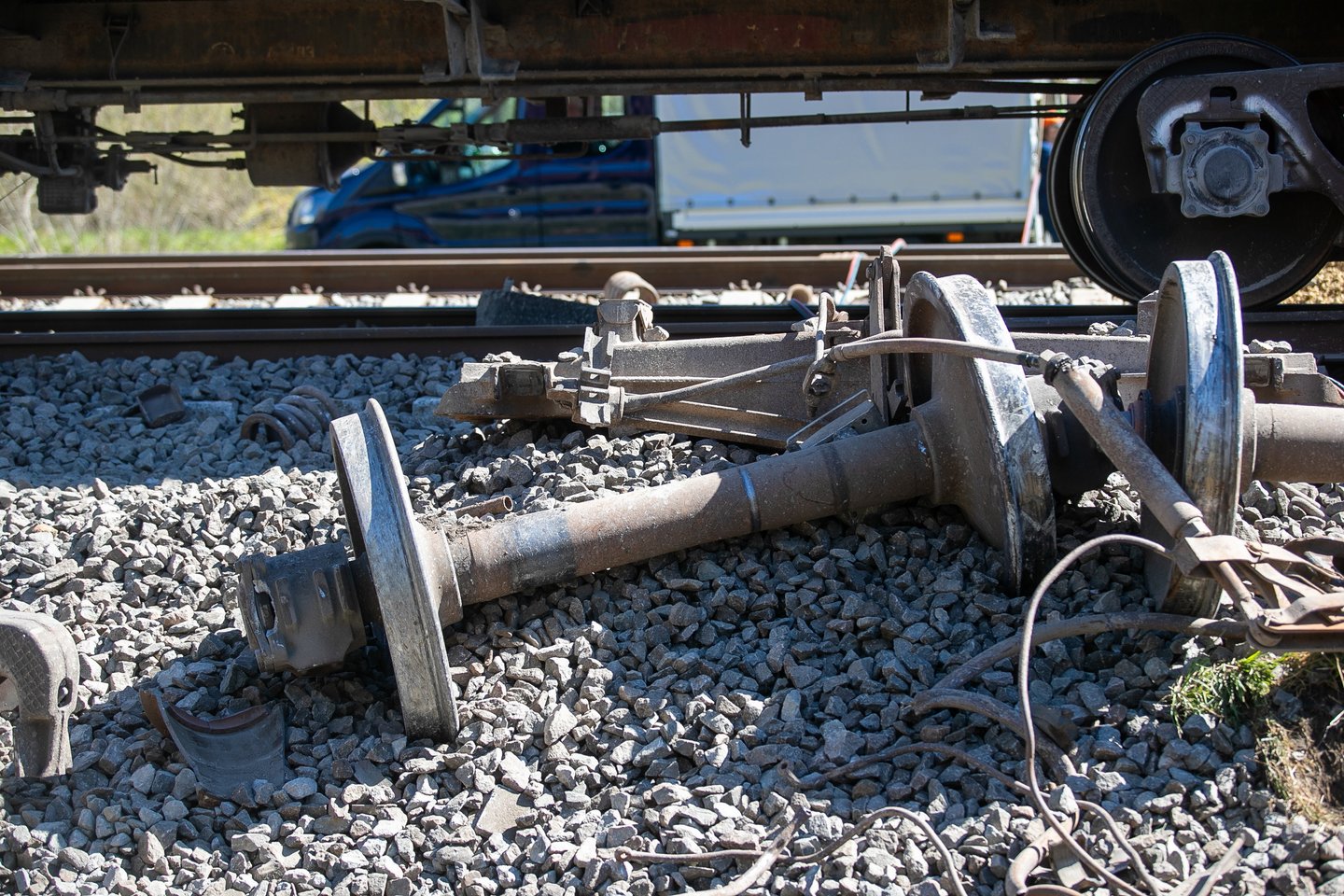
„The incidents themselves, their technical causes based on preliminary findings, and what we are seeing are different. I really cannot go into detail today because an investigation is underway, and only after it is completed will we be able to comment on the specific causes,“ said Šečkus.
„During the investigation, we will evaluate all possible causes, taking into account that the incidents occurred within a very short period of time,“ he added.
During the investigation, the LTG commission will assess not only what may have caused the incidents but also the damage incurred, after which ways to compensate for the losses will be sought.
As reported by ELTA, last Friday, after three freight cars carrying wood chips derailed at the Gudžiūnai railway station, train traffic on the main routes was temporarily disrupted: Vilnius–Klaipėda–Vilnius, Vilnius–Šiauliai–Vilnius, Kaunas–Šiauliai–Kaunas, and Vilnius–Riga–Valga.
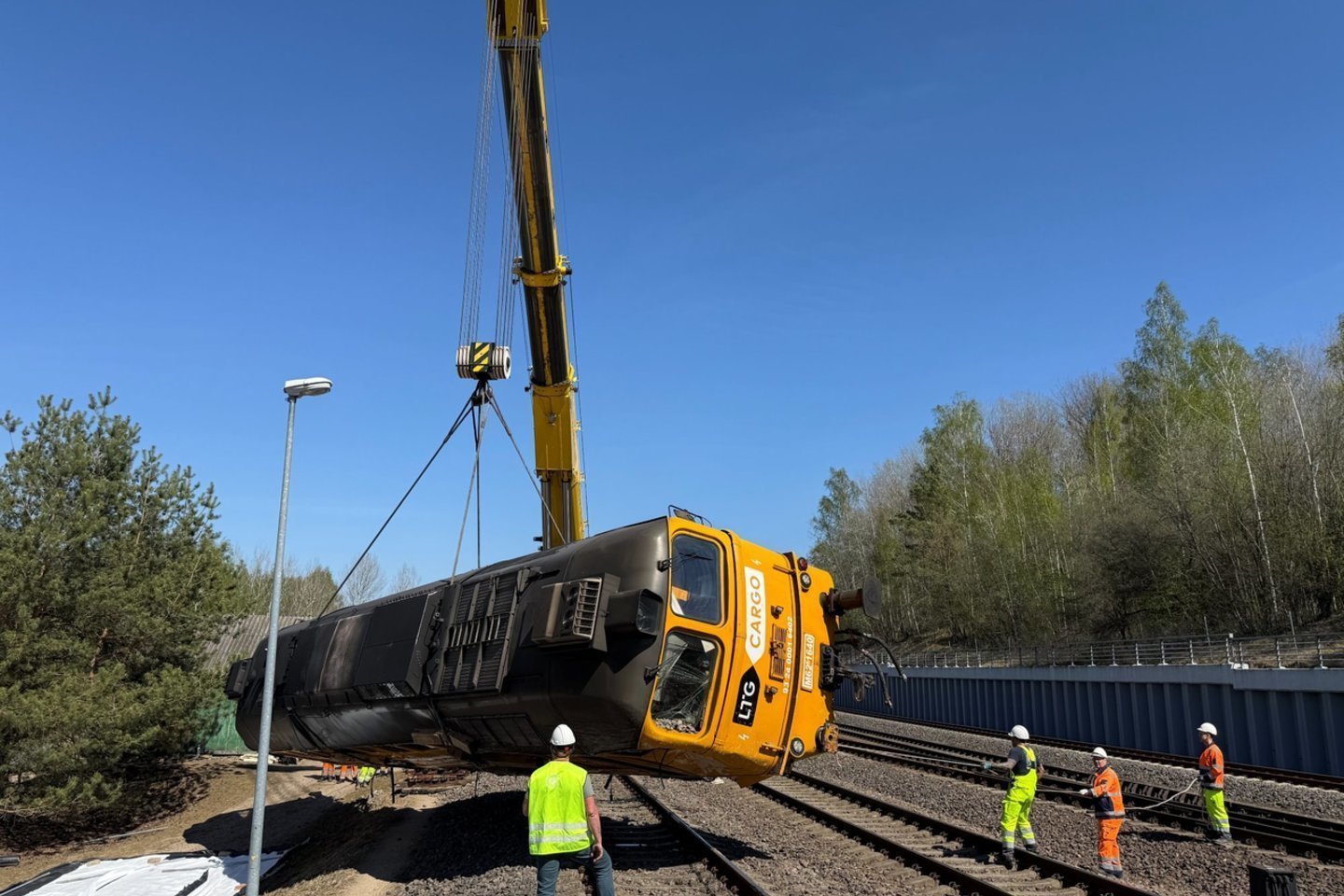
About a hundred LTG Group employees worked at the scene for more than a day, and a special train equipped with a crane capable of lifting 180 tons was deployed to remove the overturned cars. It is estimated that the incident affected 23 passenger trains, with approximately 3,800 passengers continuing their journeys by bus.
In Jiesia, after a locomotive and four freight cars travelling from Palemonas to Duisburg derailed from the 1,435 mm gauge track last Saturday, two tracks were damaged—the standard gauge and the European Rail Baltica gauge.
The incident affected the Kaunas–Kybartai–Kaunas, Kaunas–Marijampolė–Kaunas, and Vilnius–Mockava–Vilnius passenger train routes—a total of 22 trains carrying more than 800 passengers.
To investigate these accidents, LTG has formed a special commission that will examine both cases. The commission consists of all of the company’s top-level executives and the business resilience team.