
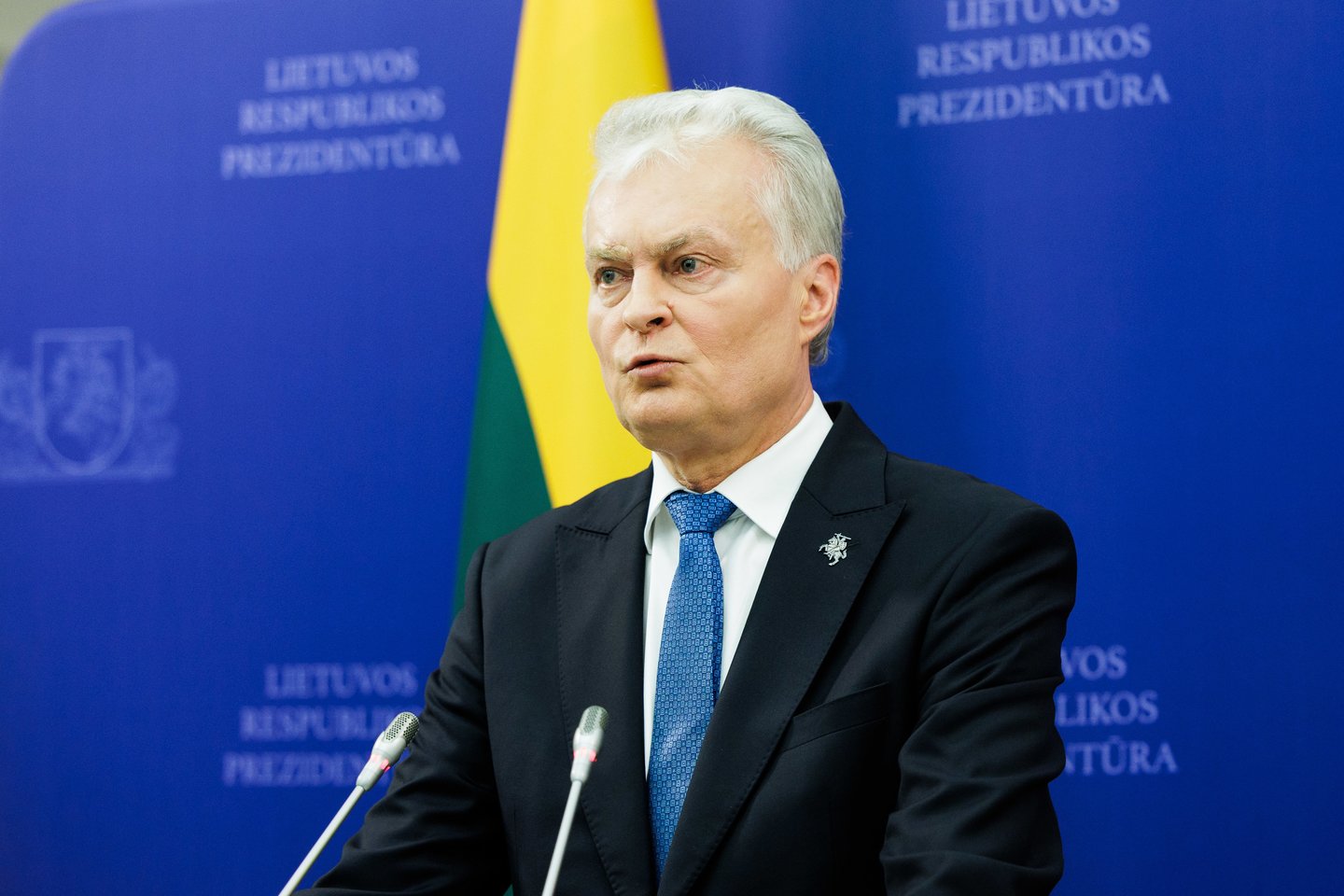
„There is no pressure regarding Belarusian fertilisers. Yes, we exchange information from time to time; we share some details with our American friends, and they also present their views on Belarus,“ the president said on Friday.
Discussions about possible U.S. pressure on Lithuania resumed on Thursday following a Lrytas article about a meeting of the Lithuanian Social Democratic Party (LSDP) faction, to which Foreign Minister Kęstutis Budrys was summoned.
Behind closed doors, the Social Democrats expressed outrage that the minister was continuing the value-based foreign policy pursued by the Conservatives; they were dissatisfied with Budrys’s stance on restoring relations with China, which they claimed was being used as a cover for a presidential election campaign.
Susiję straipsniai
According to Lrytas sources who attended the meeting, during the conversation with the Social Democrats, the foreign minister acknowledged that the situation regarding the transit of Belarusian fertilisers is changing—Lithuania is already facing pressure from the U.S. to resume transit.
„Until today, I have repeatedly stated both publicly and to you that we have not received any pressure from the Americans or any questions regarding fertilisers, such as how those sanctions are being imposed and so on. As of today, I can say that pressure is emerging,“ Lrytas accurately quoted Budrys as saying, citing a Social Democrat who wished to remain anonymous.
Following the publication of this article, the minister acknowledged to journalists that there is a „stepping up“ of activity on this issue from the Donald Trump administration.
„Yes, discussions are taking place, but the answer is very clear: for the next (…) nine months, we have European sanctions that are still in effect and have been extended. Since these are European sanctions, not national sanctions, we wouldn’t be able to change anything here even if we wanted to,“ said Nausėda.
According to Lrytas, Budrys repeated the same argument to the Social Democrats.
The minister reportedly told the LSDP faction that Lithuania is cooperating with the Americans and will try to understand their wishes, but will not automatically jump through hoops. Among other things, he emphasised that Lithuania cannot lift the sanctions on its own right now—everything must be coordinated at the European level.
The President also noted that the Belarusian regime „continues to remain unchanged in its essence,“ aiding Russia’s aggression against Ukraine; therefore, when discussing the extension of sanctions at the European Union (EU) level next year, it will be necessary to assess whether these circumstances have changed.
„If the situation does not change, I will advocate for extending the sanctions. But of course, the Belarusian regime can always demonstrate that it wants more normal relations and is distancing itself from Putin’s regime. Although the likelihood of this is very low, I would not rule it out entirely. We are always ready to cooperate closely with our American partners in addressing these issues,“ emphasised Nausėda.
Seimas Speaker Juozas Olekas told ELTA that he had received no signals from the U.S. regarding the resumption of fertiliser transit. At the same time, the Prime Minister’s advisor Ignas Dobrovolskas stated that no negotiations on the matter are taking place and that, with EU sanctions in effect, this issue cannot be considered.
The administration of former U.S. President Joe Biden imposed sanctions on Belarusian potash fertilisers in 2021, a year after the Belarusian presidential election, which was won by Alexander Lukashenko, whom the West does not recognise.
In 2022, the EU also imposed sanctions on Belarusian fertilisers; at that time, the Lithuanian state-owned Lithuanian Railways Group (LTG) terminated the contract for fertiliser transit in accordance with a decision adopted that year by Ingrida Šimonytė’s government, which deemed the state-owned fertiliser producer Belaruskalij a threat to national security.
Until then, transit was supposed to continue until the end of 2023.