
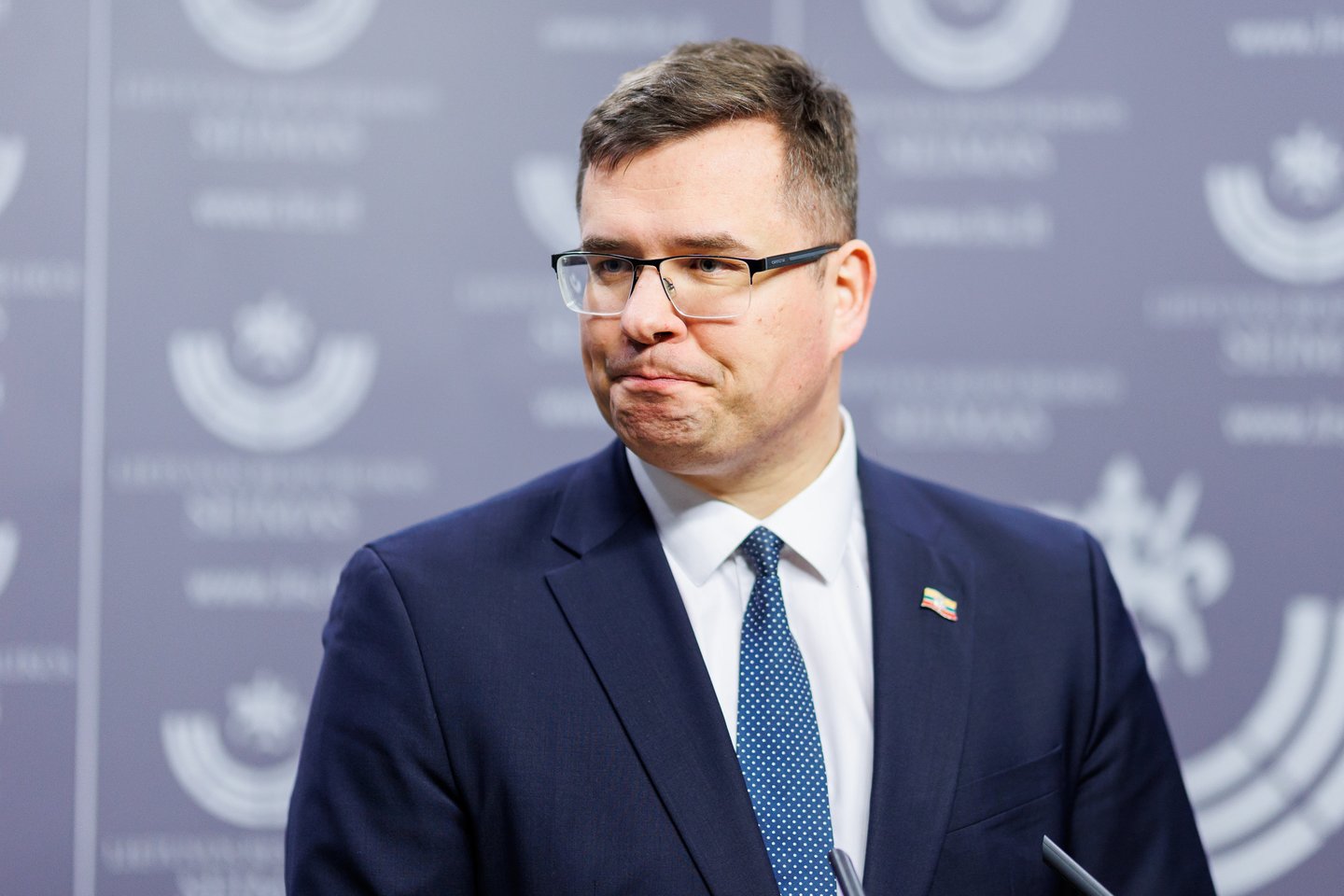
„In fact, the situation is far more serious and poses a threat to Lithuania’s national security—it is suspected to be an intelligence operation by the Russian Federation. During this operation, data from state registries regarding Lithuanian intelligence officers, military officers, individual politicians and civil servants, as well as other natural and legal persons, may have been stolen,“ Kasčiūnas wrote on Facebook on Sunday.
He believes that foreign intelligence services can exploit residential address information in various ways, depending on their objectives. The addresses of the homes, country estates, and other real estate owned by intelligence officers, military officers, diplomats, or politicians are often considered sensitive information, as they can facilitate surveillance, pressure, or even threats to physical security.
With a specific address, one can monitor a person’s routine—when they leave or return home, who visits them, and their movement patterns or routes. Physical surveillance may also be conducted near the residence to identify a network of contacts and vulnerabilities, or, in some cases, to install technical surveillance devices, such as cameras or signal interception equipment.
Susiję straipsniai
„Address information can also be used for cyber operations. Precise personal data enables the creation of highly convincing personalised fraud schemes, the execution of identity spoofing attacks, and attempts to hijack accounts by exploiting address-based identity verification. Furthermore, detailed personal profiles can be created from registries, family information, real estate data, schools, or social connections.
In some cases, addresses are used for recruitment or coercion—to identify financial difficulties, family vulnerabilities, or personal habits, as well as to indirectly reach a person through neighbours, service providers, or acquaintances.
Foreign intelligence officers can link a person’s place of residence to travel patterns, modes of transportation, phone metadata, or work and movement habits, thereby creating a detailed map of the person’s activities and connections.
The disclosure or leak of addresses can also be used for reputational pressure or intimidation—for example, by publishing addresses online, inciting violence, making threats, or exerting other forms of pressure on both the individual and their family members,“ says the politician.
He believes that knowing addresses can help plan the theft of documents, equipment, or access devices, and in extreme cases, facilitate kidnappings, attacks, or sabotage.
„As the central military intelligence agency of the Armed Forces of the Russian Federation, the GRU collects information on individuals and objects of strategic importance abroad: it identifies and profiles potentially interesting targets—military personnel, government officials, diplomats, defence contractors, critical infrastructure workers, dissidents, and other individuals significant to Russia’s strategic interests.
Detailed so-called „lifestyle profiles“ are created, analysing where people live, work, and travel, who they interact with, and their habits. In such cases, real estate registry records, travel data, phone metadata, vehicle registration information, and workplace details become valuable,“ says the conservative.
According to him, such data can be particularly valuable in the first hours of a war or a large-scale hybrid attack, when the aim is to quickly disrupt state governance, military coordination, and the functioning of critical infrastructure. With information gathered in advance about the residence of strategically important individuals, workplaces, travel routes, or communication networks, priority targets can be identified when planning the sequence of initial strikes—ranging from missile or drone attacks to covert operations in which special forces or sabotage groups would seek to disrupt command and control. This is precisely why even fragmented civilian data, when combined with other intelligence sources, can acquire significant operational value during a crisis or war.
He notes that this is not the first time Russian intelligence efforts to collect such data have been documented. Kasčiūnas recalls the case of Algirdas Paleckis—a former member of the Seimas serving a sentence for attempting to spy for Russia: among other tasks, the Federal Security Service had ordered the collection of the addresses of the former chief prosecutor of the Criminal Prosecution Department of the Prosecutor General’s Office, who led the investigation into the January 13 case, as well as the judges of the Vilnius Regional Court who heard that case.
„The state must undertake a fundamental review of its cybersecurity system to minimise the damage done and the emerging threat. Questions of both political and personal accountability regarding this unprecedented situation are inevitable,“ says Kasčiūnas.
It is suspected that more than 600,000 registry entries may have been leaked, resulting in damages of at least EUR 111,000. Conservative Party Chairman Kasčiūnas previously announced that he would request an extraordinary meeting of the Seimas Committee on National Security and Defence (NSGK) regarding the incident. The parliamentarian also raised questions regarding the ability of Minister of Economy and Innovation Edvinas Grikšas to continue serving in the government.
Meanwhile, prime minister Inga Ruginienė called on Adrijus Jusas, head of the Centre of Registers, to step down from his position.
The Centre for Registers emphasised at the time that no personal contact information had been leaked during the incident. It urged residents to be wary of scammers and to carefully evaluate calls, emails, and other messages, especially those related to real estate.
In response to the incident, the prosecutor’s office launched a pre-trial investigation into unauthorised access to information systems and other related cybercrimes.