
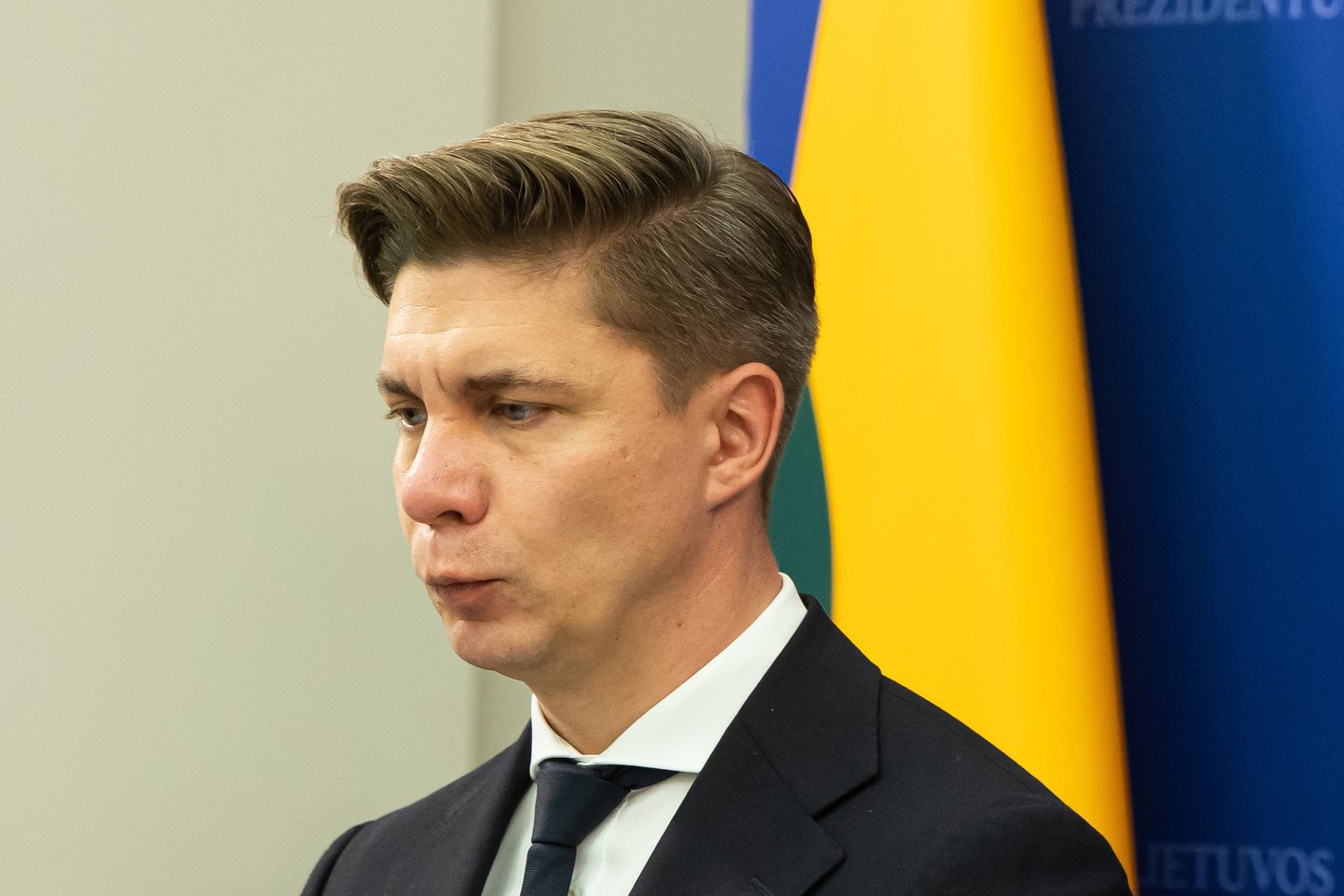
As the government reported on Monday, Sinkevičius, on a working visit to Brussels, discussed these issues in a meeting with the President of the European Commission (EC), Ursula von der Leyen.
„We are responsible for protecting the EU and NATO’s external borders, and we are increasingly feeling the consequences of the war in Europe instigated by Russia. I am convinced that strengthening air defence is now an urgent priority,“ Sinkevičius is quoted as saying in the government’s statement.
„We welcome all EU initiatives to date and propose that the Union’s efforts be further consolidated in accordance with the fundamental principle that a secure border and airspace on the EU’s eastern flank is our common concern,“ he stated.
The government’s statement notes that Lithuania is seeking to ensure sustainable funding for the security and defence needs of the Eastern Flank states, including within the EU’s multiannual financial framework for 2028–2034.
According to the government, the meeting also discussed Lithuania’s Presidency of the Council of the EU in the first half of 2027. Among the country’s planned priorities are strengthening EU security and defence, boosting the Community’s competitiveness, EU enlargement and support for Ukraine.
Speaking about the future EU budget, Sinkevičius emphasised funding for the Cohesion Policy and the Common Agricultural Policy, strategic infrastructure and military mobility. Among the strategic projects for which Lithuania is seeking EU funding, the prime minister highlighted Rail Baltica and Via Baltica.
The prime minister spoke in favour of increasing EU support for Ukraine and maintaining pressure on Russia; he expressed his hope that, during Lithuania’s Presidency of the Council of the EU, progress would be made in the EU’s enlargement processes, with particular attention being paid to Ukraine’s and Moldova’s negotiations on EU membership.
Mr Sinkevičius also invited Ms von der Leyen to co-host a high-level European Security and Resilience Forum in Vilnius during Lithuania’s Presidency of the Council of the EU, focusing primarily on the security needs of countries on the Eastern Flank.