

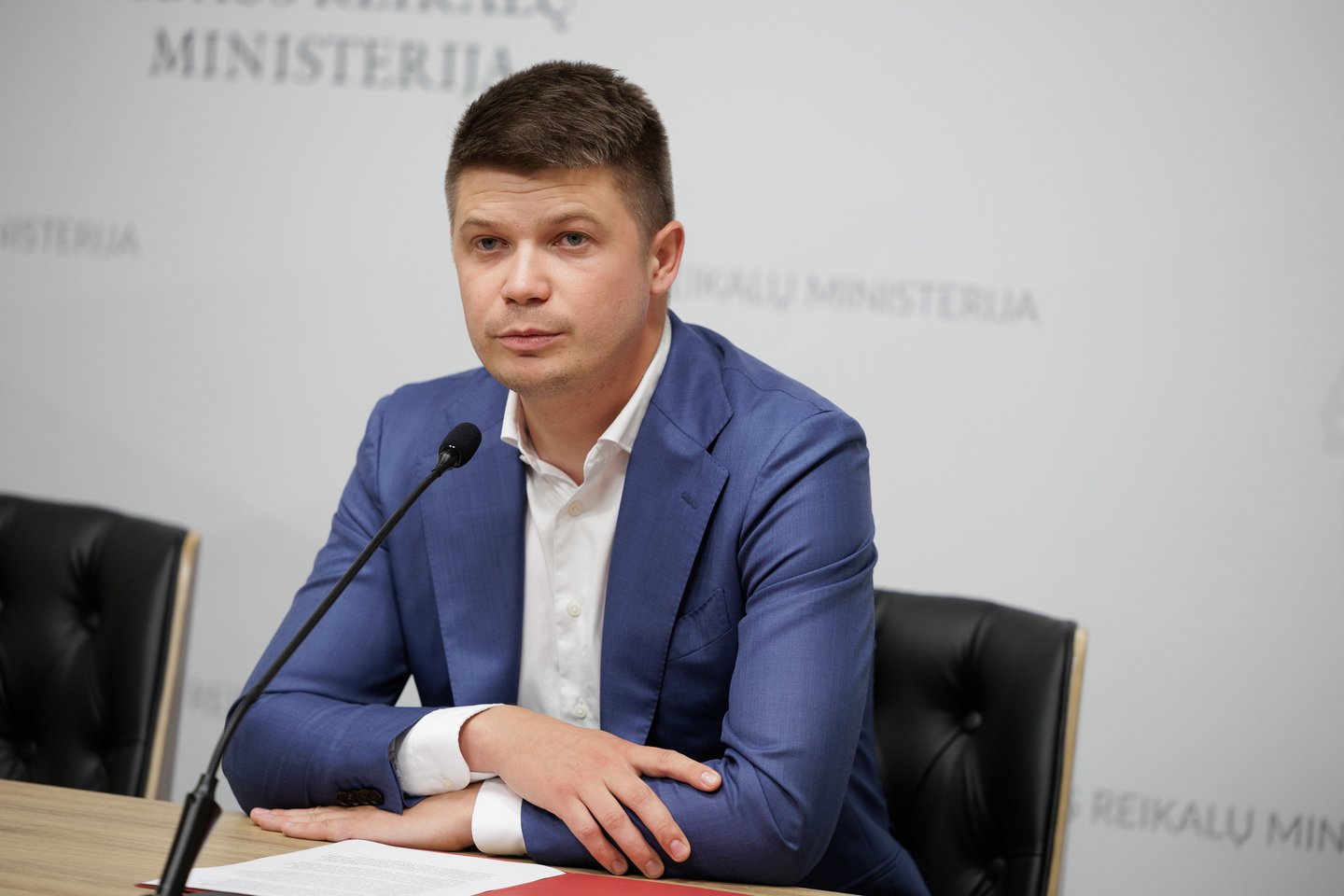
„In certain sections, it would be advisable to install a physical barrier, monitored by both CCTV cameras and thermal imaging cameras. At present, there are only cameras there, but installing a physical barrier in part of that section would be counterproductive, as we would be spending a significant amount of money where there is certainly no need for it,“ the minister said on Žinių Radijas on Thursday.
According to him, the State Border Guard Service (VSAT) drew up this plan and presented it to the minister through the service’s acting commander, Donatas Škarnulis. However, according to Katelynas, additional funding would be required to implement the proposed solutions.
„These measures have been drawn up, but they require a little extra funding. We hope to resolve these issues, as we need to strengthen not only our border with Belarus but also with Kaliningrad,“ he said.
The minister stressed that not all the measures used on the border with Belarus can be directly applied to strengthening border security in the Kaliningrad region. This is due to differing natural conditions – Lithuania’s border with the Kaliningrad region is formed by the Nemunas River, other bodies of water, as well as sections of the Curonian Spit and the Baltic Sea’s exclusive economic zone.
„The physical barrier consists of what is known as a segmented fence, with barbed wire serving as an additional obstacle. So, if an internal barrier were to be installed, similar to the one on the border with Belarus, the same solution would be applied there too, except that in certain sections it would not be practical to do so. In certain sections, however, it is necessary,“ explained Katelynas.
Army Commander Raimundas Vaikšnoras had previously suggested considering, in the long term, installing physical barriers along the highest-risk sections of the border with Kaliningrad.
As reported, Defence Minister Robertas Kaunas announced on Monday that the enhanced border security measures near the Kaliningrad region had been extended until the end of November.
In October, the Minister of the Interior, Martynas Katelynas, announced the decision to deploy the army to strengthen Lithuania’s border security near the Kaliningrad region. The enhanced security measures were subsequently extended until mid-November.
According to him, these measures were taken in response to an incident in which a group of migrants, accompanied by armed individuals, attempted to cross the border between Latvia and Belarus illegally. Preventative measures were also taken following an assessment of the overall security situation in the region and indications that Russia might announce a mobilisation.
The interior minister stated that, for the time being, the plan is to continue deploying the same number of soldiers – up to 100 – for border security.