
These figures are significant not only because of the higher revenue. They indicate that the group has entered a phase of even more balanced financial growth, where not only revenue but also operational efficiency is increasing. The business model itself provides additional stability: the majority of the group’s revenue comes from building maintenance activities, which generate a recurring, predictable revenue stream.
The growth in efficiency is also confirmed by the fact that the group's number of employees at the end of 2025 was 5% lower than the year before. The Civinity Group today unites about 40 companies and employs more than 1,500 people in the Baltic countries and the United Kingdom.
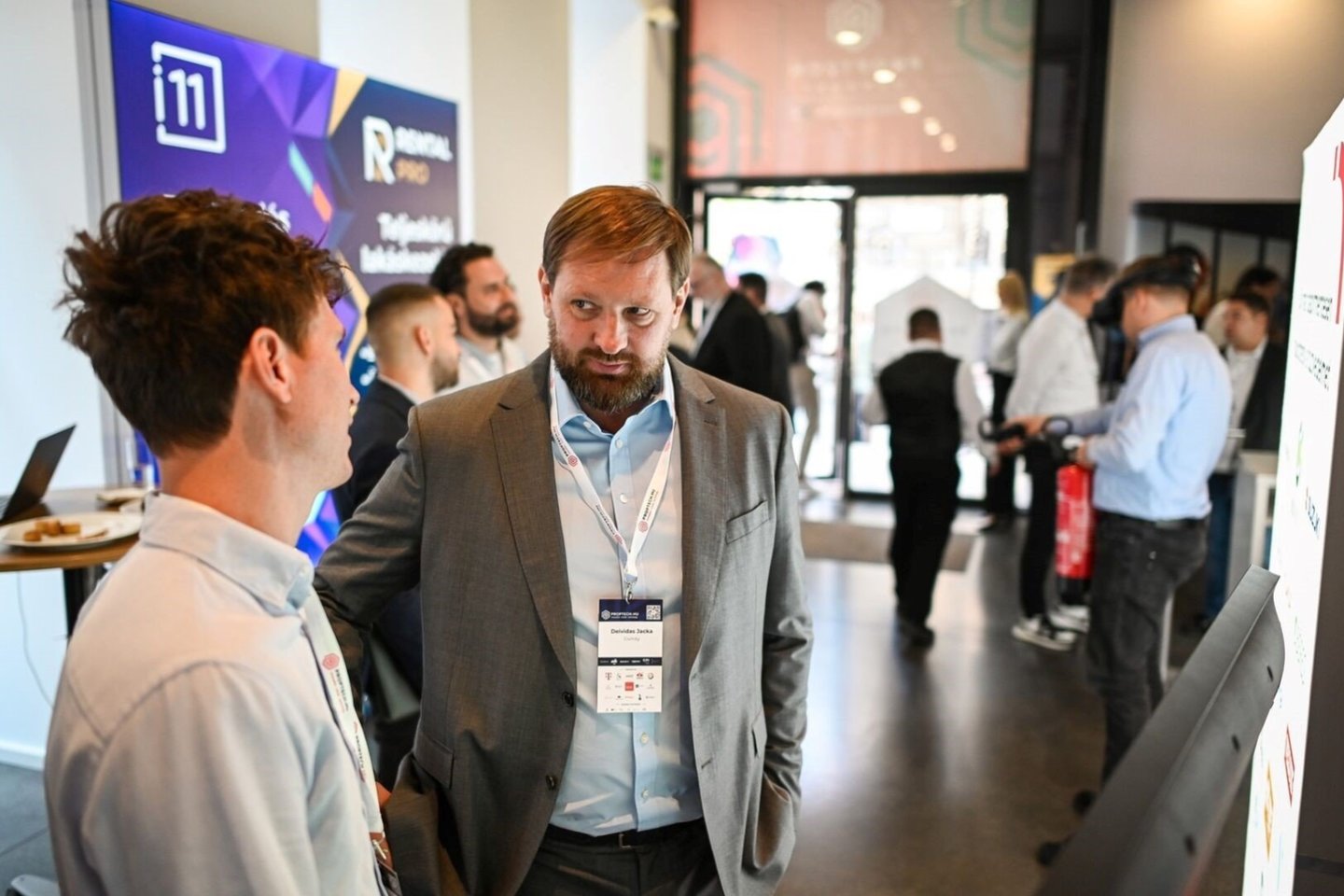
„The EUR 100 million threshold is, of course, a symbolic milestone. However, another indicator is more important to us: EBITDA grew faster than revenue. It shows that the group grew not only in scale, but also in quality: the businesses generating more stable results were strengthened, and increasing operational efficiency had a tangible effect,“ says Deividas Jacka, Chairman of the Board of Civinity Group.
Susiję straipsniai
While 2024 was a year in which the group’s growth was primarily driven by residential property maintenance activity, the renovation sector, and a new payment solutions segment, 2025 proved to be a year of broader business model expansion. The results show not one, but several sources of growth at once: stable residential property maintenance, a more active renovation segment, improving dynamics in the engineering business, and an increasingly prominent role for digital services.
„It was important for us not only to grow, but also to no longer rely on one segment. When results are generated simultaneously by maintenance, renovation, engineering, and digital solutions, the business becomes more resilient to market fluctuations. The figures for 2025 show exactly that,“ says Mr Jacka.
Strong financial results accompanied by concrete development steps
Concrete development decisions also accompanied the group's growth. In recent years, Civinity has consistently strengthened its core business areas and expanded its geographic reach and service offerings. One of these areas is digital solutions for urban services. This year, the urban services solution Mobilly, developed in Latvia and in which Civinity invested, has also started operating in Lithuania. It marks the group's further development in the field of technological solutions in the Baltic region.
At the same time, the group is actively pursuing growth through acquisitions. One of the most significant projects recently completed was the acquisition of the lift engineering company Metus. The company operates in Croatia and Slovenia and carries out projects in Germany and other European markets. Last year, the company generated approximately EUR 19 million in revenue and employed around 280 people.
„The Metus deal is important to us not only because of the additional scope of activities. It is a consistent development step that strengthens our international business profile and engineering expertise base,“ explains Mr Jacka.
A year of stable growth
Despite higher financial costs related to preparations for the next stage of development, profit before tax increased slightly – from EUR 2.81 million to EUR 2.83 million, while net profit amounted to EUR 2.12 million. Meanwhile, gross profit and operating profit recorded significant growth, from EUR 17.67 million to EUR 21.57 million and from EUR 4.49 million to EUR 5.02 million, respectively.

„The Civinity Group today has a stronger operating base and better profitability at the operational level, but the financial result still reflects development, investments, and the cost of capital. In other words, 2025 was not a year of easy records for us, but a year of more mature growth,“ states Mr Jacka.
The group has also announced a broader acquisition portfolio – this year, it plans to execute around 10 acquisitions, with total planned investments in these transactions currently at about EUR 44 million.
These results also open up a broader strategic context. The group has already announced its ambition for the next five-year period – development through a hybrid model in which a stable traditional business operates alongside faster-growing digital businesses and products. By 2030, the aim is for at least 30% of the portfolio to consist of digital businesses.
„We want to expand where we can combine maintenance, engineering, and digital solutions into a clear customer proposition. Financial results are important, but even more important is that they enable us to take the next strategic step, rather than simply increasing scale mechanically,“ says Deividas Jacka, Chairman of the Board of the Civinity Group.
Sustainability and governance strengthen the foundation for growth
This year, Civinity assessed its activities and prepared a sustainability report in accordance with the European Sustainability Reporting Standards (ESRS). The report notes that, from 2027, as requirements to reduce greenhouse gas (GHG) emissions and improve energy efficiency increase, demand for renovation and energy efficiency solutions may rise, creating opportunities for additional revenue growth.
The Civinity sustainability report shows that the group is strengthening not only its financial performance, but also the governance and risk-control framework that underpins sustainable growth. For the first time, Civinity calculated its full GHG emissions at Scopes 1, 2, and 3, conducted a climate risk assessment, and set out its direction towards 2030 – increasing the share of green energy in its own activities and clients’ properties, while steadily electrifying its vehicle fleet.
The report also highlights strong governance and operational reliability indicators: three out of five board members are independent, gender balance has been ensured on the board, and in 2025, there were no recorded cases of corruption or bribery, whistleblower protection breaches, critical cybersecurity incidents, or serious workplace accidents.
„The Civinity Group's revenue is generated in areas directly related to the growing need to improve building energy efficiency, reduce energy costs, and modernise real estate management. When announcing financial results, this allows us to emphasise that Civinity’s growth is based not only on the scale of activities, but also on transparent, responsible, and risk-controlled management,“ concludes Deividas Jacka, Chairman of the Board of Civinity Group.