
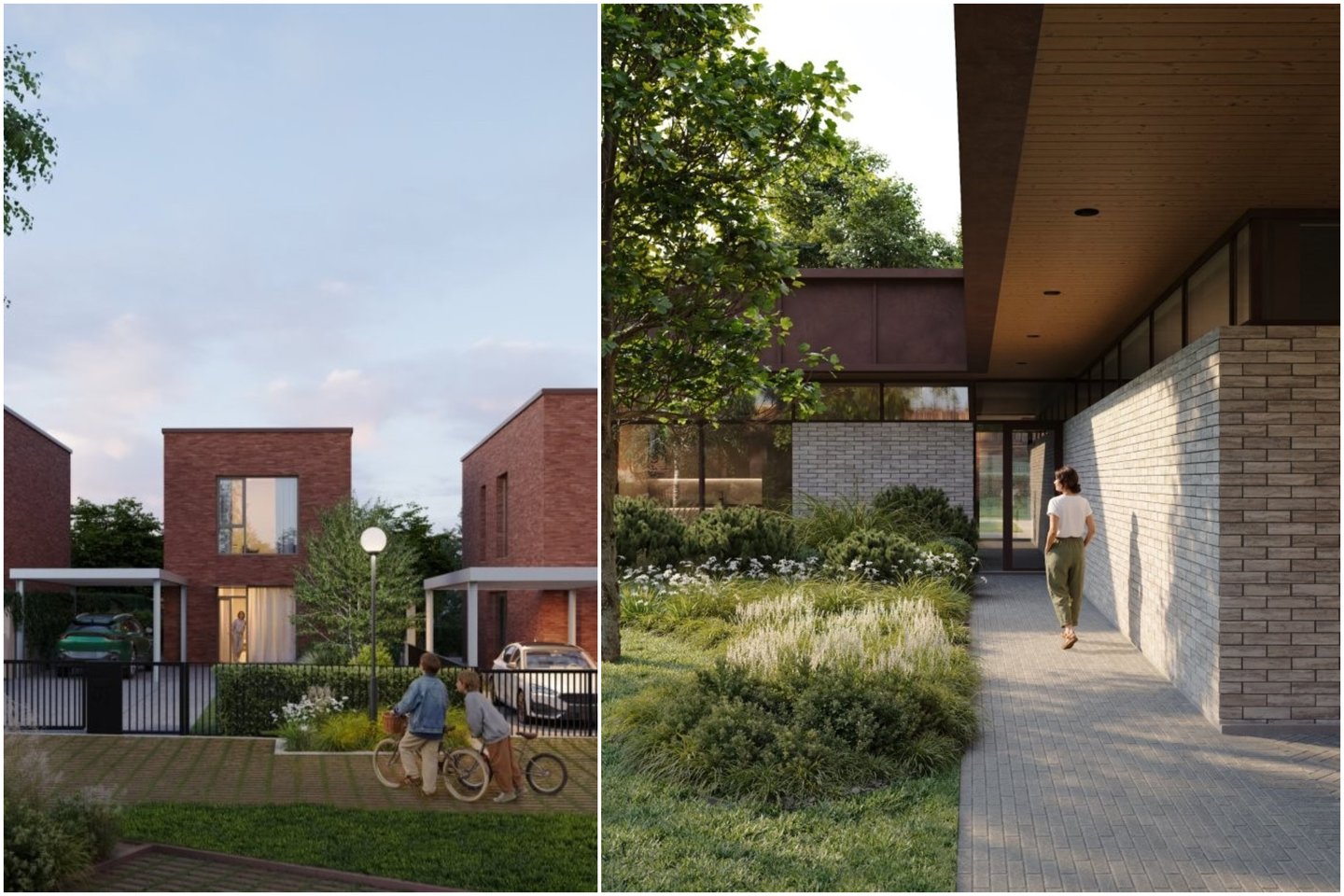
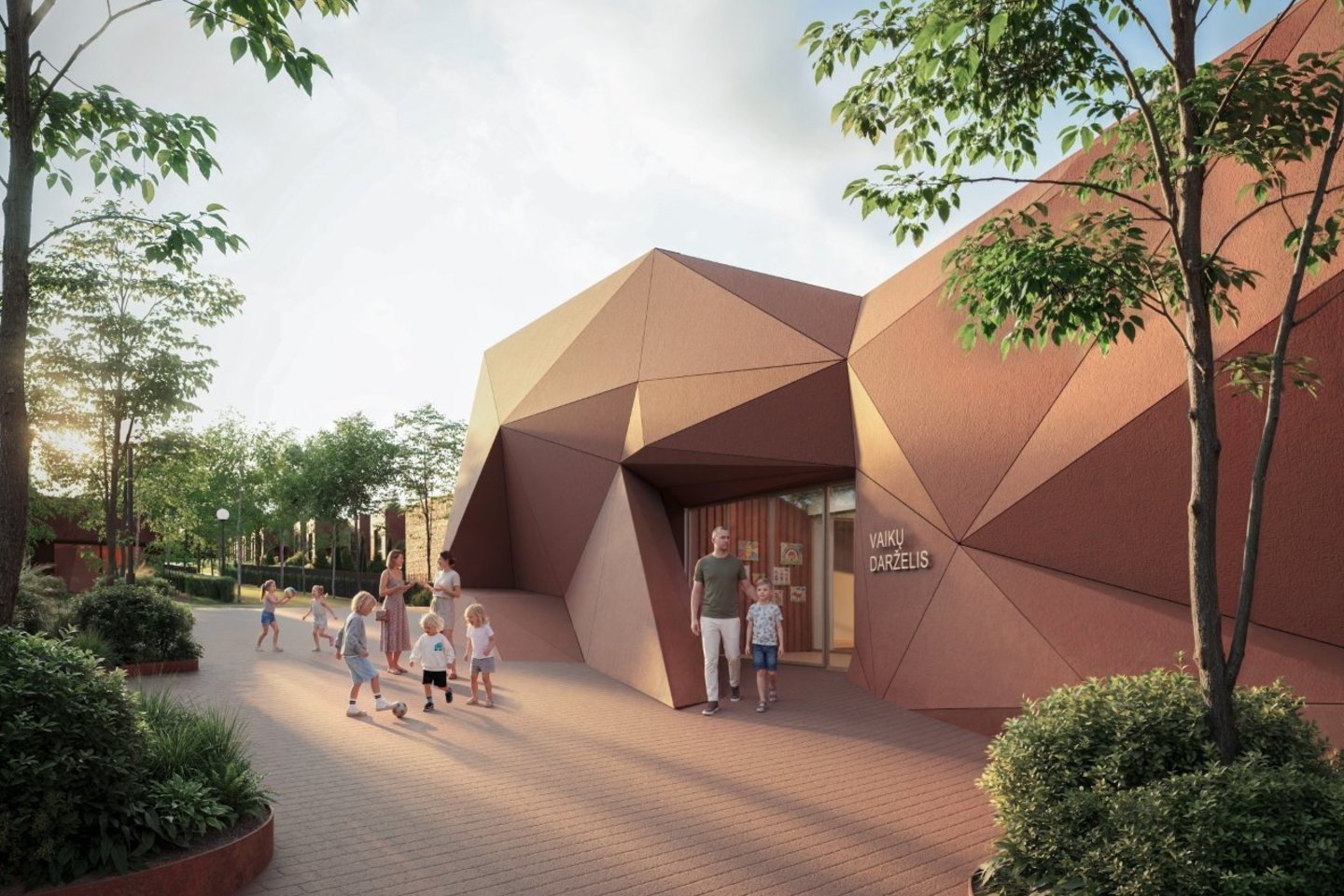
The neighbourhood will feature not only residential buildings but also fully developed infrastructure, including roads, sidewalks, street lighting, and landscaped public spaces, as well as a kindergarten, a spa and fitness centre, an active leisure and recreation area, a café, and other essential everyday services. The company estimates that total investment in the project will amount to around EUR 100 million.
According to Sigita Survilaitė, CEO of Darnu Group, the company had been searching for a suitable site to develop a single-family home neighbourhood for quite some time.
„Having monitored the private housing market for several years, we see significant opportunities to apply our extensive real estate development expertise to this segment and to set a new standard for quality of life in single-family homes. Our research also indicates strong demand for this type of housing: nearly 40% of residents in Vilnius and the surrounding area plan to purchase a home within the next three years, and 54% of them are considering a single-family home or townhouse,“ says Survilaitė.
Susiję straipsniai
Survilaitė notes that most of the existing supply of single-family homes and townhouses has consisted of small, standalone developments by smaller developers, often lacking a coherent vision as well as adequate transport and social infrastructure. Over time, this has become not only an inconvenience for residents but also a challenge for the city as a whole.
„That is why, in developing the Nojai project, we set out to create an environment for people who no longer want to choose between the convenience of city living and the freedom of a private home. Here, everyday life extends beyond the front door, with thoughtfully planned services, leisure spaces, modern infrastructure, and convenient transport connections,“ says the CEO of Darnu Group.
Project location: untapped potential
The company has acquired a 26.4-hectare site near Mechanikų Street, distinguished by its unique landscape and forested areas, which are planned to be transformed into walking and recreational spaces. The site is located near the Paneriai Forest Reserve.
Darnu Group photos.
The Nojai project will be developed in four phases and will offer around 270 homes. Design work for the new neighbourhood is already well under way. The first phase, comprising 86 residential units along with commercial and recreational facilities, is scheduled to begin construction early next year, with reservations opening later this year.
According to Survilaitė, people of different ages, lifestyles, and family structures will live here, so the project will feature a wide variety of home types: from compact one– or two-storey townhouses with small private plots and detached houses of various sizes with terraces and gardens for private relaxation, to exclusive homes set on spacious plots, with the option to create a private swimming pool, a home SPA area, an outdoor dining space or room for other personal ideas.
To ensure residents’ convenience, the neighbourhood will feature a community centre with both active and passive recreational areas for children and adults, as well as small parks. It will also include several playgrounds, a pond, a private spa and fitness centre, a kindergarten, a community centre for local events, a café, and other everyday services.
As with the company’s other projects, significant attention will be given to landscaping in both private and public spaces, as well as to modern architectural design that serves not only an aesthetic purpose but also plays a practical role in shaping the harmonious daily life of the local community.
„The southern part of the city has enormous untapped potential. In this part of the city, very close to the future Nojai neighbourhood, we are also planning another development – the 71-hectare Launagiai neighbourhood. It will feature highly developed recreational and service infrastructure, creating added value not only for residents of both projects, but also meeting the needs of virtually all residents in the southern part of the city and significantly raising the bar for quality of life,“ notes Survilaitė.