
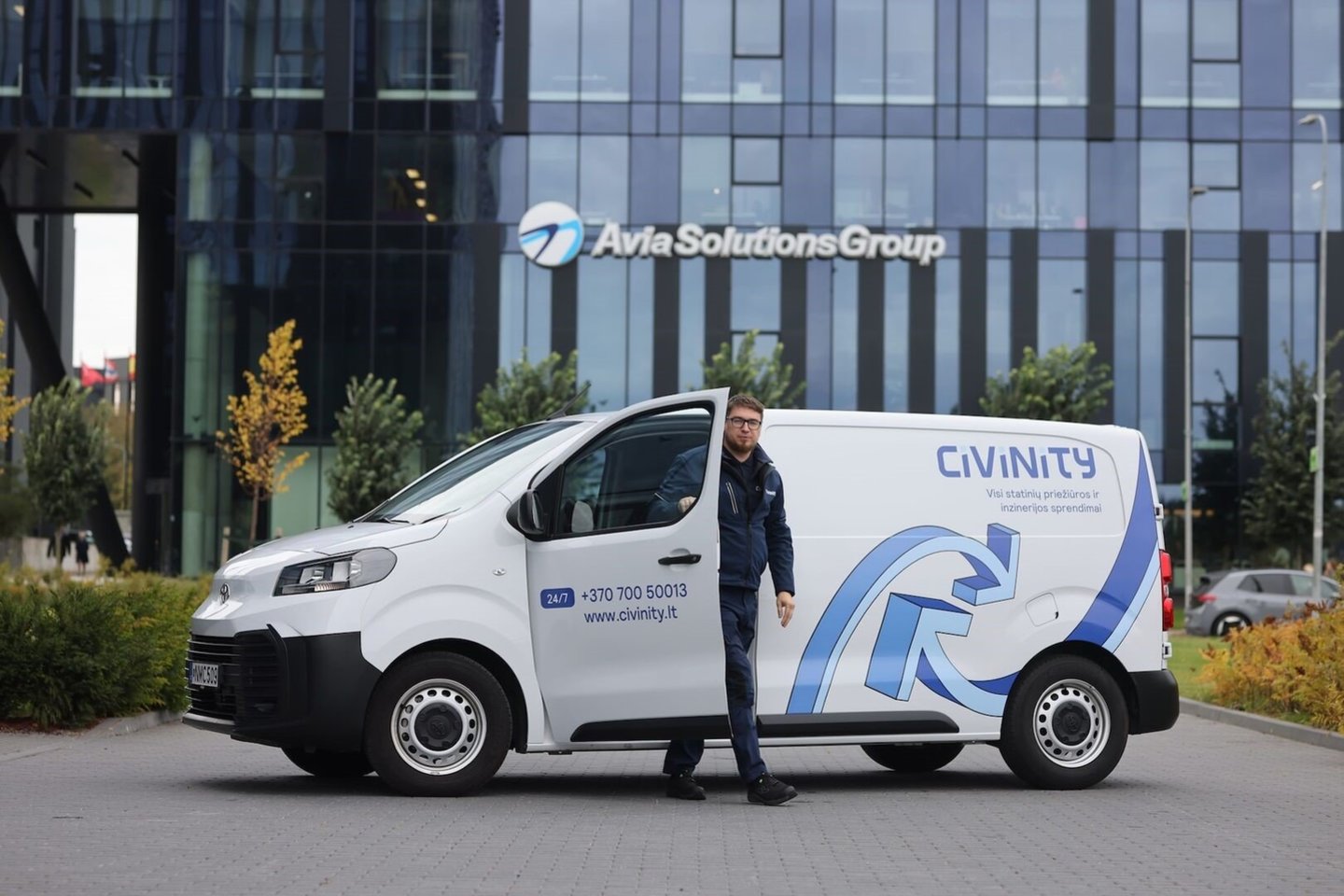
The first vehicles are expected to reach teams in September–October. The value of the first stage will be up to EUR 2.7 million. The total planned number of vehicles to be purchased is 350, and they are expected to be integrated into a more sustainable, significantly lower-emission fleet over the course of three years.
Autotoja won the tender in Lithuania, while in Latvia it was WESS Motors Toyota. In total, five vehicle dealerships submitted bids. The first-stage order will be financed through leasing with an external financing partner. Subsequent stages will be organised with the same main vehicle supplier, in accordance with the Civinity group’s schedule.
When evaluating the bids, consideration was given to compliance with the tender requirements, vehicle quality and reliability standards, warranty duration, and the service network’s coverage across cities in Lithuania and Latvia.
Susiję straipsniai



A broad network of authorised dealerships and service centres was one of the key practical criteria, as Civinity’s technical teams operate in six cities, and vehicle downtime directly affects service delivery to customers.
„We are pleased that our announced tender attracted significant interest from representatives of leading commercial vehicle manufacturers. In our business, the vehicle fleet is not merely a support function. It is part of the service, on which team mobility, response times and day-to-day efficiency depend, and in Civinity’s case it is also a step towards implementing our ‘Smart Green City’ vision,“ said Deividas Jacka, Chairman of the Board of Civinity.
This project is taking place at a time when corporate vehicle fleets are becoming a major driver of growth in the electric vehicle market. In Lithuania, companies already account for the majority of new electric vehicle purchases, and the number of EV leasing contracts among legal entities has grown rapidly in recent years. This shows that fleet renewal in the business sector is driven not by image, but by total cost of ownership, operational needs and regulatory developments.
Of the 150 vehicles in the first phase, 89 will be allocated to Civinity companies operating in Lithuania and 61 to those in Latvia. The vehicles will be used by building administration, technical maintenance and engineering teams in Vilnius, Kaunas, Klaipėda, Šiauliai, Panevėžys, Palanga, Kretinga, Riga, Jūrmala, Jelgava and other locations.
The new order will include Toyota Proace City, Proace Medium and Proace Max vehicles, most of which will be electric. A large share of the renewal will focus on low-emission transport. However, a small number of larger vans (seven vehicles) will have internal combustion engines, where this is required due to longer distances, more intensive use or specific technical needs.
Alongside the fleet renewal, Civinity also plans to expand its charging infrastructure. Charging points will be installed at the group’s offices and technical facilities, while agreements will be signed with public charging network operators for day-to-day use.
Particular attention will be paid to driver training. Employees will be introduced to the specifics of electric vehicle driving, charging practices, efficient usage principles and seasonal operational considerations.
The vehicles will be centrally purchased by the group company Civinity Rent. It will be responsible for financing, insuring and leasing them to group companies, and replacing vehicles at the end of their defined usage period.
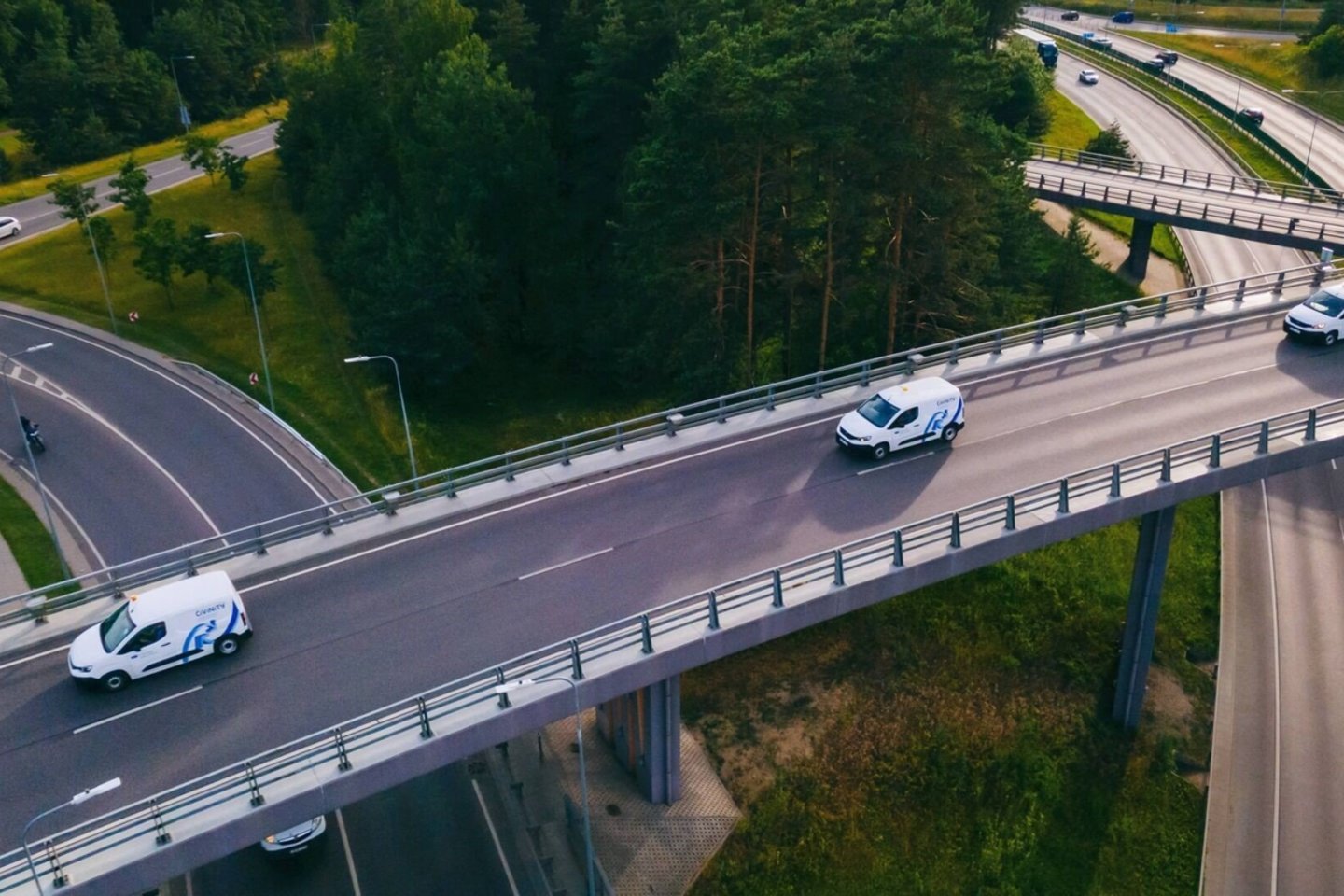
CIVINITY nuotr.
The fleet renewal will be included in the group’s ESG reporting. Civinity plans to calculate the project’s impact using greenhouse gas emissions accounting principles and to use the accumulated data when planning subsequent phases. The group currently operates a fleet of nearly 400 vehicles, which, as previously announced by Civinity, is planned to be optimised and renewed in several stages, with up to 350 vehicles in Lithuania and Latvia expected to be replaced by 2028.
The fleet is one of the areas where environmental impact can be reduced most quickly. In building maintenance and administration activities, mobility is essential to the service: teams travel to clients every day, respond to incidents, conduct inspections and perform engineering work. As a result, transport solutions directly affect service quality, while the choice of green energy influences environmental impact.
„Our approach to sustainability is very straightforward: if we want to create a smart green city, we must start with our everyday practice. Mobility is one of those areas where change is quickly visible. And this is not ‘greenwashing’, but a step that reduces pollution and noise in residential areas where our teams work, and helps us consistently transition towards a lower-emission operating model,“ Deividas Jacka concludes.