
According to a survey commissioned by real estate development company Darnu Group and conducted by Spinter Research, the share of such businesses has increased significantly, rising from 22% last year to 34% this year.
Experts say this suggests that, while businesses still need to remain cautious, they are learning to navigate the uncertainty created by global developments. Despite the challenges, companies are becoming more confident in their decision-making, pursuing not only expansion but also greater operational efficiency.
„Recently, we have seen companies becoming less reactive to sensational headlines. Instead, they are adapting to the changing environment and focusing on the areas they can control, such as efficiency, processes, cost management, and human resources. We have been closely tracking business sentiment for several years now.
Susiję straipsniai

This data helps us make more accurate forecasts and better anticipate the needs of businesses not only today but also in the near future as we plan the supply of commercial real estate in the capital city,“ says Mykolas Čiplys, Head of Lease and Sales Department at Darnu Group.
Businesses are adapting
According to economist and Vice-President at the Lithuanian Business Confederation (LBC) Marius Dubnikovas, the volatility that had affected the business environment over the past four years has eased, with business sentiment becoming even more stable over the past year.
„We can see that businesses have learned to adapt to potential risks and are now responding to them in a more measured and less anxious way. They assess existing risks more realistically, while putting hypothetical threats and uncertainty to one side. Furthermore, positive developments are boosting confidence among both businesses and the public – from Europe’s economic recovery and the revival of the defence industry to increased investment in Lithuania’s defence sector. All of this is strengthening confidence in the future. Rather than dwelling on hypothetical risks, businesses are focusing on what they do best – getting on with their work,“ says M. Dubnikovas.
According to him, this trend is not unique to Lithuania. The global economy has also adapted to the changing environment and grown more resilient in a relatively short period of time.
„It is not just the Lithuanian economy that has become more resilient in the face of instability. Global stock markets provide a clear example of this trend. Both US and European financial markets have continued to perform strongly, with major stock indices recently reaching new highs. The biggest shock triggered by US President Donald Trump’s actions came between March and May 2025. During that period, investors rushed to sell shares, capital flowed out of markets, and concerns about the future intensified. However, over time, everyone realised that this had become part of the new reality we have to navigate. Despite all the rhetoric, the actual measures have proved less alarming than they initially appeared. I can see that businesses are gradually getting used to this environment,“ says the economist.
Mykolas Čiplys, a representative of Darnu Group, says that daily interactions with companies across a wide range of sectors show that, while businesses now plan their processes more conservatively and make decisions more carefully, their focus on growth remains unchanged.
„Our data confirms this trend. Around 59% of small and medium-sized enterprises in the capital city planned to invest this year. A closer look at where they intend to direct their investments shows that businesses are placing particular emphasis on purchasing new equipment (31%), improving employee skills (24%), recruiting additional staff (21%), upgrading their vehicle fleets (21%), developing new products (16%) and refurbishing business premises (15%),“ says the expert.
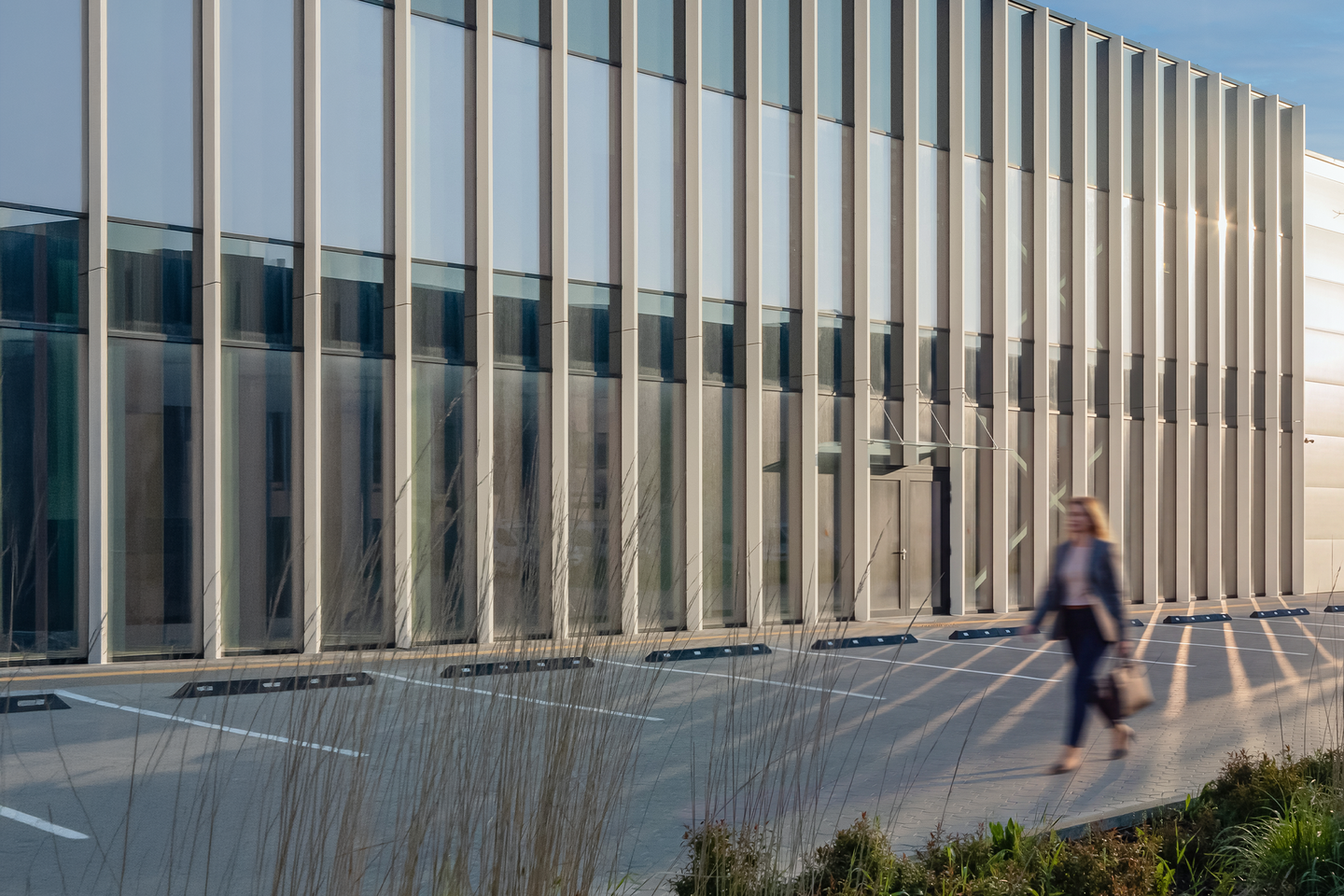
Turning to the refurbishment plans reported by companies, M. Čiplys adds that the positive momentum and improving business sentiment are evident not only in survey results but also in real-world interactions with clients about the premises at the Vilnius Business Park retail warehouses managed by the company. While property lease and sales activity had slowed in recent years, 2025 brought a significant turnaround, with the number of transactions surging by 62.5%.
„We have noticed investors returning to the commercial property market this year, with interest picking up particularly from the middle of the year onwards. Some are looking to buy retail warehouses for use in their own businesses, while others are approaching these properties as investment opportunities – purchasing units that already have tenants and keeping those tenants in place,“ says M. Čiplys.
Under pressure from rising wages and labour shortages
Although geopolitical risks are becoming less of a concern for businesses, developments in Lithuania’s economic and political environment continue to have a significant impact on day-to-day business decisions. According to the survey, the biggest challenges for small and medium-sized enterprises in their day-to-day operations are rising wage expectations (26%), labour shortages (16%), and changes in domestic policy (16%).
M. Dubnikovas says that wage expectations and labour shortages, which businesses cite as two of their biggest challenges, are closely interlinked and continue to have a very real impact.
„When businesses struggle to find enough staff, higher wage expectations are a natural consequence. That is exactly the situation we are seeing in Lithuania today. What makes it particularly challenging is that wage expectations have remained elevated for some time now and are becoming increasingly concerning for businesses – over the past decade, average wages have grown by around 10% a year. Those are substantial increases, and they inevitably push up costs. I believe these pressures will eventually have a greater impact than geopolitical developments, because they are reflected in real figures that directly affect companies’ balance sheets and profit and loss statements,“ says LCB Vice-President M. Dubnikovas.
Darnu Group's survey found that more than half of respondents (58%) have recently experienced difficulties recruiting new staff, with 10% reporting significant challenges and a further 48% describing them as minor.
„Today, employees look beyond the role and wage when choosing a job. They also consider practical factors such as benefits, team culture, and opportunities for professional development, as well as the workplace itself – how comfortable it is, where it is located, and how easy the commute is. Businesses recognise that these features not only matter to their customers but can also give them an edge when attracting new employees and retaining their existing teams. Our survey confirms the importance of these factors: once price is excluded, convenient parking and accessibility rank as the most important considerations when businesses choose their premises,“ says M. Čiplys.
Darnu Group is one of the leading developers of retail and stock-office premises in the capital city. It has developed almost 50,000 m² of such space to date, offering it both for sale and through lease-to-own arrangements.
The survey of small and medium-sized businesses was conducted by market and public opinion research company Spinter Research on behalf of Darnu Group. Representatives of 213 companies operating in Vilnius took part in the survey.