
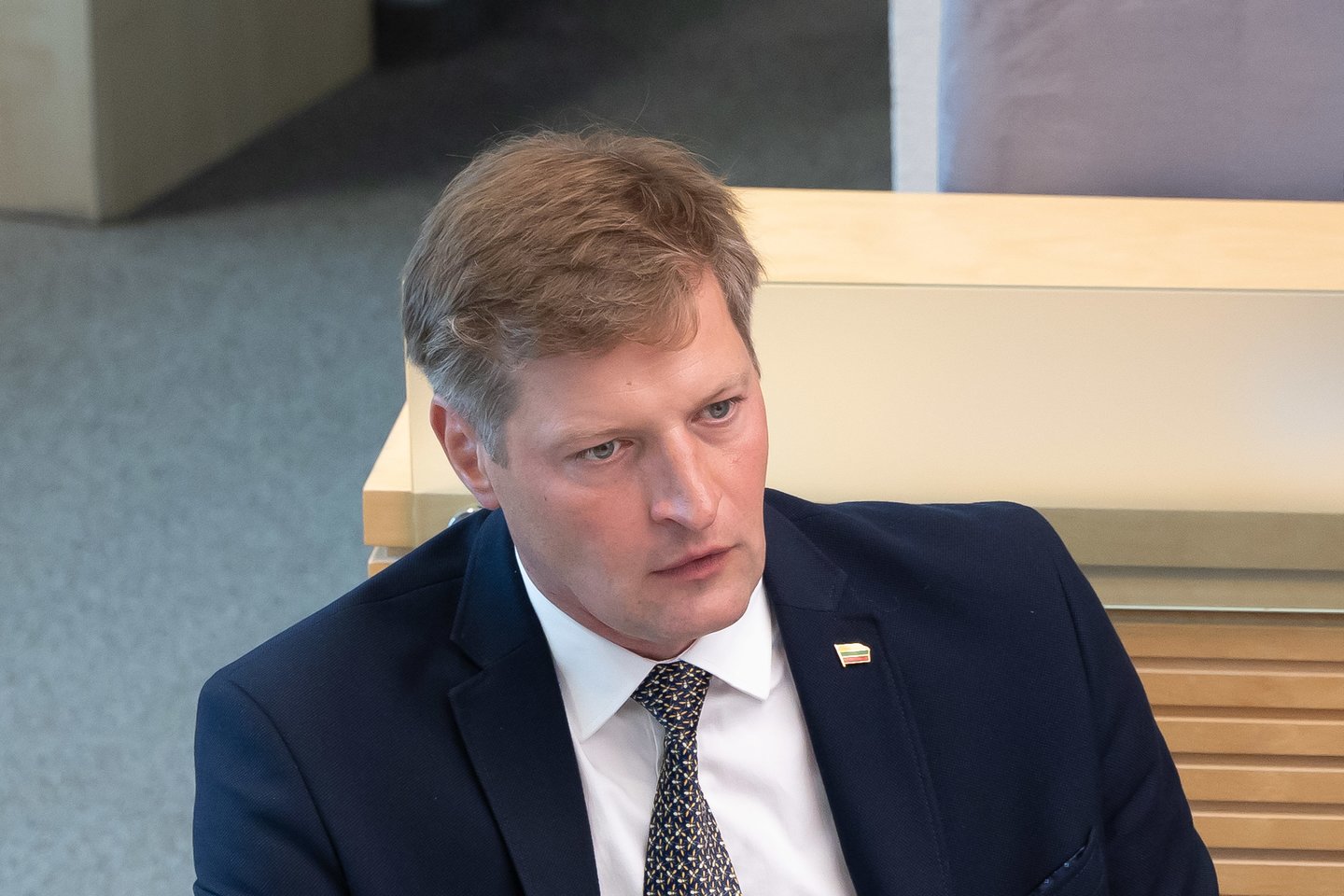
Journalist Birutė Davidonytė pointed out that the earlier remarks by Virginijus Sinkevičius, the interim Chairman of the Democrats, regarding audits that would take place at this ministry following the Nemuno Aušra administration’s tenure „are a lie“; Sinkevičius himself responded to this shortly thereafter.
„In a recent interview with our editorial team, Democratic Party leader Virginijus Sinkevičius said that after taking over the Ministry of Agriculture—which had been run by Nemuno Aušra—the Democrats would allegedly conduct audits there to assess corruption risks and investigate what had been happening there at the time, claiming that the party could not afford to inherit new scandals.
Now all of this seems like a lie. Who will you conduct these audits with? Together with both former Nemuno Aušra ministers in the same boat? Or will you even leave Puchovič's brother, who was recently hired, there?
Susiję straipsniai
And why was it necessary to change the coalition at all, if the Nemuno Aušra people won’t actually be removed from the ministries and will be allowed to operate freely there and continue managing their own affairs?“ wrote journalist Davidonytė.
Following her post, Democratic Party leader Virginijus Sinkevičius himself responded to this outcry.
„If the question here is what I think about our appointed Minister of Agriculture’s decision to invite Ignas Hofmanas to serve as an advisor, I fully understand that, having already seen two prime ministers come and go in such a short time, with a corruption scandal at the Plant Production Service—one that’s hard to fathom—unfolding before everyone’s eyes, and with the Nemuno Aušra farce in government still fresh in our minds, the current atmosphere is such that it seems no matter where you point, you’ll hit both problems and the culprits,“ said Virginijus Sinkevičius.
However, the politician continued, the greater the chaos in the country, the more important the details become.
„First of all, let’s start with the fact that ministerial advisors do not conduct audits in the country at all. And assessing corruption risks and auditing government agencies will be among the first tasks. Second, why did Ignas Hofmanas ultimately leave the government after its reshuffle? Because while he was still a minister, he spoke openly on more than one occasion about Remigijus Žemaitaitis’ attempts to pressure the ministry, demands to fire people, hire Žemaitaitis’ people, and so on.
Even regarding the crop farming scandal, it is absurd to cast suspicion on the former minister, under whom the investigations began, when former Minister Kazys Starkevičius himself publicly admitted to corruption. Third, the nature of the Ministry of Agriculture is such that its core activities are most directly related to a single group of people—farmers.
Both our appointed minister and his selection of advisors are directly related to the specific expertise and experience needed best to balance the interests of farmers and the state.
Therefore, I cannot see any specific reasons why such choices should be criticised. However, I fully understand the general atmosphere of dissatisfaction,“ stated Sinkevičius.
Hofmanas served as the Minister of Agriculture, appointed by the Nemuno Aušra party, in the 19th government. At the same time, Paluckas was appointed by this party to the 20th cabinet of Prime Minister Inga Ruginienė and also served in Saulius Skvernelis’ government from 2019 to 2020.
According to Mažeika, the goal will be to convey a message of stability to the farming community and to demonstrate the ministry’s openness in addressing the sector’s challenges.
Among these challenges, the future minister highlighted the need for funding for farmers from the national development bank ILTE. According to Mažeika, the current system is still not smooth enough, and farmers face bureaucratic hurdles.
„We’re not talking about small farms, but about serious, operating farms; I believe we’ll be discussing this with both the prime minister and the finance minister,“ he assured.
Mažeika also confirmed that Deputy Minister Taraškevičius, who currently oversees EU funding, is expected to remain on his team; according to the future Minister of Agriculture, Taraškevičius’s experience is crucial in negotiations over the EU budget, as Lithuania prepares to hold the EU Council presidency next year.