

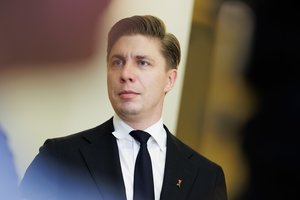
„Lithuania’s interests are our guiding principle, and they serve as a compass for me personally, for the institution, and for maintaining control over diplomacy in general. What do we base our actions on? A clear Lithuanian interest—what we want to achieve—and this is a pragmatic interest tied to concrete results that ensure our security and economic well-being,“ the minister told LRT television on Thursday.
„However, in implementing all of this, we rely on certain principles that we will not cross. We will not violate our obligations under international law, nor will we violate the principles just mentioned, such as sovereignty, territorial integrity, and respect for human rights and freedoms. We will be guided by what is important to us,“ he assured.
According to Budrys, he is optimistic about progress in this area in the coming months; he stated that achievements have already been made in certain aspects regarding consular representation and visa issuance.
Susiję straipsniai

The minister also denied rumours that Lithuania is changing its position toward communist China, noting that it was China that severed diplomatic relations.
„The direction we are moving in is clear, and no one here is questioning it. We want to restore representation, which, incidentally, was scaled back and ultimately severed not because of a decision by Lithuania. Now, when I hear, against this backdrop, that Lithuania is changing its stance and decisions, that is a lie. We did not sever diplomatic relations—that was China’s decision. We want to normalise relations because there are many reasons for doing so—when we have issues to resolve, it’s good to have a channel,“ noted Budrys.
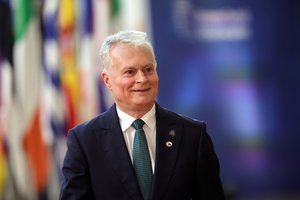
As previously reported, Budrys’s fate as foreign minister has been linked in public discourse and political circles to the issue of China; President Gitanas Nausėda has also stated that the minister’s future in the post will depend on his progress in normalising relations with that country and implementing agreements with Taiwan.
ELTA notes that relations between Vilnius and Beijing deteriorated significantly after the opening of a Taiwanese representative office in Lithuania at the end of 2021—Beijing considers Taiwan a province of China. It does not permit it to establish representative offices in countries with which China maintains official relations. In response to Lithuania’s decision, China imposed severe diplomatic and economic sanctions on the country.
Consequently, in February 2022, the European Commission (EC) filed a complaint against China with the World Trade Organisation (WTO)—the EU claimed that China was engaging in discriminatory trade practices against Lithuania, as trade restrictions, allegedly imposed for hygiene reasons, reduced Lithuanian exports by 80 per cent that year.
However, last December, the EU decided to withdraw its complaint from the WTO.
Amid tensions between Vilnius and Beijing, China’s Ministry of Foreign Affairs also officially downgraded diplomatic relations with Lithuania.