
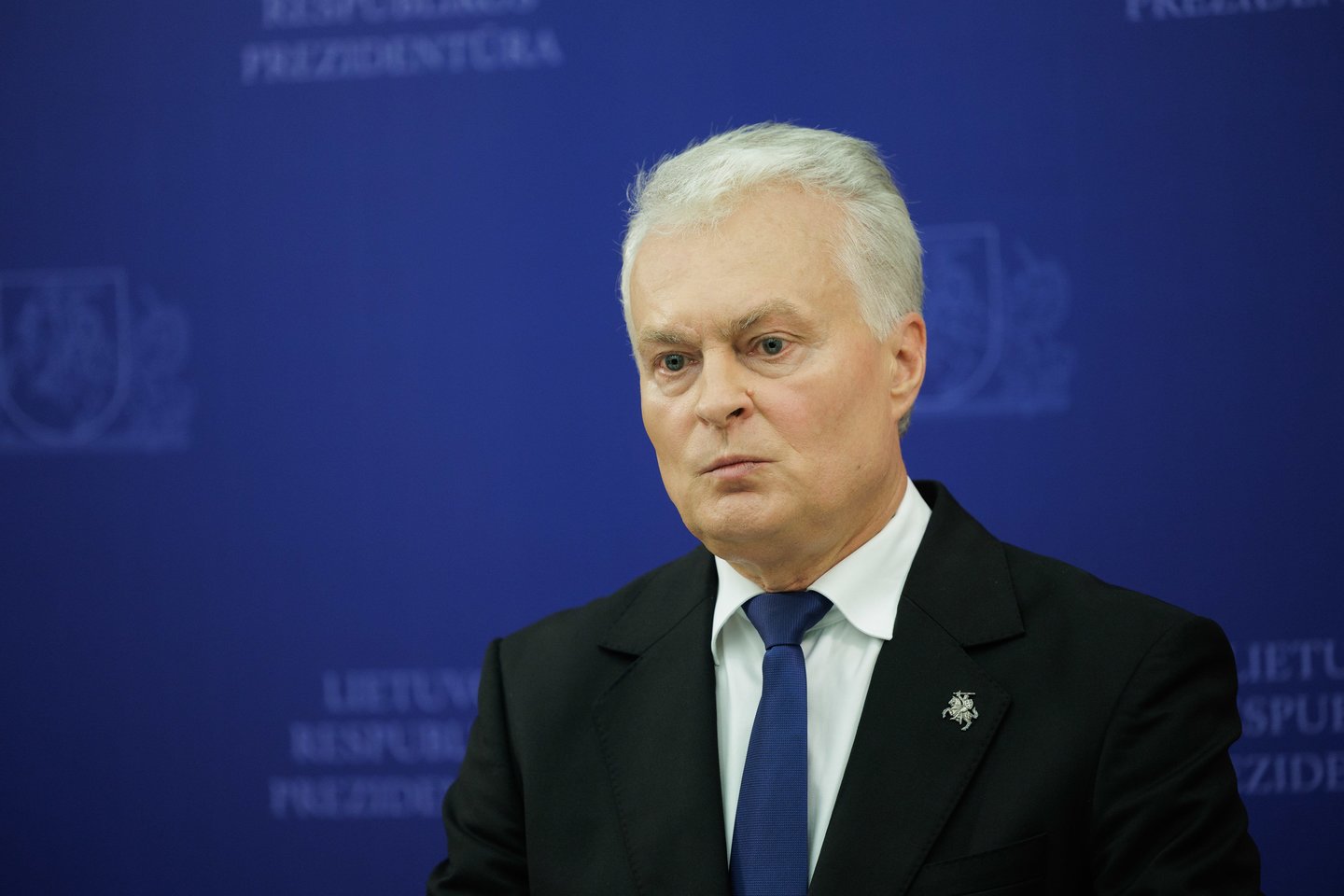
According to Nausėda, Lithuania is currently contributing to Latvia’s border security by sending officers from the State Border Guard Service (VSAT) to help prevent illegal border crossings.
„This cooperation is certainly very good and could be even more intensive, but that will depend on the needs expressed by Latvia,“ the Lithuanian leader said at a joint press conference.
He emphasised that the reintroduction of internal border controls within the Schengen Area would be a sign of failure.
Susiję straipsniai


„The establishment of internal borders within the Schengen Area would be a defeat and a kind of capitulation in the face of this phenomenon (increased flows of irregular migration—ELTA),“ stated Nausėda.
According to him, the more effectively the EU secures its external borders, the less need there will be to implement internal border control measures.
Related articles Latvian President Rinkevičius stated that Belarus has used migration as a means of pressure against the Baltic states over the past five years, so it is essential to continue strengthening external border protection and ensure the effective application of existing control measures.
According to him, since the beginning of this year, Latvian officials have thwarted approximately 8,000 attempts to cross the country’s border illegally.
„The main focus right now should be on ensuring that existing control and security measures at the border are implemented more effectively,“ said the president of Latvia.
Rinkevičius also noted that Latvia is cooperating with other countries to return migrants who have crossed the border illegally, and that this area will continue to be a priority.
According to him, although migration pressure may decrease in the future, there is currently no basis to discuss introducing stricter internal border controls.
„That would be a disaster and would mean that we would have to devote almost all of our resources to protecting our internal borders,“ said the President of Latvia.
Latvia shares a border approximately 172 kilometres long with Belarus, a close ally of Russia. The Baltic state accuses Belarusian leader Alexander Lukashenko of deliberately directing migrants toward the EU’s external border in an effort to put pressure on the bloc.
As a result, Latvia, Lithuania, and Poland have strengthened border security and erected border fences.
Last year, VSAT officers prevented more than 1,600 people from entering Lithuania from Belarus at unauthorised locations; this year, the number was 901.
In total, 25,500 illegal migrants have been denied entry into Lithuania since the start of the migration crisis triggered by Belarus.