
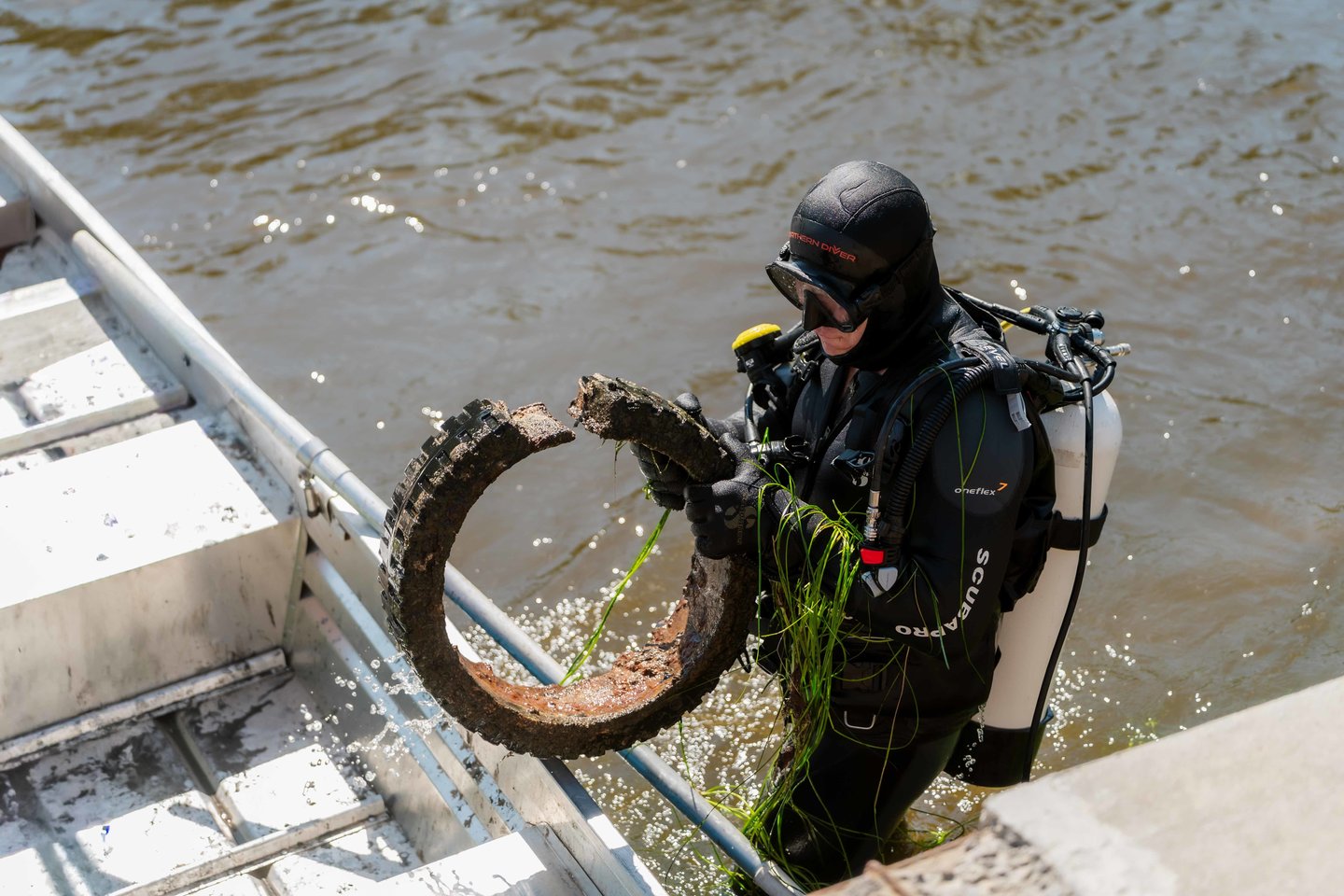
„Last year, while cleaning up the Neris River, we saw the true extent of underwater pollution – tons of rubbish in the city centre served as a reminder of just how greatly human activity impacts the environment. This year, we will continue this initiative until the entire 24-kilometre stretch of the river in Vilnius has been cleaned. We believe that projects like this are important not only for keeping the river cleaner, but also for raising public awareness and strengthening our relationship with the environment,“ says Akvilė Liaudanskienė, Director of Corporate Affairs and Marketing at Darnu Group, which initiated the project.
The entire riverbed will be cleaned along a stretch of approximately 7.5 to 8 kilometres. As in the first phase, work will take place both in the city centre, where the river runs along concrete embankments, and in the more natural surroundings of Antakalnis and Verkiai.
Kęstutis Skrupskelis, a member of the Lithuanian Society of Hydrobiologists and consultant for river initiatives at Darnu Group, says that the first phase of the Neris cleanup brought both numerous challenges and valuable lessons. Last summer was the rainiest in several decades, and the resulting muddy river water made cleanup efforts more difficult.
Susiję straipsniai


„This year, we’re ready for that. We have refined our methods for working underwater while anchored in strong currents, and we have learned to work as a team to remove large debris in such conditions. I must admit that we aren’t expecting long stretches of good weather and clear water this year either, so we’ll be working whenever water clarity improves even slightly, making the most of every moment,“ notes Skrupskelis, who coordinates the diving team’s work.
The specific nature of the riverbed suggests large amounts of rubbish
According to the diving team, due to its specific characteristics, this section of the river may be just as polluted as the stretch between the White Bridge and the Lazdynai Bridge that was cleaned during the first phase.
„Cleaning the first section revealed certain patterns: most of the waste accumulates in areas with slower currents and under bridges. There are even more bridges in this part of the river, so it is likely to contain large amounts of debris. It is difficult to predict the exact extent of the pollution at this point, but we don’t expect to find less rubbish than in the first phase of the cleanup, when we removed more than two tons of man-made waste from the river,“ says Skrupskelis.
It is believed that the stretch of the river between the Trinapolis Church in Verkiai and the White Bridge is home to vast amounts of waste – once again, hundreds of tyres, thousands of bottles, and tons of other debris are expected to be found.
„Yet I want to believe that passersby who often watch the divers at work and witness the incredible extent of pollution in the city centre will reflect on the impact of human activity, and that the river cleanup efforts will not only help clean the river but also serve as an educational initiative reaching a wide audience,“ adds Skrupskelis.
More than 10 tons of rubbish removed
This is not the first river cleanup initiative by Darnu Group. Six years ago the Darnu Group’s initiative led to the cleaning of the Vilnelė River in the capital. 10 tonnes of waste was collected over a period of three years. Car and tractor tyres, fence segments, shopping trolleys, construction waste and other rubbish was found at the bottom of the river.
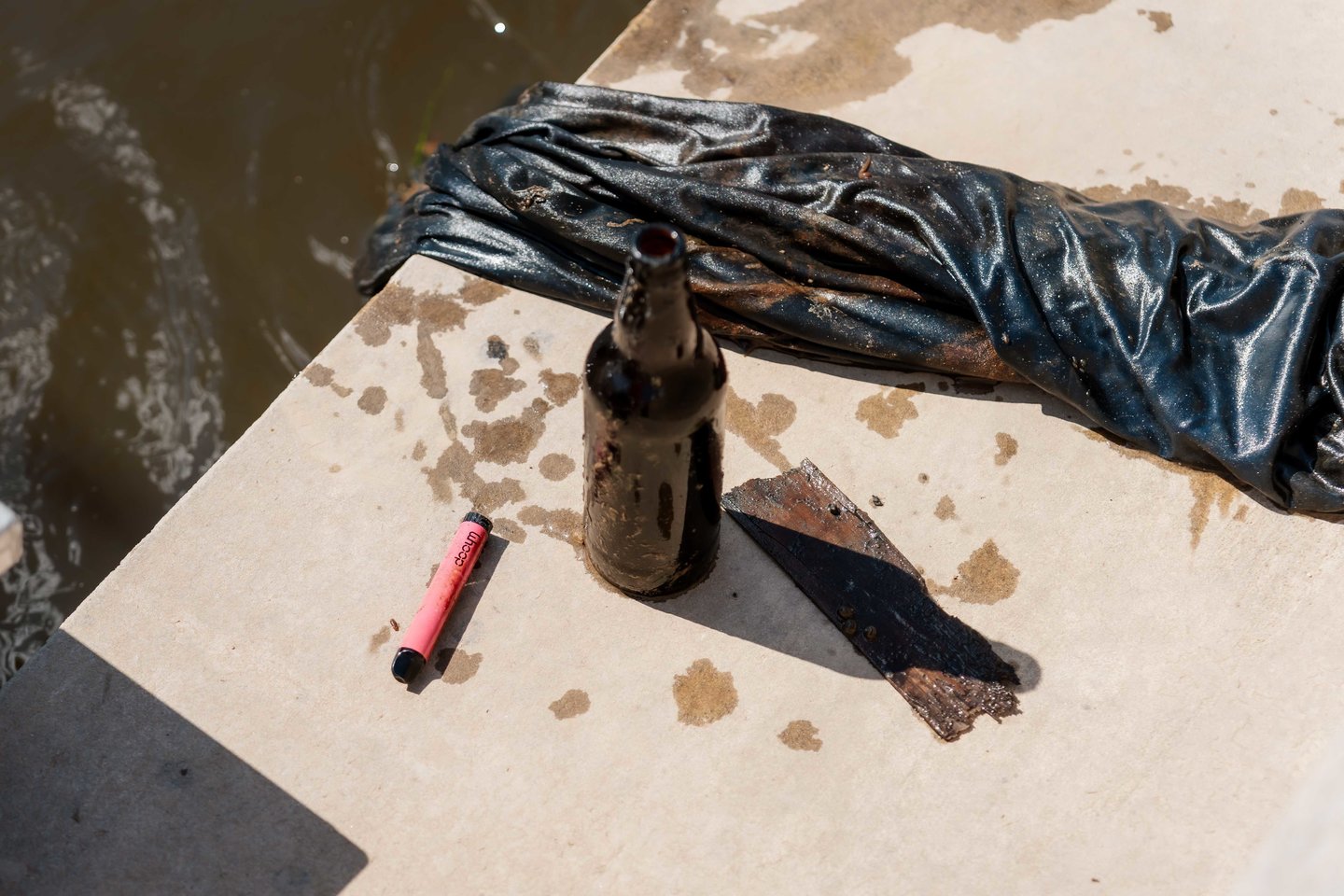
During the first phase of the Neris River cleanup last year, more than two tons of rubbish were removed from the river, including 1218 kg of various metal products, 1020 kg (89 items) of car tyres, 106 kg of glass, 80 kg of plastic, and 41 kg of other waste, including textiles. Metals dominate by weight, but in terms of quantity, tyres and glass containers are not far behind. Among the finds were three electric bicycles, two electric scooters, a door or camera bars, and four mobile phones.
So far, the Darnu Group has contributed more than EUR 100,000 to the capital's rivers.